
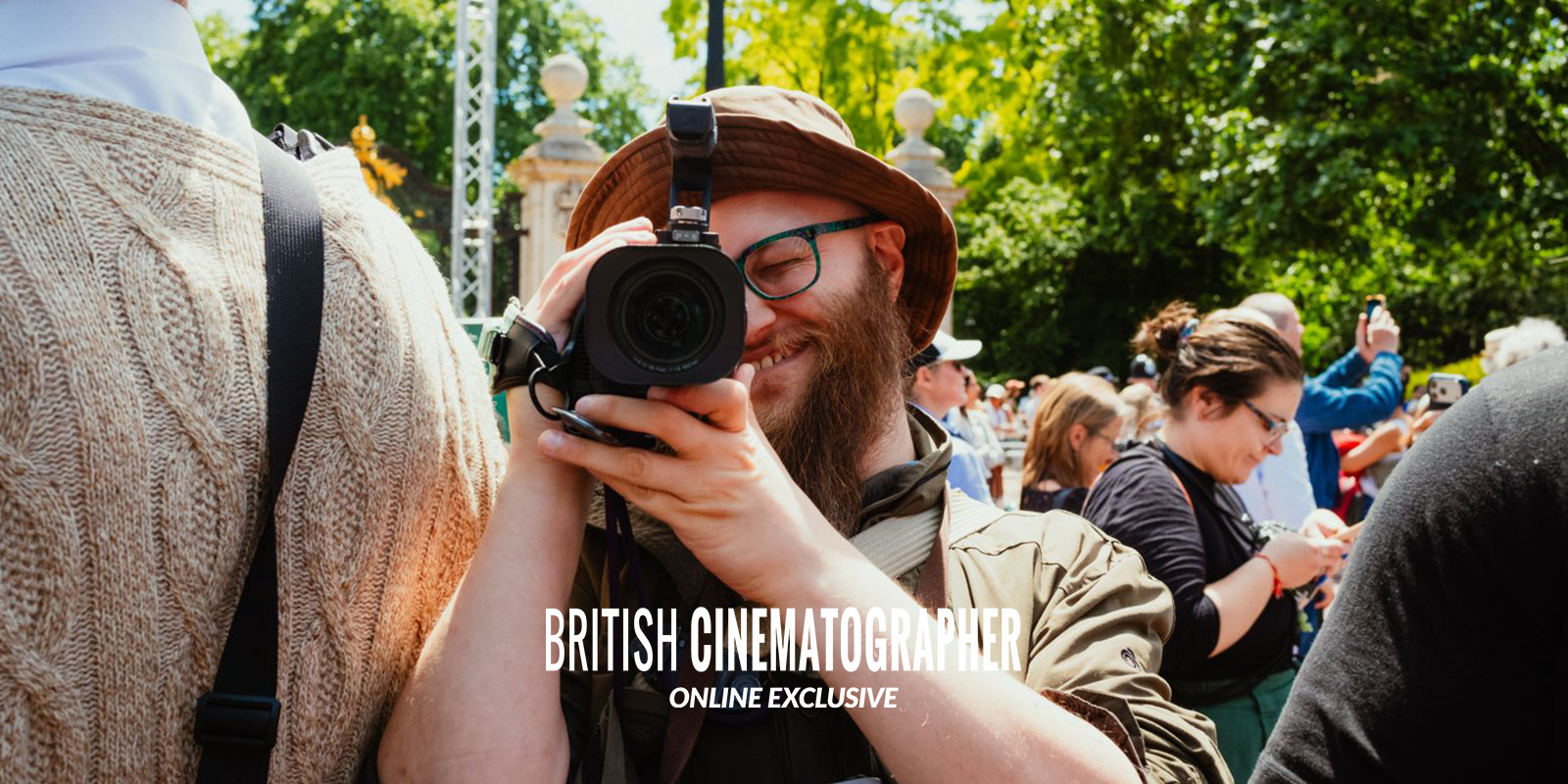
MAKING A FEATURE-LENGTH DOCUMENTARY WITH A CAMCORDER
Director Simon King explains how natural light, spontaneity and a Panasonic X1600E shaped street photographer documentary Everything Happens All the Time.
Everything Happens All the Time is my first ever feature-length documentary film; 27 interviews with street photographers in London across 1 hour 45 minutes. In the context of this film, “street photographer” includes purists who catch candid moments, photojournalists and documentary photographers, fine-art-abstract objet trouvé type discoverers, and people who feel no label truly contains all the nuance needed to identify their practice. I spoke to photographers of all skill levels from seasoned pros to people who feel they are just starting out.
I actually tried very hard to NOT make this film, but eventually factors compounded to make it an inevitability. This is a community of people I see on a regular basis across the situations, events, and general street life I am documenting myself, and there are always such engaging conversations I thought would be worth preserving and amplifying.
I initially spoke to several big-name YouTubers, short of insisting that they direct their energy towards something long form, knowing that they had it in them to adapt their content creation approach to produce something more substantial, but while they seemed to like the idea I don’t think any of them seriously considered it.
This left it to me to try and figure out, and once the pieces started falling into place the production itself was incredibly simple – I’d go as far as to say that the film sort of made itself, I just happened to be there with a camera and some interview prompts.
Confidence with a camcorder
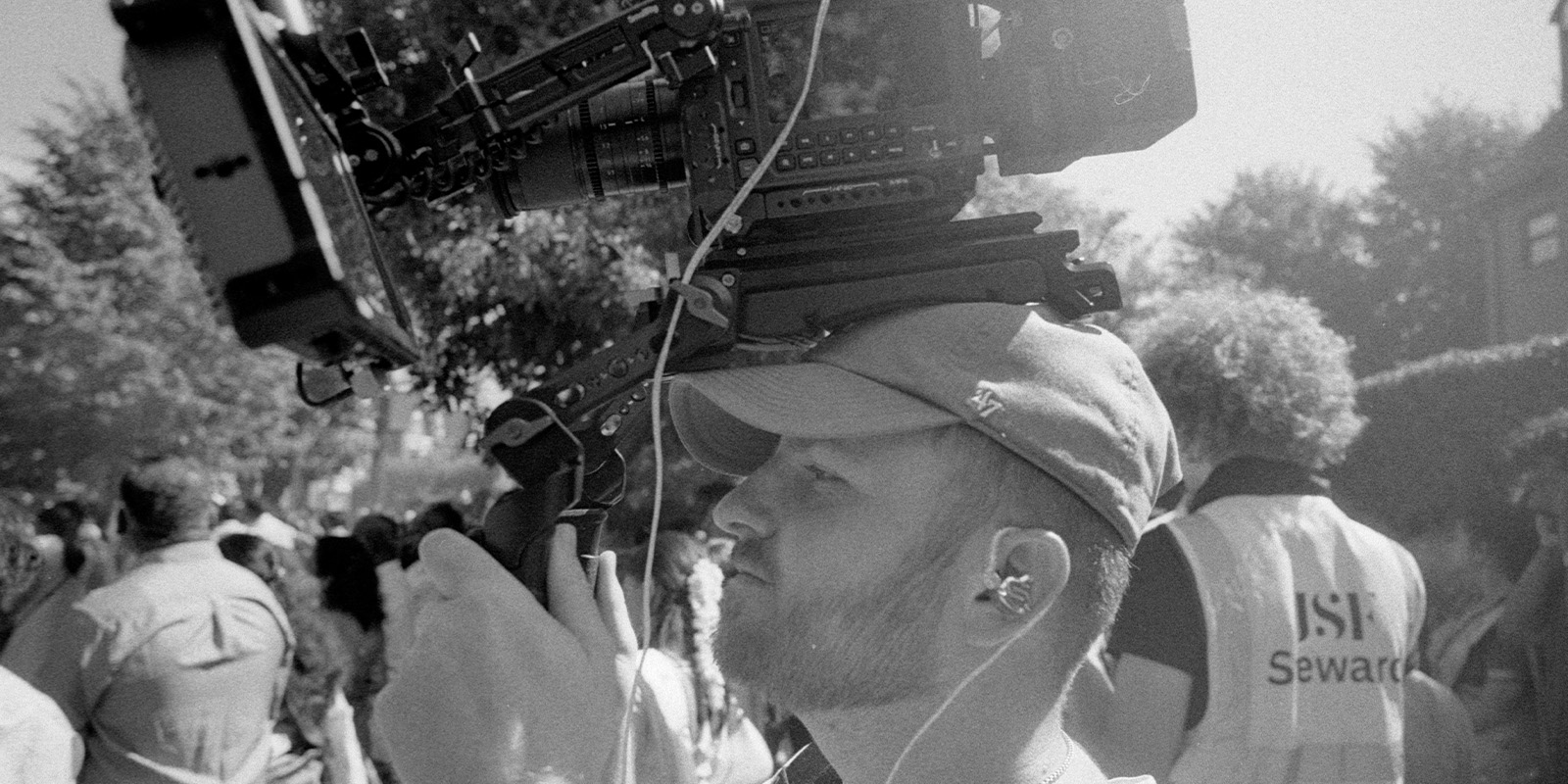
What really gave me the confidence to get started was watching the incredible filmmaker, DP and camera operator Joey Nutkins, as he worked on his own series of short films about photographers, using a shoulder rig PYXIS 6K, sometimes working with a second shooter, fully mission focused and driven.
He made it seem so easy to just set up and work in an environment, really drawing back the curtain for me on this kind of solo production, where my previous filmmaking experience was mostly on sets as a stills photographer and other small roles. I was used to the idea of a crew, and when it came to documentary settings I’d never really considered the value of how much could be achieved through these intricate gear setups in the right hands.
I owned a GoPro which I’d used for more of a personal diary of moments, nothing narrative outside some experimental blogs, including a 50ish minute journal of time living at a very special Buddhist monastery in Milton Keynes, a story I may return to eventually with my new approach! I didn’t feel I could make a film with a GoPro in the way I wanted, nor my phone, which I dislike using for creation. I like a dedicated machine that fits one purpose and doesn’t distract from that.
The GoPro is a point-and-shoot, a single-button operation designed for convenience over control. There’s no optical zoom, no direct manual exposure adjustments, and the fixed wide-angle lens forces a singular perspective that doesn’t allow for the compression or isolation I wanted when speaking with my interview subjects, or observing from a distance.
On the other side of the gear spectrum, I wasn’t drawn to something like a PYXIS or FX6, even though they are all absolutely marvellous machines, nor something SLR-styled like the FX3 or Nikon ZR, which feel a bit awkward for holding in position for long takes without a rig, which then makes it that much less portable for a daily carry. These are incredible tools, but they require commitment, a bag of batteries, a cage, external monitors, cables snaking everywhere. They’re not something I can wear on a strap as a daily carry and forget about until the moment arrives.
I needed something portable, that I could use alongside my main photography camera without getting in the way, that I could quickly use and grab shots, and use for interviews without being too intimidating or needing too much doing moment to moment to operate.
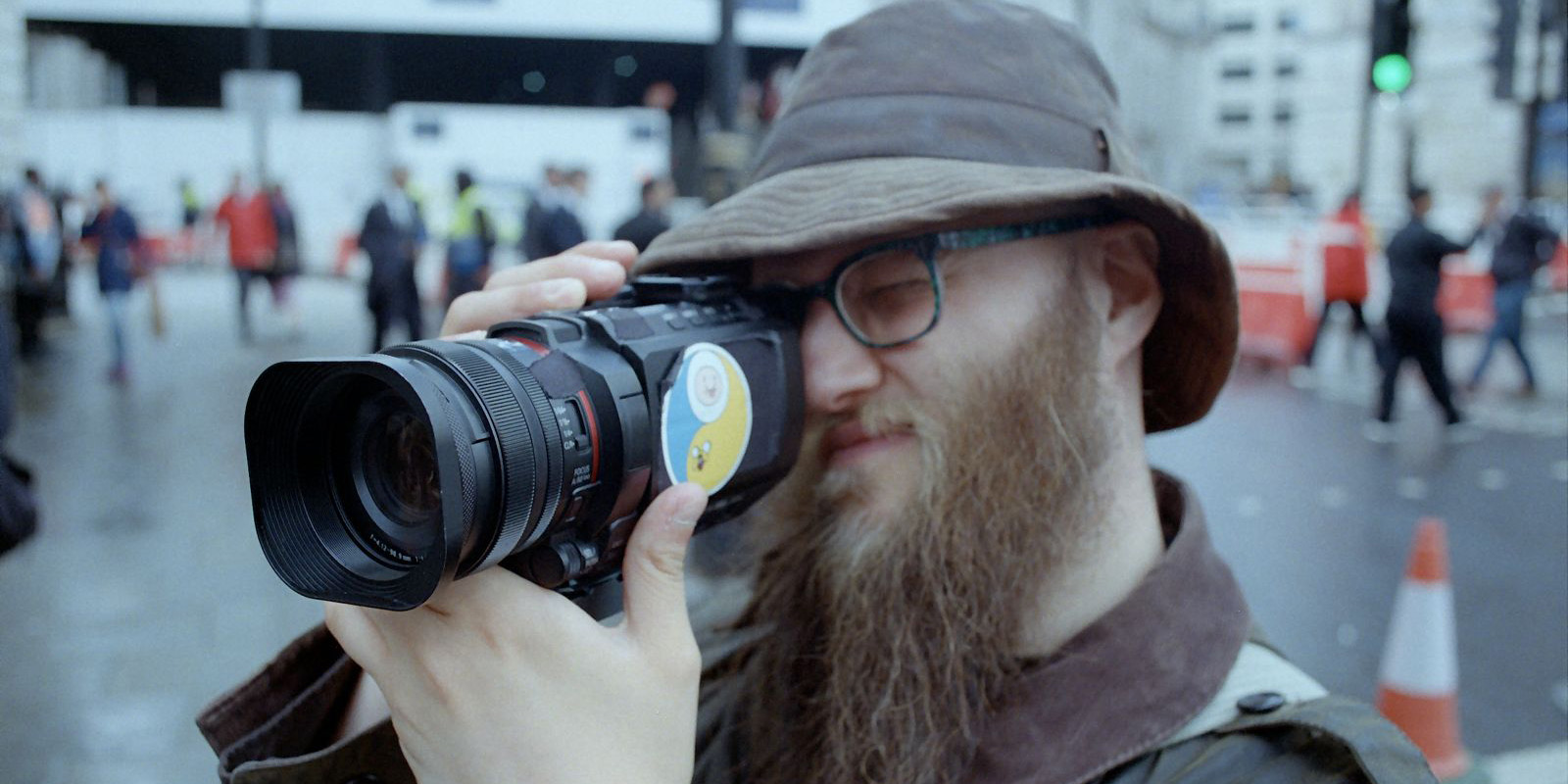
So, in between the point-and-shoot simplicity of a GoPro and the involved professional rig, I found what I in hindsight believe to be an incredibly underestimated option: the camcorder. Specifically the Panasonic X1600E, with an approximately Super 8-sized sensor, 25-600mm equivalent lens, and all of the controls that would allow me to achieve the shots I was after, a built in mic port for plugging in my DJI wireless lav mics, and some handy threads for adding options like handles, Arca baseplates for a strap, and other accessories. The battery is huge, and has lasted me four hours of fairly continuous shooting across a project I worked on while learning how to use it.
I was able to easily wear the camcorder by base-mounted strap, hanging by my side next to my bag as an everyday carry, something I wouldn’t consider an option with the bulkier fully rigged cine cameras, even the smaller ones, as there are too many bits and wires floating around to get caught on things. The camcorder is all in one, with accessories in my pocket to be easily added as needed.
Nothing but natural light
At no point in the entire production here was a lighting setup used. Everything you see in the film is lit by what was available at the time: sunlight, shade, reflections from a window, the diffused overcast grey of a London afternoon. This is how I work normally with my documentary photography; you’ll almost never see me with a flash except in the depths of winter. This was also practical rather than stylistic, as I was moving constantly, often following subjects or responding to spontaneous availability to interview. Carrying a lighting kit would have been antithetical to the entire ethos of the project, which was built on being both ready and unobtrusive.
I shot the vast majority at 24fps with a shutter angle of 1/48th, maintaining standard cinematic motion even when operating outside of traditional filmmaking environments. My exposure strategy was deliberately simple: I kept the camera’s gain at its lowest native setting to minimise noise and preserve dynamic range, and for the majority of the shoot I left the aperture in automatic, allowing the camera to react to changing light conditions faster than I could manually adjust.
This allowed me to prioritise getting the shot over perfecting exposure. Where I needed a specific look, pulling the background into darkness, or letting highlights bloom, I switched to manual and took control, but those moments were the exception, as I wanted to mostly engage with my subject and keep good eye contact rather than being involved in the operation of the camera.
Working this way, I appreciate the X1600E’s automatic exposure and focus where I know I would have struggled with my alternative, adapting my manual lenses onto (probably) a Nikon ZR. There were occasional mistakes, or times I took the exposure on screen for granted, but I am used to working with my mistakes rather than against them, and I see these aesthetic imperfections simply as textures and moods I hadn’t anticipated. The harsh contrast of London summer light, the way it falls across faces in the street, the hard shadows that carve out compositions, these became part of the film’s visual language precisely because I didn’t try to correct them with a fill light or a bounce. Just let the city light the city.
The sensor size of the X1600E, roughly equivalent to the surface area of Super 8mm film, means that even at the widest aperture, f/1.8, it handles light with a depth of field akin to f/11 on full-frame sensor. This is often seen as a limitation, and in certain contexts it is. You cannot achieve the shallow, dreamy backgrounds that have become somewhat synonymous with “cinematic” imagery.
This actually aligns perfectly with my practice as a stills photographer. I rarely shoot wide open, I prefer my 28mm or 35mm lenses at f/8 or f/11, which allows me to zone focus and encourages me to think about the relationship between elements in the frame rather than the crutch of simply isolating a single subject. The X1600E forced me to apply that same discipline to motion, where every background detail had to be considered.
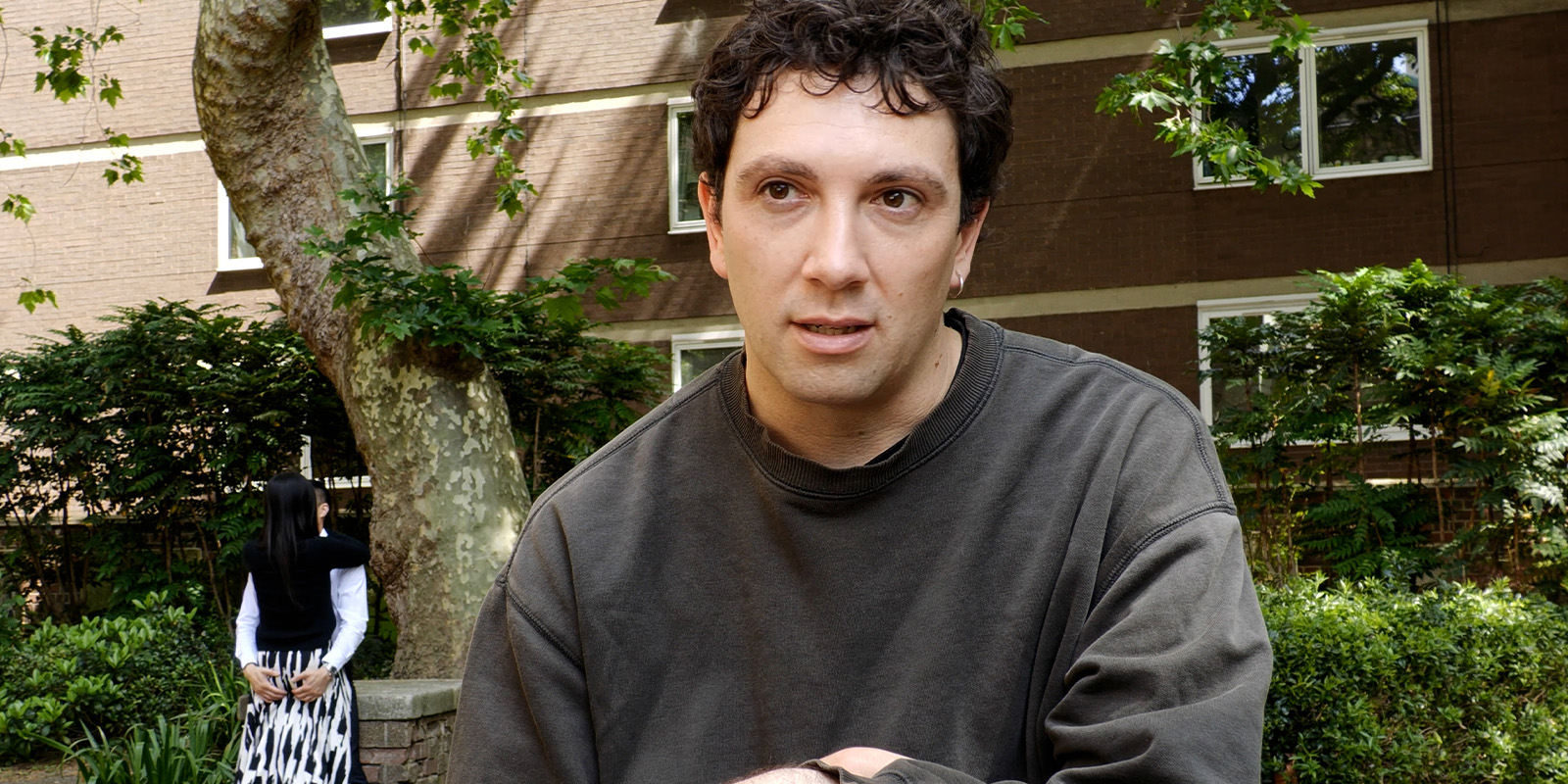
One standout frame in particular was from my interview with Elliott Gunn, as in the background as he spoke a couple were kissing one another for quite a while, almost the entire duration of Gunn’s remarks. A proper “street photography moment” – entirely spontaneous, undirected, and a very entertaining and funny outcome. If I’d shot this with a shallow depth of field, this would have been lost.
On the longer end of the range, for B-roll, detail and distance shots, I was working with a much thinner depth of field, which gave me the ability to track a subject through a crowd or highlight a specific detail against a busy backdrop. The extreme zoom meant I was never changing lenses or thinking about my options, I could just set the frame to what looked good, and then during interviews I could quickly change the perspective, moving through the focal options as my interviewee paused between thoughts, which meant I could bring together what felt like a multi-cam setup in the edit.
Stolen shots
Practicing with this setup I found myself leaning into the language of “stolen shots”, especially when using the longer end of the zoom range. The early filmography of the Safdie brothers was a significant visual inspiration, and I also looked at other camcorder or adjacent styled work, including Inland Empire by David Lynch, John Wilson’s sublime observational narrative works, Harmony Korine, and all sorts of TV shows which use these small sensor format ENG/broadcast style cameras to deliver their narratives.
A lot of my sequences and shots were in line with classic street photography approaches, and I leaned into that observational, fly-on-the-wall aesthetic, letting the camera wander wherever it felt right to go. In a couple of moments I even moved focus away from my actual subject to follow some cute dogs that passed by.
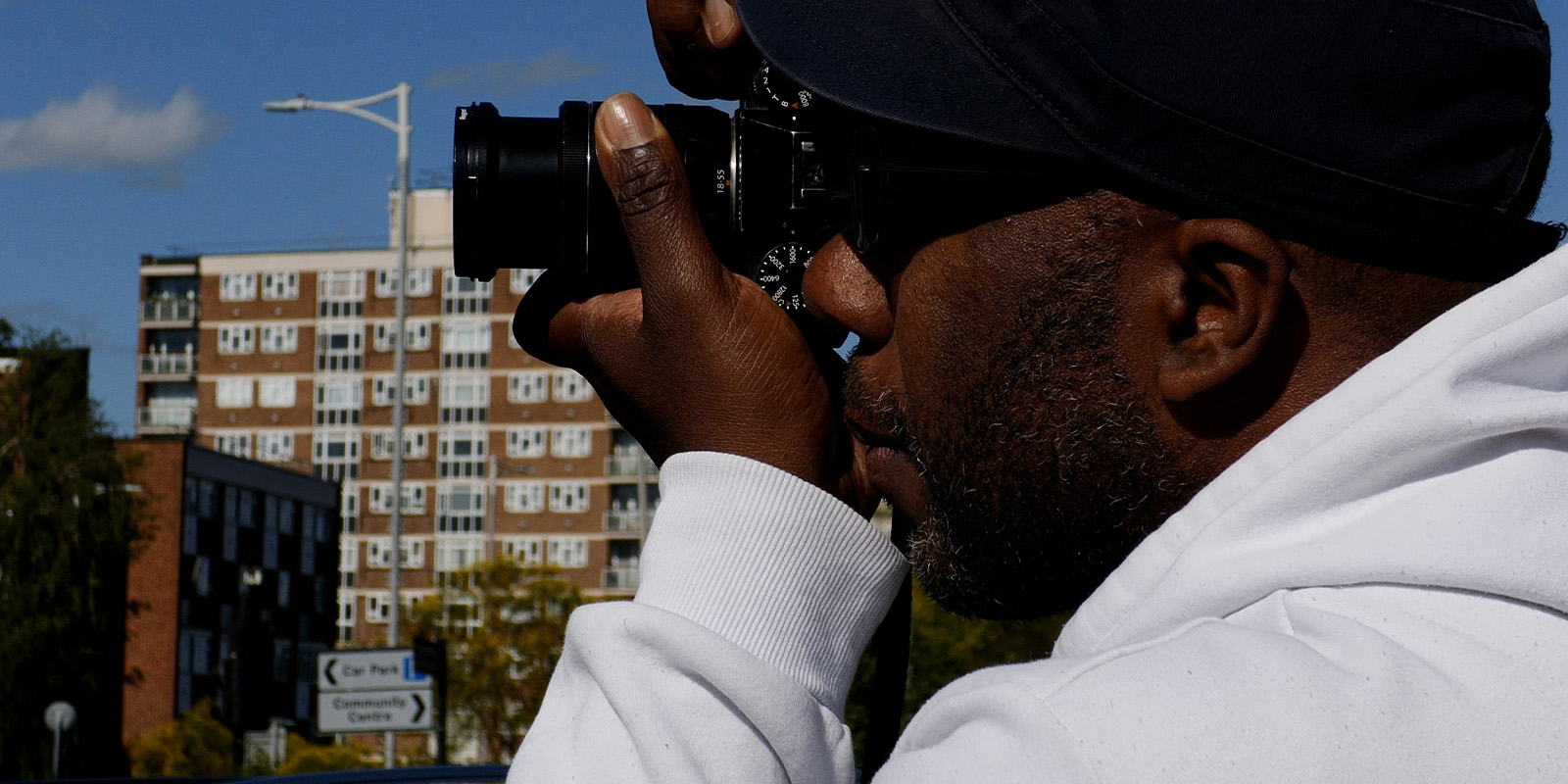
I think the narrative format overall, talking head interview with illustrative B-roll, is quite basic and overdone, if only because it’s such a straightforward way to put together a flow of information. I tried to mix things up a bit with some interviews done while walking, and a few really great moments arose from this, from some interactions that played out in front of the lens and really helped bring that improv, reactionary energy of the streets into the film.
The film as a whole represents my learning process as I put it together, and I think you can tell the difference between the parts I made early on in the process, and some of the final moments and finishing touches.
The interviews were mostly spontaneous, as and when people were free, so I needed to be ready to mic them up, help them articulate their thoughts, and make sure it felt right on camera. The hurry behind this is tangible in the film, although I don’t think any of it feels truly “rushed”.
Sound judgement
I was using the very capable DJI Mic Mini setup, plugged directly into the on-camera 3.5mm port, but because a lot was filmed during the arduous summer heatwaves I wasn’t able to easily hide these on people’s clothing, as it was mostly single layer or loose fit. Unfortunately this means that the mic is often on show, which is what most takes me out of the final visuals.
It feels very clumsy and amateur, and was not a creative choice, or in hopes of some kind of vérité aesthetic. It was a compromise forced by circumstance; I knew that a visible lav was better than potentially unusable sound (which turned out less than ideal due to other factors anyway). Watching it back, I feel the weight of that decision. It is definitely the mark of someone still finding their feet, someone without the toolkit of solutions that allow them to avoid these outcomes entirely.
Any compromise will feel bad compared to the vision of how things might have been done differently. At the end of the day, it got me the footage and synchronised audio, and that’s what matters. The film exists because I made those flawed choices, along with many others. If I had waited until the weather cooled, or until I had a more sophisticated recording solution, or a better understanding of various techniques, I might still be waiting.
Shortcuts and rough compromises made for a lot of my decisions across the few months I spent filming these interviews, and followed me into the editing process, which got easier as I went on, and I eventually reached a level I was comfortable with, and I really recognise how much of that is necessary in order to bring this thing into existence.
These imperfections, all of the scaffolding holding this thing together, are really obvious to me, and I’m sure will be to a viewer with any kind of production experience or knowledge. I just have to accept that, and value that I now have the knowledge of how to prevent them from happening in the future. If I was a perfectionist I might look into reshoots and corrections, but I think this would destroy me mentally in a way, rather than letting it be and moving on to whatever I work on next, armed with all of those hard learned lessons and regrets.
Everything Happens All the Time will be available to stream on YouTube and Dailymotion from 17 September.