
SHOOTING WITH CLARITY
Tackling a challenging subject matter, Gentle Monster required an objective, compassionate visual language from its cinematographer, Judith Kaufmann BVK.
Marie Kreutzer, the director, and I had already worked together on Corsage, and she asked me whether we wanted to continue our collaboration on Gentle Monster.
In 2023, two years before filming began, I read the first draft, and I was immediately captivated by this harsh, dark story and the way it is told. Most films approach the subject either from the perspective of the victims or the perpetrators. Gentle Monster chooses a rare point of view: that of the partner — the perspective of the relatives, the side of society that does not know how to deal with it. The looking away. The shame. I was interested in the many disturbing questions the film raises. And of course, I was also eager to work with Marie again.
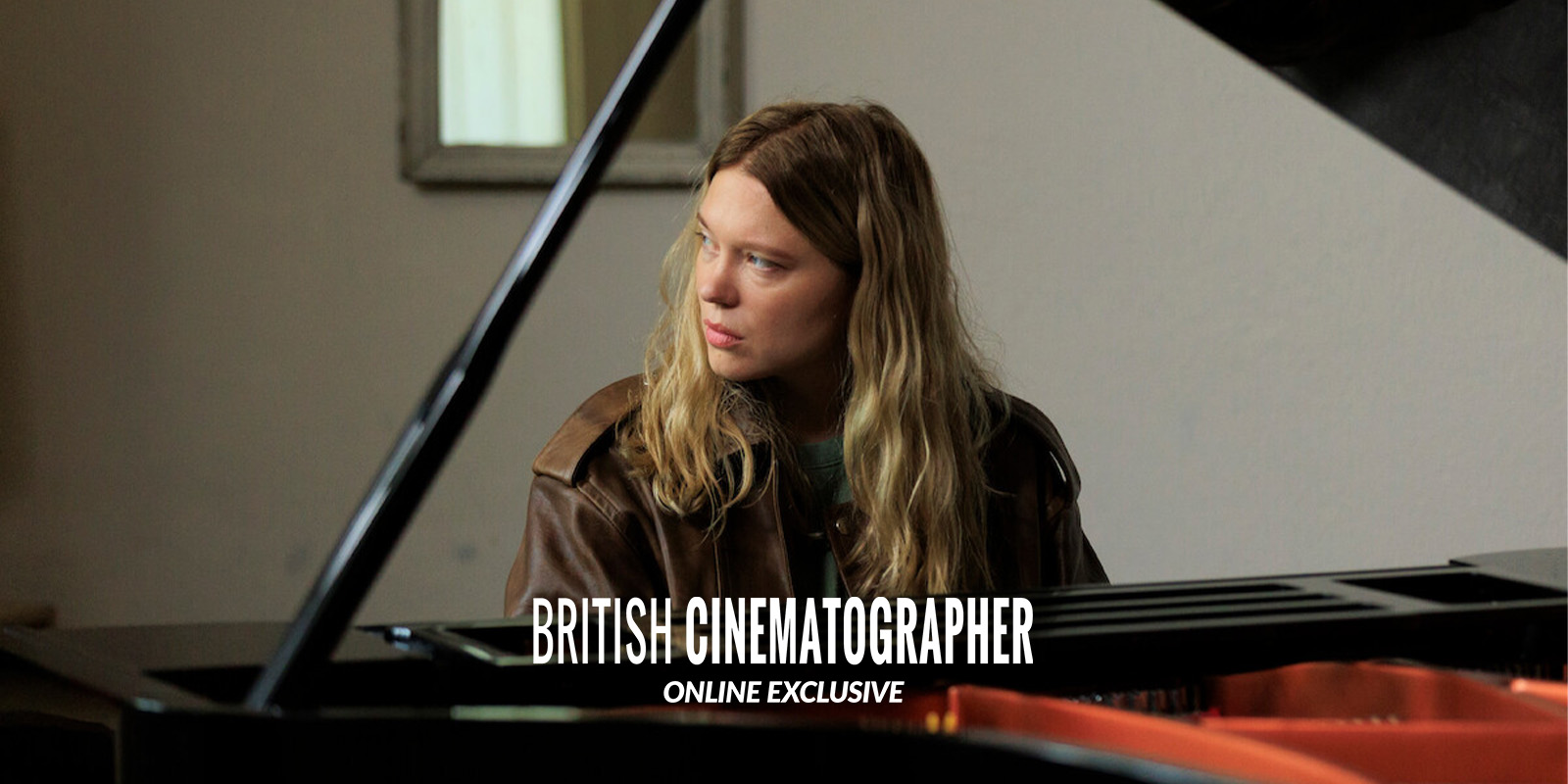
Precisely because the subject matter is so complex and difficult, we wanted to try to tell the story with the greatest possible clarity and without prejudice: a restrained visual approach with long, static takes. We wanted to stay close to Lucy, but we did not want to dramatise, to force emotions, or to pass moral judgment through the camera.
One of our first considerations was: How can this film be told without reproducing those images, without imposing a paedophilic gaze on the audience? We decided to portray the child as objectively as possible. To resist the impulse to show how incredibly cute and funny he is, but instead to step back and observe him soberly, simply to say: he is just there. Johnny lives what appears to be a carefree childhood, but the story is not about him as a character, and we do not look at him in a way that could arouse suspicion. It was also completely clear that we would not show any of the horrific images that the police are actually confronted with in their work.
Another visual idea was that, from a certain point onward, Lucy and Philip would no longer appear together in the same frame, and that we would also avoid over-shoulder compositions.
During the preparation process, Marie develops a director’s book in which she collects moods, images, associations and thoughts for every single scene. We talk about these extensively, and of course I also gather references myself: images and film sequences that I find inspiring in terms of scene composition, lighting, framing or editing. I then share these with her.
Music is also a major source of inspiration, and both the actors and the closest collaborators receive Marie’s playlists long before shooting begins — that too opens up the imagination. Because we were aiming for simplicity and clarity in the visual language, I revisited the films of Cristian Mungiu and Andrey Zvyagintsev, directors whose work I admire deeply — and who, interestingly enough, have also won the top prizes in Cannes this year. An early black-and-white film by Payal Kapadia was also inspiring, as were films by Justine Triet and Audrey Diwan.
Two strands, one vision
We did not want to consciously distinguish the two narrative strands — Lucy’s and Elsa Kühn’s, the investigator’s — visually. But their personalities — and the worlds they live in — are very different. Lucy is open, highly emotional, and facing an enormous struggle. We experience everything through Lucy’s eyes: her confusion, her slowly emerging fear, and her growing panic. To convey her inner turmoil and capture how deeply unsettled she is, we often worked with handheld camera
Elsa, on the other hand, is more grounded, very calm, and highly focused. She tries to keep both her career and her private life under control with the same sense of pragmatism. She collects facts and tries to maintain a clear, analytical perspective. Here the camera is more static and stays matter-of-fact.
A contemporary film seems to me, in some ways, just as demanding as a historical one, because everyone knows this world and this era. Portraying it authentically so that everything feels natural can sometimes even be more difficult than with a period piece, where you can invent and shape things more freely. We wanted it to feel as though the story could happen to our friends or neighbours.
A year before shooting began, Myrna Wolff (production designer) started searching for our main location: the old house with the garden. Marie’s screenplays are very visual, and the spatial layout of the locations is often already an essential part of the storytelling. That can make the location search difficult at times. For me, the concrete preparations began about six months before filming started.
The most complicated aspect of the location search was the subject matter itself — because the question was how and when to communicate it to the property owners, with the constant risk that they might then withdraw their agreement. Another challenge was finding the right house. This is where the film begins. It was meant to be a world one longs for — a house in the countryside, with space and light. Warmth was important to us here, a sense of safety and comfort. It needed to have old architectural features (windows, floors, walls) and a wild garden. It should convey a feeling of freedom, while also remaining believable that this young couple with a child could actually afford it. It had to be usable both inside and outside, and situated within an unremarkable, “typically German” town.
We searched for a long time and eventually found a house in Lower Austria that was exactly in that condition. It was up for sale because a young couple had moved in there and separated during the renovation process — a trajectory that, in a strange way, mirrored our own story. As a result, we were able to make use of and incorporate much of what this house offered spatially and atmospherically.
This supposedly idyllic world, which is quickly destroyed again in the film, was intended to stand in strong contrast to the world of the police. The layout of the rooms and buildings was meant to embody the greatest possible sobriety: white walls, small rooms, the dry and pragmatic nature of investigative work. A functional place, but not unfriendly or alienating.
Other major challenges included the many scenes with the child and the piano scenes with an actress who cannot actually play the piano. The music scenes were technically extremely demanding. For all of us, this was uncharted territory — music that was supposed to feel live on screen. These large concert sequences with many extras almost felt like a parallel production of their own.
Mobile camerawork
Especially when working with a child and with a director who does not rehearse, it is important to be very mobile and flexible with the camera. That is why I chose Leica Summilux C prime lenses — on the one hand because they are quite sharp and have a T1.4 aperture, which helped me reduce lighting requirements when shooting on 35mm. The lenses are also small and lightweight, making them well suited for handheld camera work.
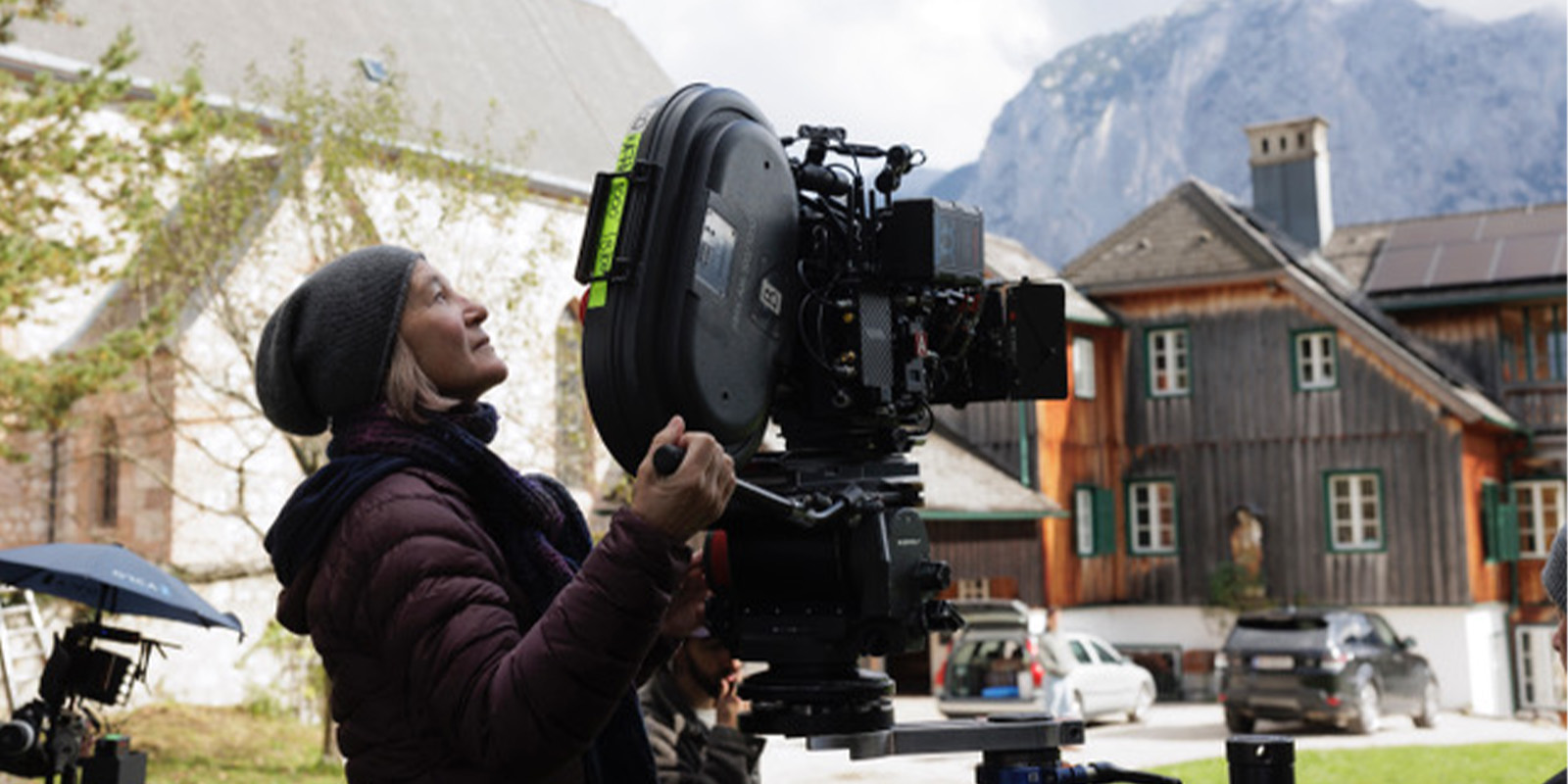
We had 40 shooting days in total: 13 in Austria and 27 in Germany. We mainly shot with a single camera (Arricam LT S35 3-perf). The footage shot by Philip within the film was captured on a 16mm Bolex using DOUBLE XX daylight spools. On a few individual days, we used Steadicam and a second camera.
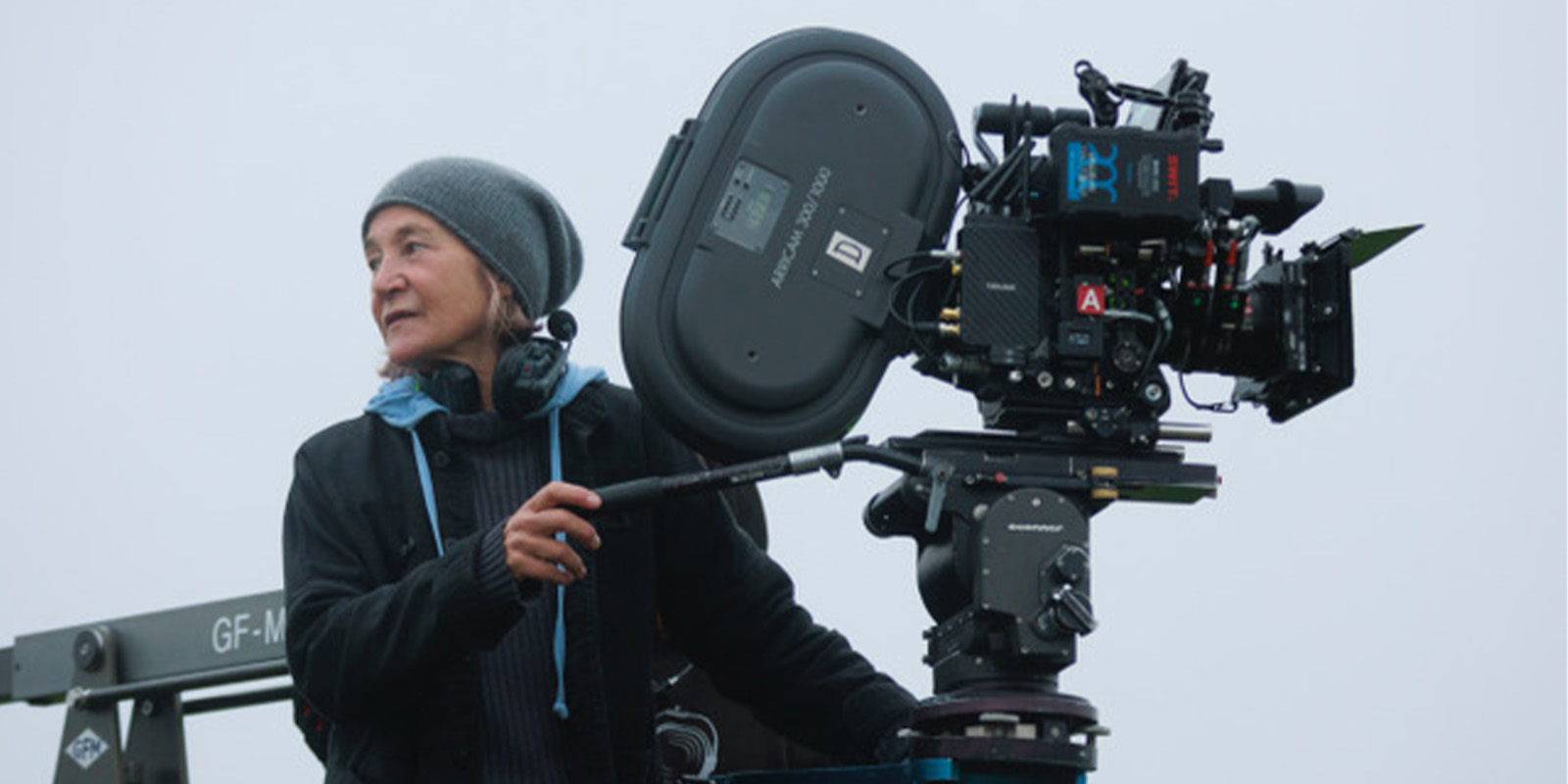
Marie has shot all of her feature films on film so far. Shooting on film requires the director to be aware of what that actually means: fewer takes, a less brilliant video playback, no live result/quality check, changing magazines, no on-set focus pull feedback, not daily rushes… Working with film is a different kind of challenge — the lower sensitivity of the material means you need more light, everything takes longer. The camera is large and heavy compared to digital systems. But Marie is fully aware of these conditions, and we both love shooting on film. There is a certain excitement that comes with the unpredictability of film, with its known risks: hairs in the gate, softness, or underexposure. I would say it makes everyone work more attentively.
I chose KODAK 500T (5219) and KODAK 200T (5213). I had already tested both extensively on Corsage and really like their softness and grain. And of course, the organic nature of film stock gives you greater colour depth and beautiful skin tones. The very wide exposure latitude in the highlights is simply something I don’t find in digital.
The negative was sent daily by courier to the lab in Berlin, ANDEC. There it was scanned and output as ProRes 4444 HD, and made available to the production for the on-set dailies grade via download. Together with the colourist (Christian Kuss), I graded the material each evening after shooting wrapped, and it was then available on the dailies platform with a delay of two to three days.
Controlling light
Long before filming began, my excellent gaffer (Christoph Nickel) and I spent a great deal of time thinking about how we wanted to light the film. We were working with a number of specific constraints: all of our locations were real/on set locations; we did not shoot in a studio. Many of the interior scenes were also directly connected to exterior spaces. This meant that when lighting the interiors, we always had to take into account the lighting conditions under which we would be shooting the exterior scenes. Our main location in particular posed a major challenge: the old house in the middle of an overgrown garden. Since Marie wanted to shoot chronologically (and not film all exterior scenes first), we had to design the interior lighting in a way that would not destroy the garden.
We positioned Condors and cherry pickers with very long reach on neighboring properties, allowing us to access the windows from outside our own garden. For sunny scenes, we equipped them with motorized 18K HMI fixtures; for overcast moods, we used large diffusions with Ultra Bounce or grids. This allowed us to switch quickly between interior and exterior setups without long reset times.
Another special aspect was Marie’s way of working with the actors: she does not do blocking rehearsals, which often meant we did not know how the performers would move through the space. Nevertheless, we wanted to create high-contrast images and keep parts of the rooms in darkness. This was particularly challenging in evening and night scenes. For this reason, we relied heavily on practical lighting and worked closely with our wonderful production design department to find suitable lamps.
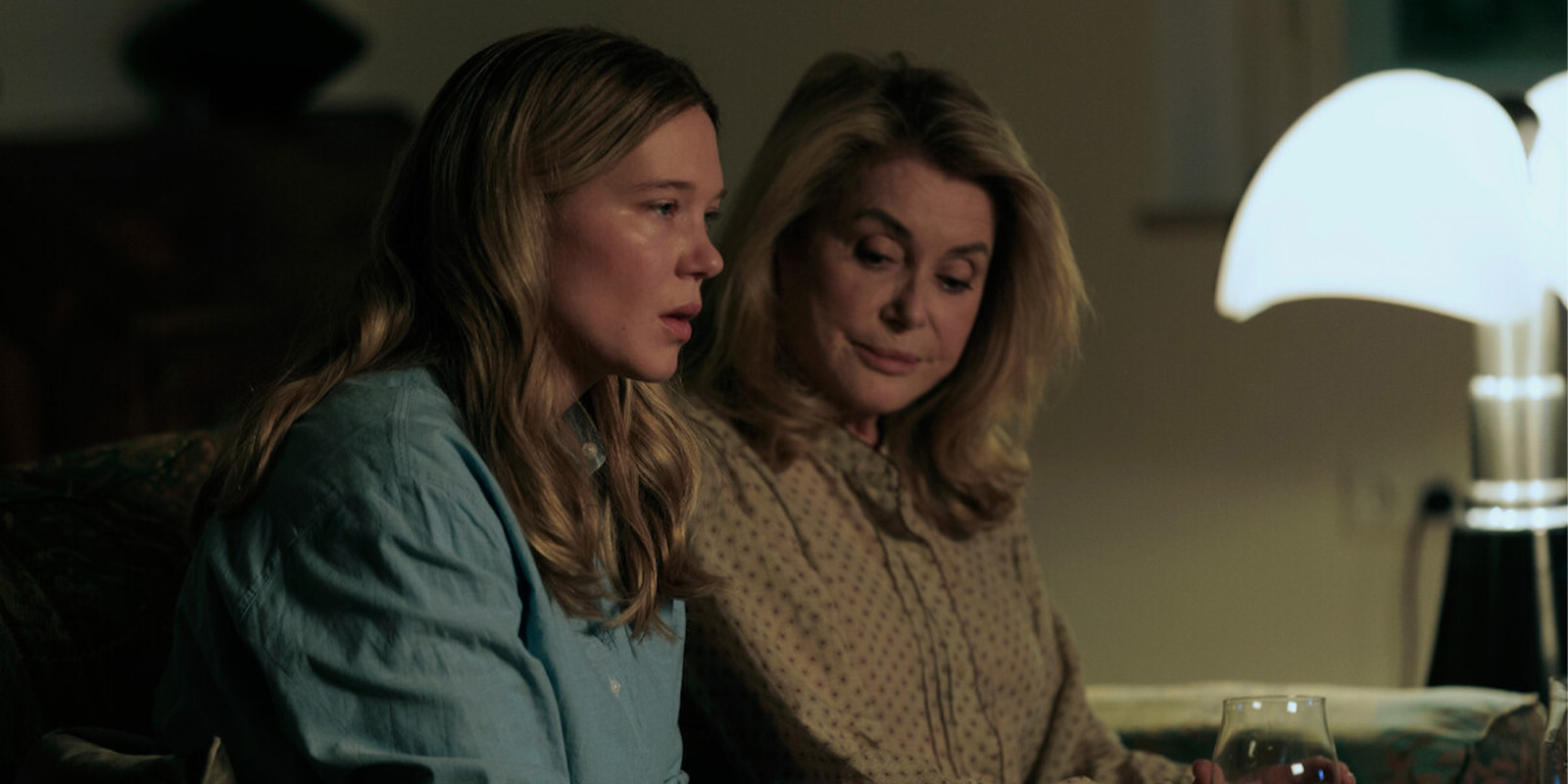
On the other hand, we installed many LED fixtures — both hard and soft sources — in hidden positions on set or mounted on ceilings. My gaffer then used the Blackout app to fine-tune the lighting during and between takes.
To maintain this level of control, we worked whenever possible with wireless, colour-temperature-variable LED fixtures: large hard sources from Nanlux and Aputure, Fresnels from Fiilex and Astera, as well as soft sources such as Vortex, Kino Flo Freestyle Air, and Astera lights. RodLight-X4 units in various lengths also proved extremely useful; we used them to shape fill and contrast, or — installed above windows — to increase the amount of daylight in the interiors.
Focusing on realism
It was my first collaboration with the wonderful production designer Myrna Wolff. From the outset, it was clear to us that, given the subject matter of this film, any overly stylised visual approach would be inappropriate. In a sense, the film is about facts rather than fiction or theory — it is our world, and events like these take place within it. Our focus was therefore on realism and on avoiding a visual concept that would inevitably lead to a fixed “look”. This also applied to the colour palette; our general approach was to avoid preconceived ideas and instead question familiar patterns of design that filmmakers are taught and audiences have come to expect — such as patinating or painting walls, installing multiple layers of curtains, or using an excessive number of slightly implausible practicals or decorative images, and so on.
At the same time, it was clear that colour is a natural part of an authentic world. I believe it becomes infinitely more unsettling when this subject is placed within a world that also contains intense, rich, and sensual colours — the lush green of nature or the bright yellow of the house. A complex colour concept that nevertheless never loses sight of the pure, the unadorned, and the unembellished.
The colour worlds of the different locations are not far apart, but can still be individually identified: Lucy’s spaces tend toward the warmer end of the spectrum — the terracotta of the city apartment, the wooden surfaces of the concert hall, the yellow of the house. Inside, slightly yellowed window and door frames, the warm tone of the old wooden floor — otherwise very bright, clean, and untouched, as an expression of a new beginning, a blank slate. Her mother Eloise is close to this, with a very subtle hint of blue in the violet range — a kind of bridge to the world of Philipp’s parents, where we move more strongly into the bluish spectrum, starting from the water of the lake.
The police station where we see Elsa working, by contrast, is very clear and predominantly white, with the strong turquoise of the floor also setting a colour accent.
I like the scene when the police arrive, at minute 14 of the film. It is particularly interesting in terms of how we shot it, as it reflects Marie’s working method. It is the first encounter of the three main characters together — both within the story and within the shooting schedule. For two of the three characters, it is a life-changing moment, which can put a lot of pressure on the actors. On top of that came the excitement of working with a star such as Léa Seydoux.
Marie wanted to use of this real nervousness among the actors before this major scene, and therefore decided that the two worlds — the couple on one side and the police on the other — should only meet for the first time in front of the rolling camera. The actors playing the police were trained by real police officers so they would know exactly how to behave during such an operation, but, just like in real life, they did not know the location in advance.
All actors were housed separately and were not allowed to meet each other in makeup or costume. The scene was shot with two cameras and only interrupted when the action moved to another floor. Between takes, the actors withdrew entirely on their own; there was no conversation. Between takes or during changes in position, only the absolute essentials were adjusted or rebuilt. The entire crew was in a state of focused tension, and — as a welcome side effect — the scene was shot in an almost breathless speed.