
BUILDING A NEW UNIVERSE
James Oldham explains how a “beautifully bespoke and cost-effective” virtual production pipeline helped to shape the look of TIFF-winning short film Into the Betaverse.
I didn’t expect I would ever write this article. Winning at TIFF wasn’t on my career to-do list, but as with a lot of career-progressing events, it came as a welcome surprise.
Into the Betaverse won Best Animated Short film at TIFF 2026. Produced by Grey Moth and directed by Varun Raman and Tom Hancock, the 14-minute short straddles the world of live action and animation as Gary and his technophobe flatmate Dave take us Into the Betaverse, a virtual realm of infinite possibilities. The film was a labour of love over many years, with extensive pre-production, principal photography in Manchester, and virtual environments that took almost a year after all the animation was finalised.
In a purely digital environment, the question for a cinematographer perhaps ought to be, “What shouldn’t we do?” The choices are limitless. Grounding the tumultuous real world relationship of Gary and Dave inside a virtual world was a key proponent of making this charming comedy work effectively. Whether that be making story-progressing shot choices for a virtual camera, or lighting subjects with invisible sources, the options in virtual cinematography land can be bewildering. Finding the heart and context for scenes remains (as with live action) of the utmost importance.
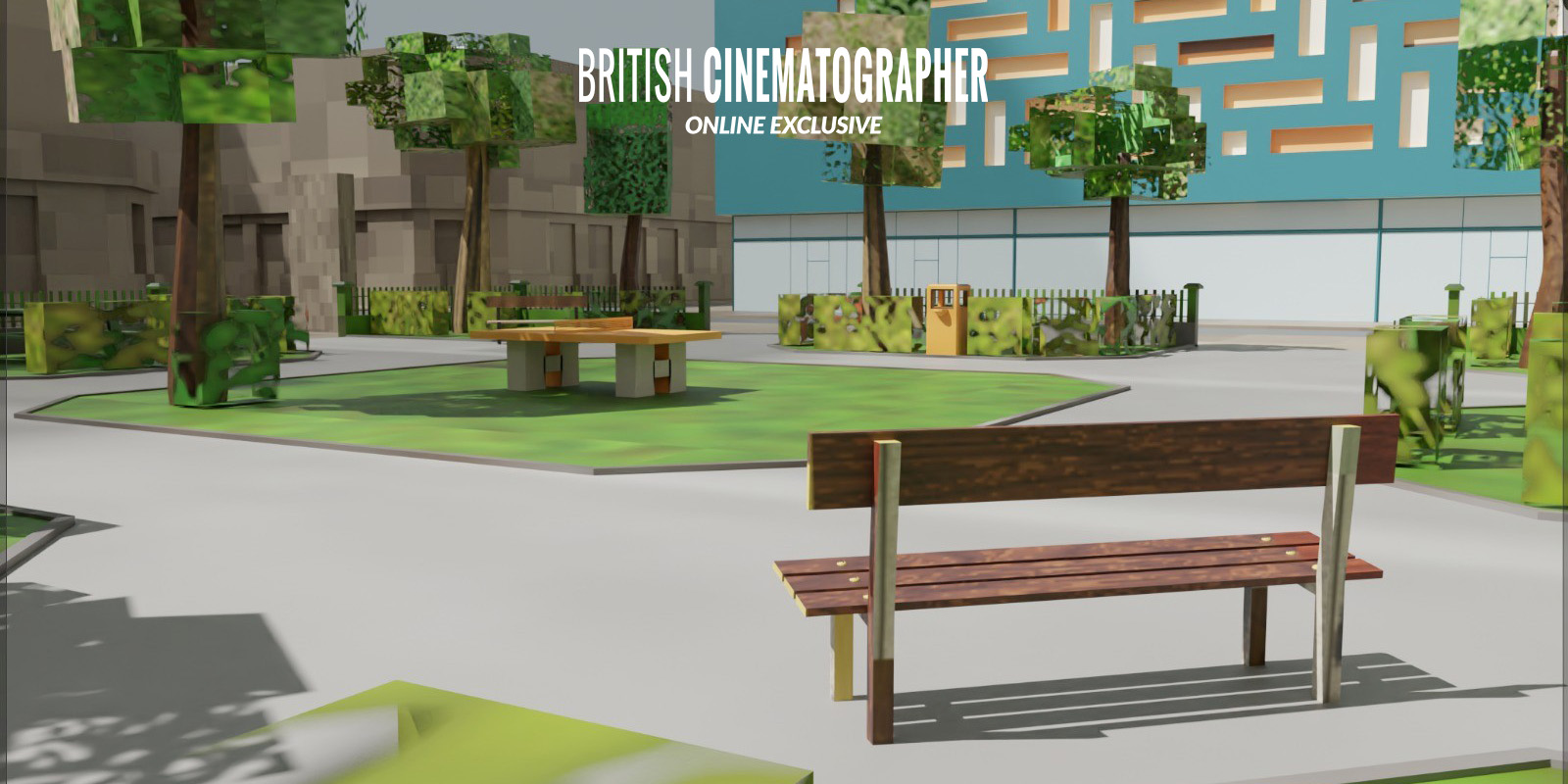
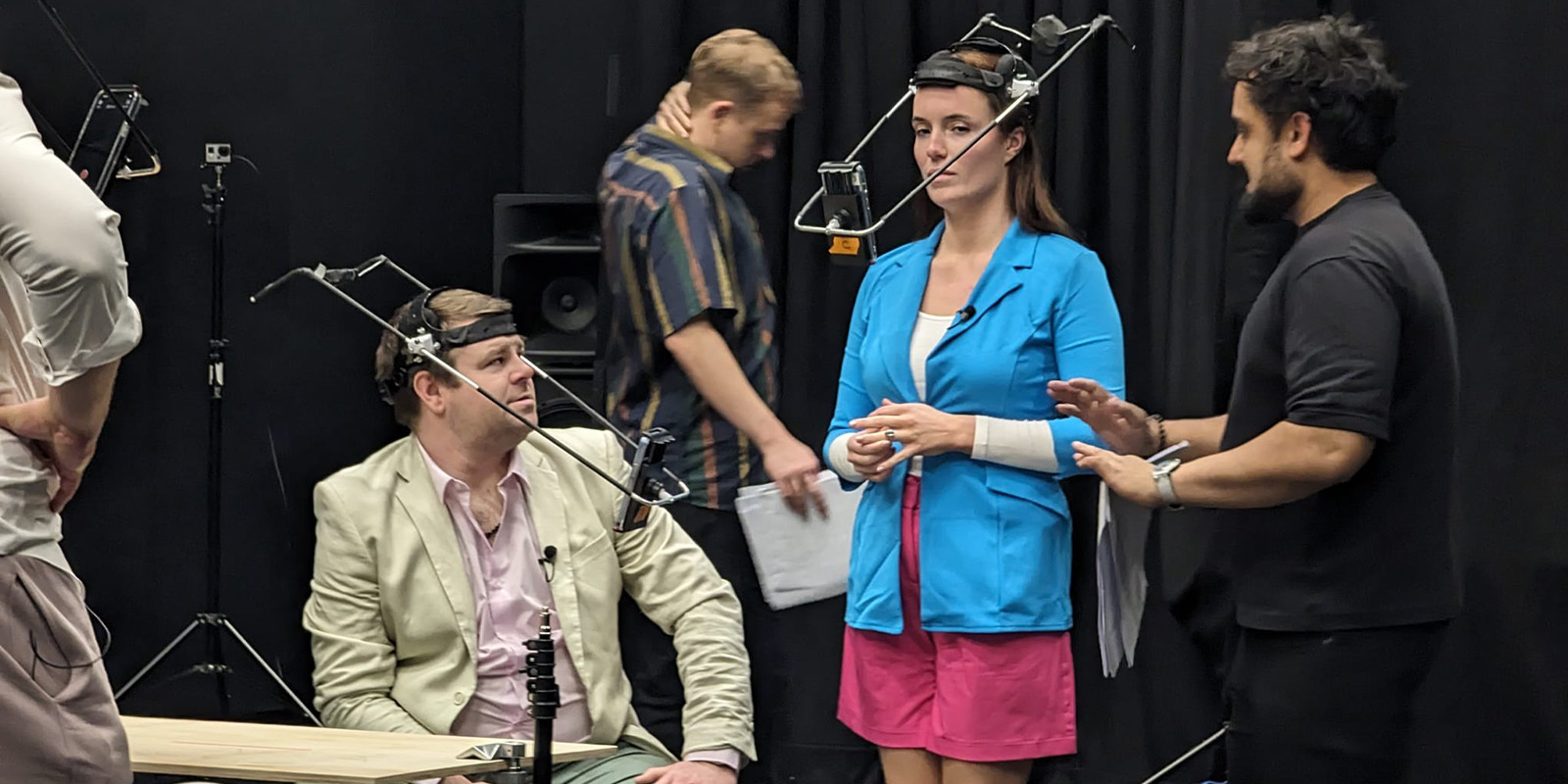
Firstly, I have to give huge credit to the incredible world-building skills of Dan Garden (virtual VFX supervisor) and Charles De La Mare (virtual art director), without whom this process of virtual production would have been impossible. They worked closely to create a beautifully bespoke and cost-effective virtual production pipeline. Performances of the actors were captured in the round at Salford University with over a dozen GoPros to accurately record movement, alongside a helmet cam to capture facial performance data.
This project was so ambitious that it was scary. As with every short, we were short of cash, but full of drive, imagination and determination to see this film to the finish line. Collaborating with Tom and Varun was an absolute dream. Their ideas would always push the boat out a little further, and bring more definition to characters and the world of the ‘Betaverse’. My job was clear: to cement the visual identity of the film with shot and lighting choices that would enhance the storytelling and keep the audience invested. I had great help. Dean Keague was my focus puller and Fran Farrell Oscroft was loader on this film. They were a brilliant team who have been with me before on tiny budget films.
A lot of the lighting in virtual reality, as in live action, is about nailing the time of day. The great advent of building a virtual world is that the lighting is entirely controllable, so we could keep a low sunset feel throughout a whole scene and never have to change. We would sometimes change the time to get the desired sun height throughout the scenes. A favourite thing for me to do with lighting actors was to have an ‘impossible’ soft source, close to the face, whilst actors moved through scenes. In Unreal Engine, these lights can be hidden whilst still emitting light, thereby giving complete flexibility with the look of the light landing on actors.
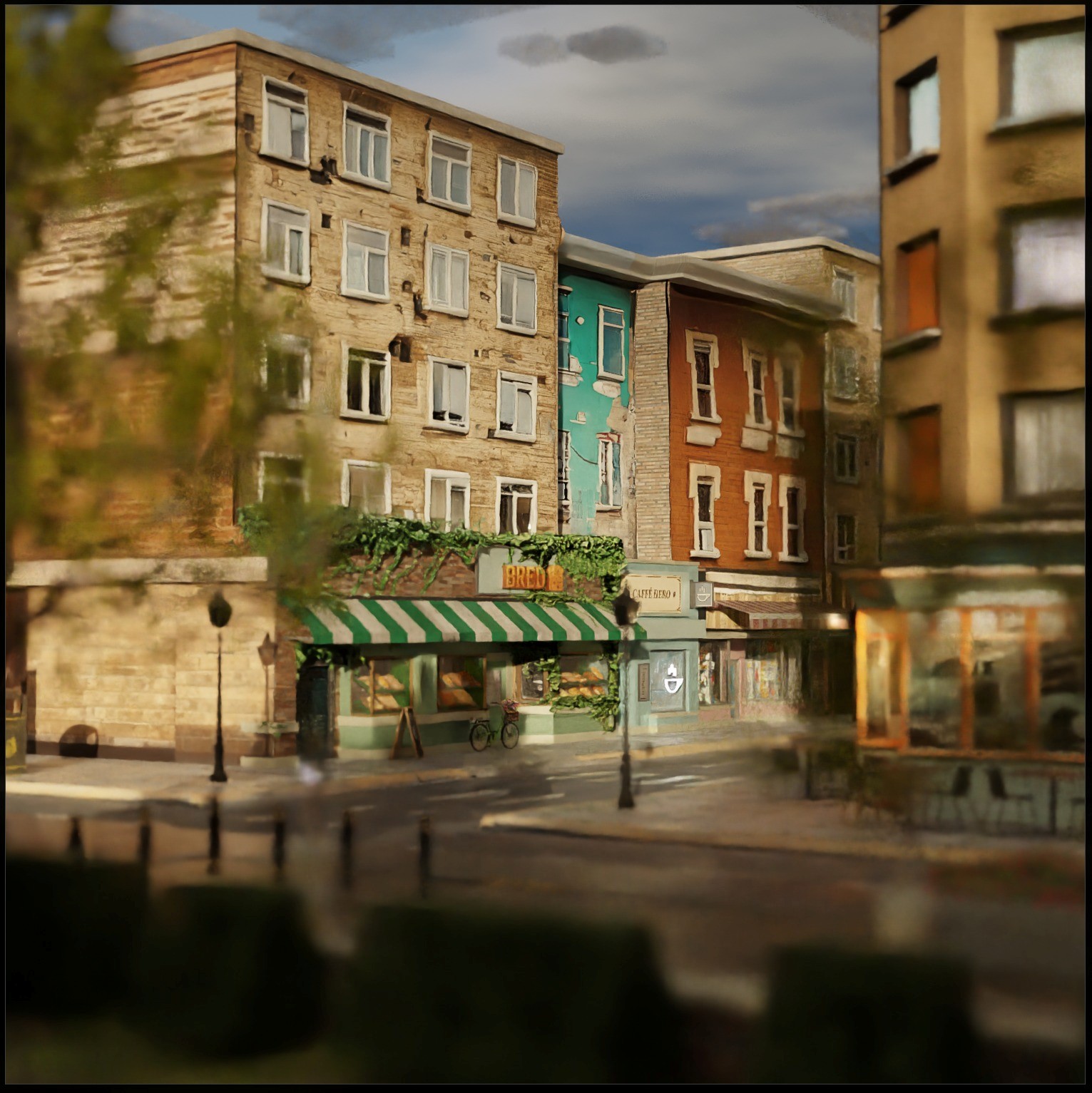
We shot in 1.33:1 for our live action scenes to communicate the isolation felt in the real world, which we then expanded into 1.85:1 for our Betaverse scenes, giving more height to see the world around. As a technophobe, Dave has purchased a ‘janky’ version of the Betaverse, so his animations and world are all slightly wonky, stuttery and defective. Whereas when we show the Betaverse through the eyes of Gary, who never leaves the Betaverse and has made a fortune there, a smooth and polished anamorphic world is presented, with shallow DoF and a widened aspect ratio of 2.35:1 further enhancing and playing into the look of an expensive world, with swooping Technocrane-style camera movements and glistening oval bokeh.
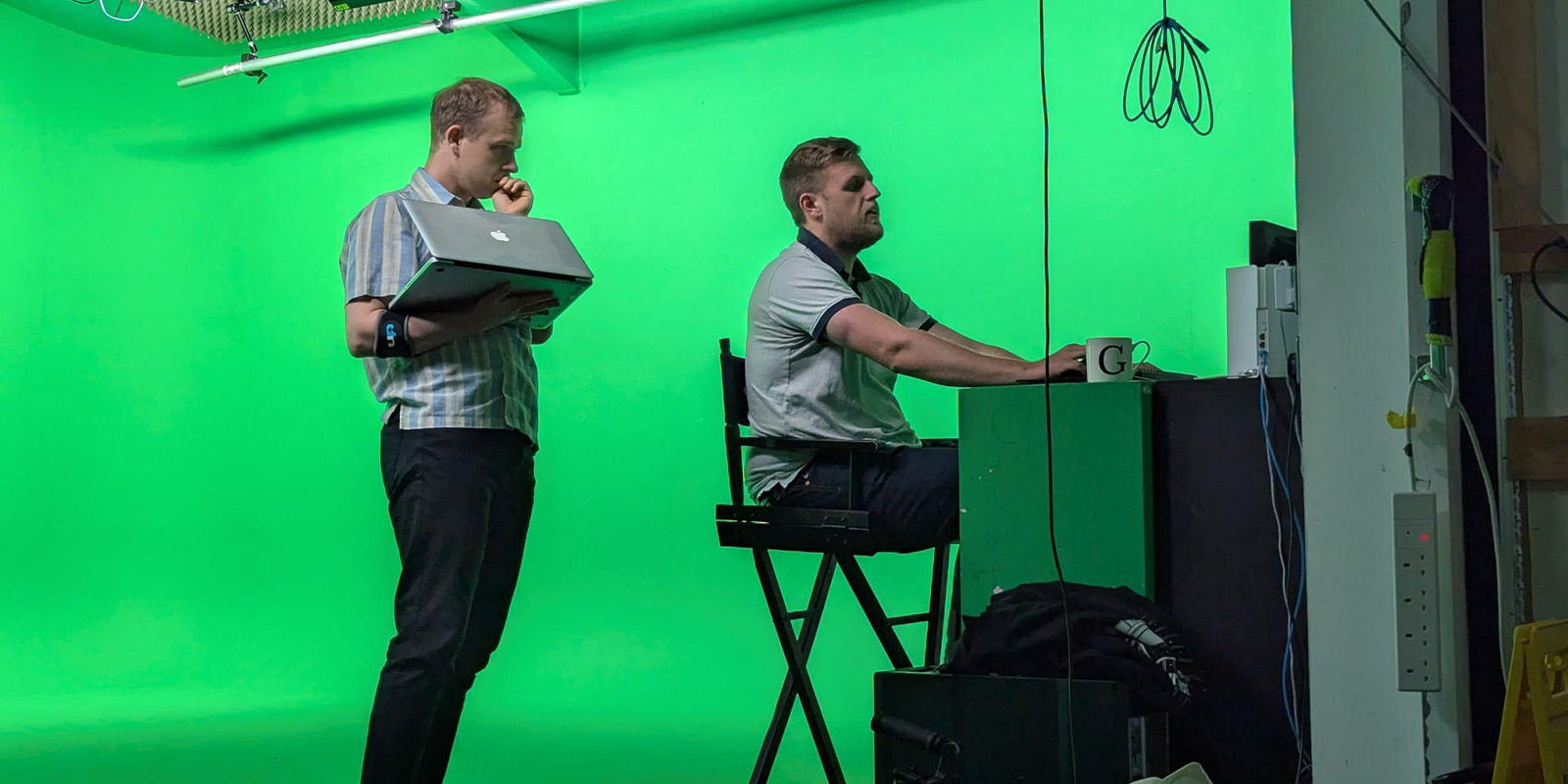
Real-world shots were often grounded with a static camera, making use of zooms and keeping a small footprint, whilst we kept the camera in motion pretty much throughout the virtual world. A year after we shot the film, the team got together and refined lighting and camera angles across three days in Galleon Studios in Rochdale, where we really got into the detail of camera moves and lighting choices. This process gave the film its finished look, especially as Dan Garden, our VFX supervisor, also graded the film. We gave live-action shots a print look in Resolve, adding gate weave and halation, which went a long way to keep the aesthetic as far away from the Betaverse as possible. This gives the film a really strong visual sense of identity throughout.
A huge mix of choices were being made throughout the process to move the story along. The film doesn’t just have one look. Instead, it leverages different aesthetics to push the narrative towards its conclusion throughout the entire 14-minute runtime. The film is a bold refusal to adhere to visual fashion, but instead to return to visual storytelling in a meaningful and original way. It is a defining moment in my career as it won at TIFF this year at its premiere, and I am looking forward to the rest of its festival run.