
SUPER STORYTELLING
Captured entirely on Super 8 celluloid by dozens of filmmakers across the globe, Super Nature explores humanity’s relationship with the natural world in stunning style. Director Ed Sayers explains how he coordinated such a complex shoot.
Since 1999, Ed Sayers has run the straight 8 filmmaking competition, which tasks entrantswith producing a short film on one single roll of Super 8, with no post-production allowed. In the process, he has provided a platform for filmmakers to network, learn from peers and have their films shown at major venues and events like BFI IMAX and at Cannes Film Festival – boosting their profile and standing in the industry. Yet Sayers talks of the initiative as mutually supportive, the platform inspiring the community and the community inspiring each other and the straight 8 team itself. So it proved six years ago, as one filmmaker lit the flame for Super Nature, the director’s new documentary feature shot exclusively on Super 8 film by collaborators around the world.
“I was really impacted emotionally by the work of an 80-year-old French man who regularly entered straight 8,” says Sayers as he reflects on what sparked this years-long journey. “He was making these amazingly well-shot short films about nature in his back garden – birds, insects, butterflies – with beautiful macro photography. But it wasn’t just the photography, it was clear that he had a deep understanding of his subjects.
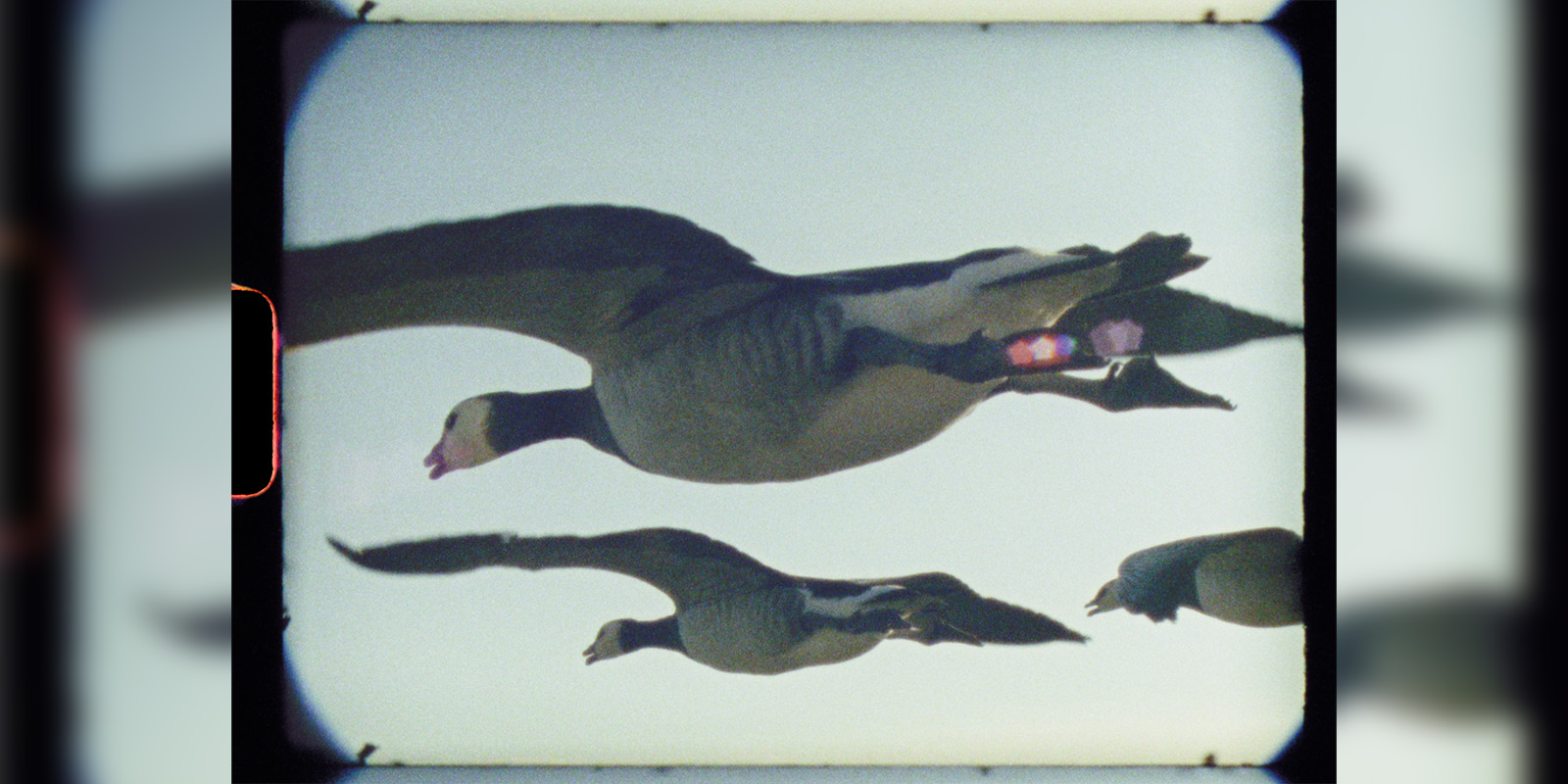
“It was about his fourth or fifth year entering when, in 2019, he made a film that included footage of greater flamingos in southern France. He’d captured these beautiful birds on grainy Super 8, with all the saturation and texture of the format. The music was quite cheeky and accentuated their movements – the way they twisted their heads and interacted with each other. Then the sequence built to the flamingos taking flight. As the final bird flew into the sky, becoming thinner and thinner against a pale cloud, I found myself having an incredibly emotional reaction to it. Honestly, every time I watched it, it felt like it was pulling at my heartstrings.”
Such was the emotional impact of the straight 8 entry, Sayers began to imagine capturing a similar energyin a feature-length format. “I started trying to unpack what I was feeling. It wasn’t just love for the image or the animal – it was a feeling of loss, as though I was watching something slip away. A bit like waking up from a dream and trying desperately to remember it as it fades,” he muses. “There was something about seeing this beautiful animal on grainy Super 8 film, and feeling like I was losing the image even as I watched it, that felt incredibly powerful.”
While Sayers wanted to emulate the feelingthis straight 8 short provided, he was also inspired tonally by the experimental 1982 documentary Koyaanisqatsi, which examines humanity’s relationship with nature without narration, interviews or the spoken word at all. “I remember discovering it years ago and being completely blown away by it,” he explains. “During the making of Super Nature I revisited it and watched a fantastic analysis of its structure. It’s an incredibly immersive film that asks profound questions about our place on the planet.”
Aiming to replicate the meditative, reflective toneof that film, Super Nature is similarly contemplative, with composer Alexandra Hamilton-Ayres producing a score that emulates “joy and sadness at the same time, uplifting and heartbreaking within the same moment”, as the doc examines both the healing power nature can provideand the harsh reality that humanity is, ultimately, causing its devastation. This score combined with David McCauley’s inventive sound design, who “recorded all sorts of Super 8 cameras and projectors, then transformed those sounds into sonic textures that run throughout – some are used literally and others almost musically”.
Talking things through
Unlike Koyaanisqatsi, however, Super Nature does include narration, with Sayers and a worldwideteam of filmmakers – both professional and amateur – offering honest, vulnerable musings on their relationship with our planet. “I briefly wondered whether we could make something similar to Koyaanisqatsi, entirely without words, but it seemed like such a waste when we had these amazing people with such powerful perspectives and voices,” Sayers says of his approach, which allows his teamto pull back the curtain on their filmmaking process and reveal why they care so deeply about the natural world. In order to build his team, Sayers initially relied on his straight 8 network, before the reach of the project went far beyond it – with wildlife photographers, conservationists and even Indigenous tribes contributing to the cause.
“I knew from the beginning that this needed to involve lots of people,” Sayers explains. “straight 8 is a community project and I’ve met filmmakers all over the world through it. I knew people on every continent with Super 8 equipment and enough analogue experience to contribute, but then it built into something bigger, with a broader scope. The key was creating the conditions for autonomy, whether contributors were trained filmmakers or not.”
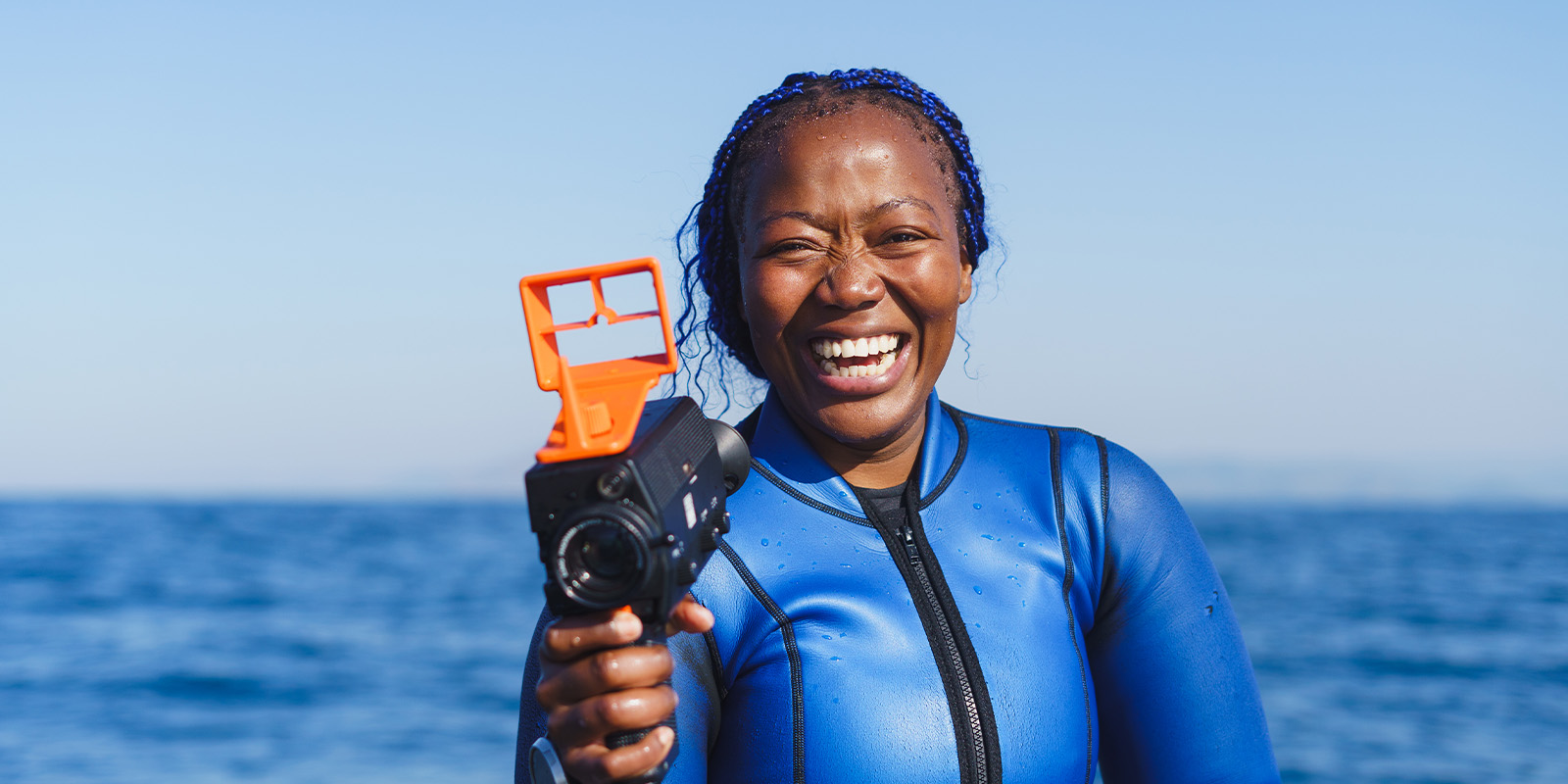
On creating this “autonomy”, Sayers reveals, “When it came to the stories, I never approached contributors thinking, ‘This is the angle we’re going to use.’ I never storyboarded for people. That would have been awful. Instead,
I encouraged them to tell me what they were interested in filming and film it, and talk about it in audio notes. When their footage came back to me from Cinelab Film & Digital, I’d work through the material, build something from it, share it back with them and continue that conversation between us. I always knew it would be multiple voices telling their own stories about nature. The challenge was how to collect all those voices and make one film, rather than a collection of short films.”
Perfecting the narrative
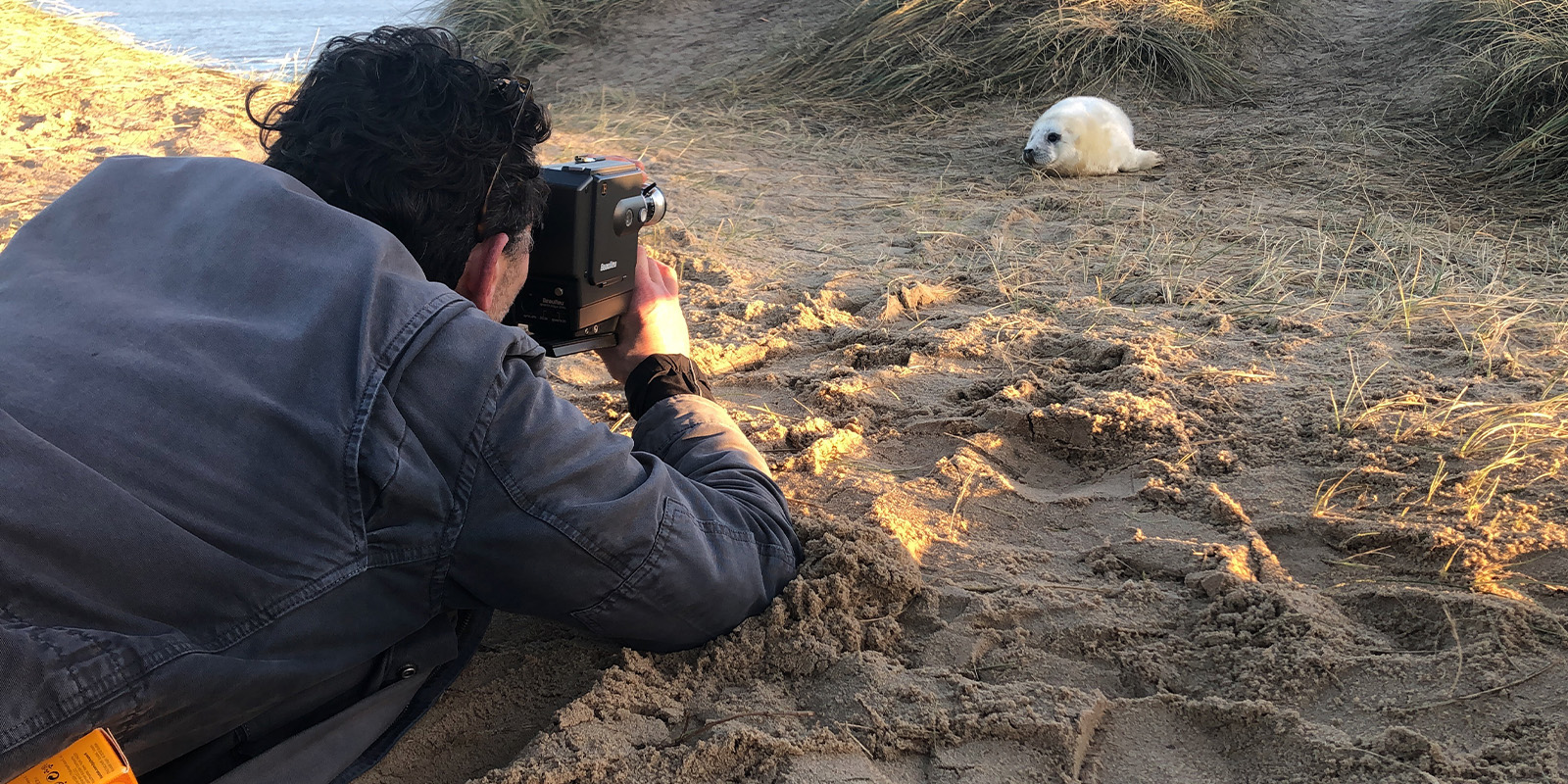
Key to crafting a flowing, unified narrative was Ed Watts, who came on board as story consultant and helped ensure all the disparate pieces came together as a “cohesive story”, and to be more than the sum of their parts. That story begins with Sayers filming seals on a Norfolk beach before spanning 25 countries and five continents – from Wadi Rum in Jordan to Ol Pejeta Conservancy in Kenya – eventually returning to Sayers, back on that same beach in Norfolk, at the end of the project as the director brings his own altered perspective to the story. Having to coordinate a network of 40 filmmakers, along with fellow producers Rebecca Wolff and Beth Allan, across all corners of the globe, Sayers recalls his organisational background as a producer on “huge public events” like the T-Mobile Sing-along – but the director credits each creative for taking ownership of their strands within the wider narrative.
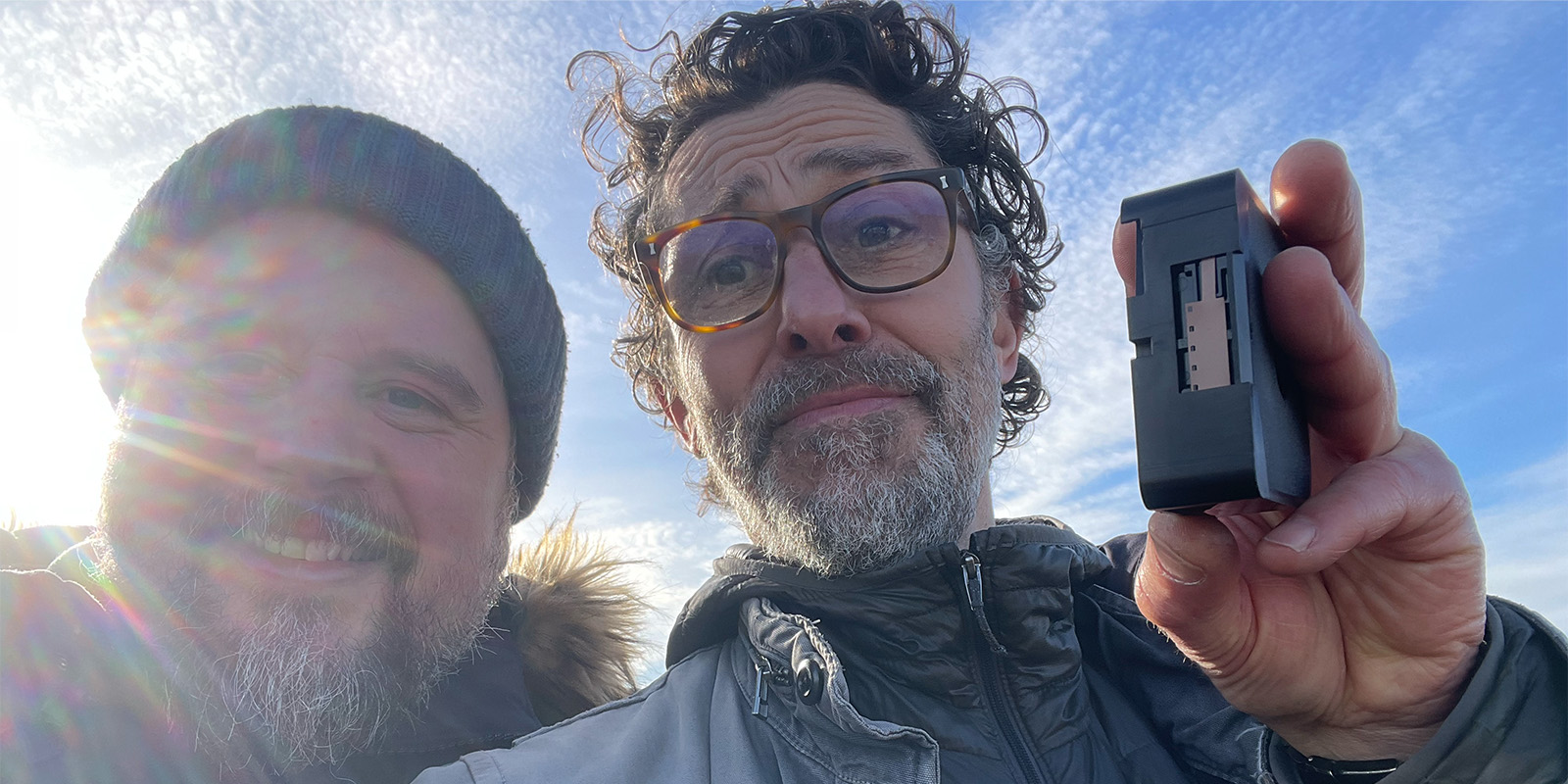
“It was very collaborative throughout,” he says. “They were out there in the environment, dealing with whatever conditions nature presented. I wasn’t going to be sitting on Zoom while they filmed. My job was to encourage confidence and provide support where needed. If they’d never filmed nature before, I could share my experiences and say, ‘It’s difficult. You’ll need more time than you think. Here’s what I’ve learned.’ But ultimately, the films had to be theirs.”
Super skills
Training filmmakers on any tool – especially remotely – is challenging enough, but doing so on as demanding a piece of kit as a Super 8 camera proved an even more interesting challenge. Yet, for one of the industry’s most prominentchampions of the medium, it was a very worthwhile process. “Looking back, what we achieved is a bit crazy, but I’ve always felt that rules are there to be challenged. Sometimes all people need is the opportunity and the confidence to try. And when you give them that, they can surprise you.”
For all the challenges the old-school piece of kit throws up, though, Super Nature demonstrates both Super 8’s beauty and its versatility, with cinematographers including Sayers taking “many different Super 8 models” – including the underwater Eumig Nautica and “super flexible” Beaulieu 4008 ZM-II – from the skies to the sea – producing singular visuals in the process.
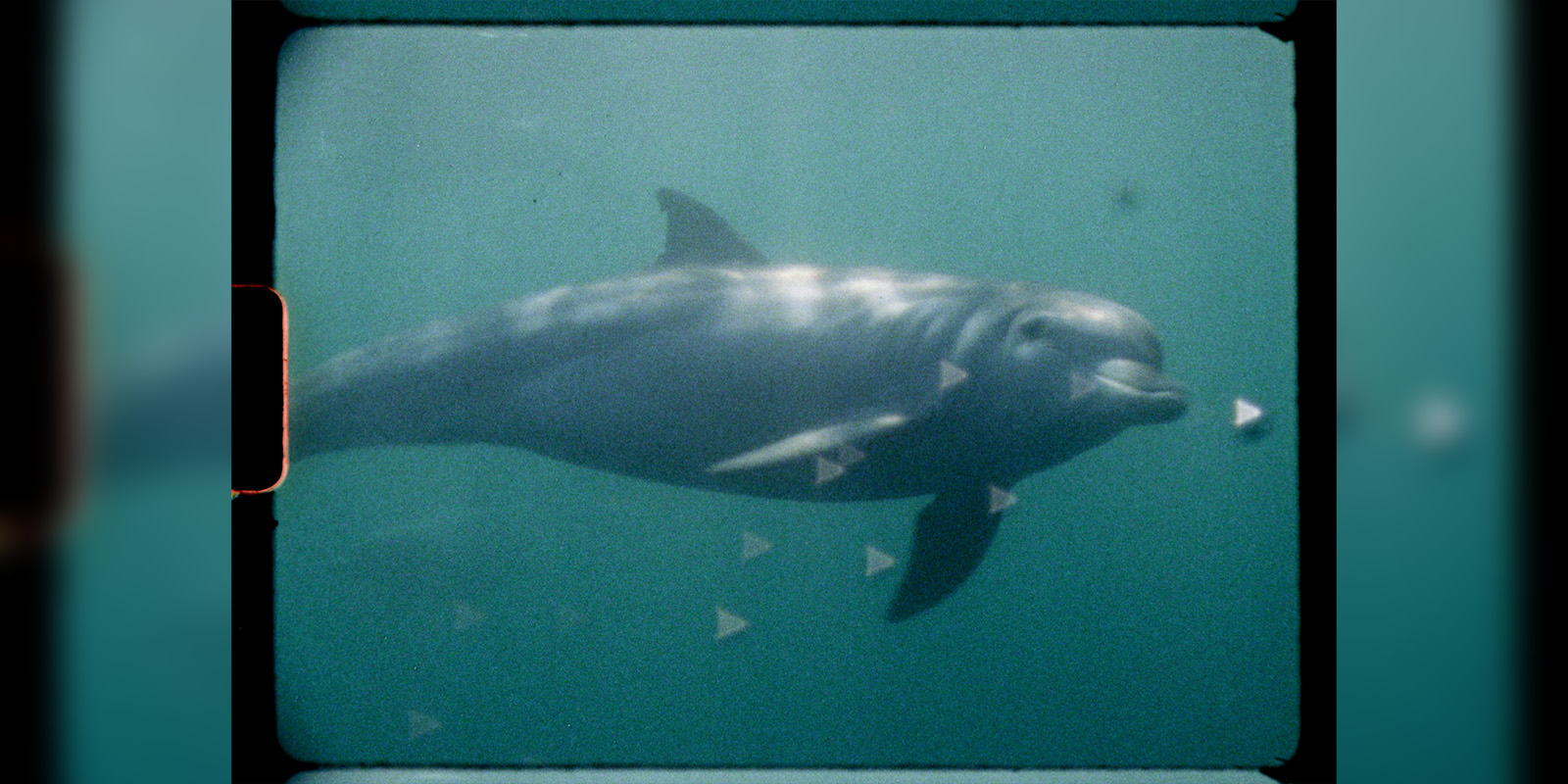
“One of the big learnings was to start accepting that the footage was rarely anything like what I was expecting, and to let go, and embrace that,” Sayers says. “Sometimes shots that I’d noted as soft, or too shaky, ended up proving really emotive in the edit. Start to see things that way and suddenly everything is potential gold!
“The point isn’t perfection. The point is embracing what the format is. We’ve got geese filmed from a microlight, underwater sequences with seals, slow-motion wildlife footage – we pushed the format in all sorts of directions. But you don’t come to Super 8 for technical perfection. As Phil and Rhonda Vigeant at Pro8mm in Burbank have often said, ‘The perfection is in the imperfection.’”
Time to reflect
With its unique aesthetic evoking a sense of memory, and the finitenature of Kodak Super 8 celluloid building on the underlying motif of preservation, the medium was not only used for the fun of it. Rather, its “capturing memories quality” was fundamental to the core concept: to celebrate all the biodiversity we have, and all we have to lose. “Everything comes back to story,” Sayers asserts. “Every cinematographer says that because it’s true. We can talk about lenses, cameras and processing techniques all day, but story comes first.”
“I think what’s really interesting about Super 8 is its impressionistic quality,” he continues. “If I show you an ultra-high-resolution photograph of water lilies, or take you to see Monet’s Water Lilies in person, which experience are you going to be drawn into emotionally? I’ll bet it’s the more impressionistic image. Your brain has to explore what it’s being shown. It pulls you closer. That’s probably the biggest thing I’ve taken away from making this film: the power of showing the world differently. It opens people emotionally in a way that can be very powerful.”
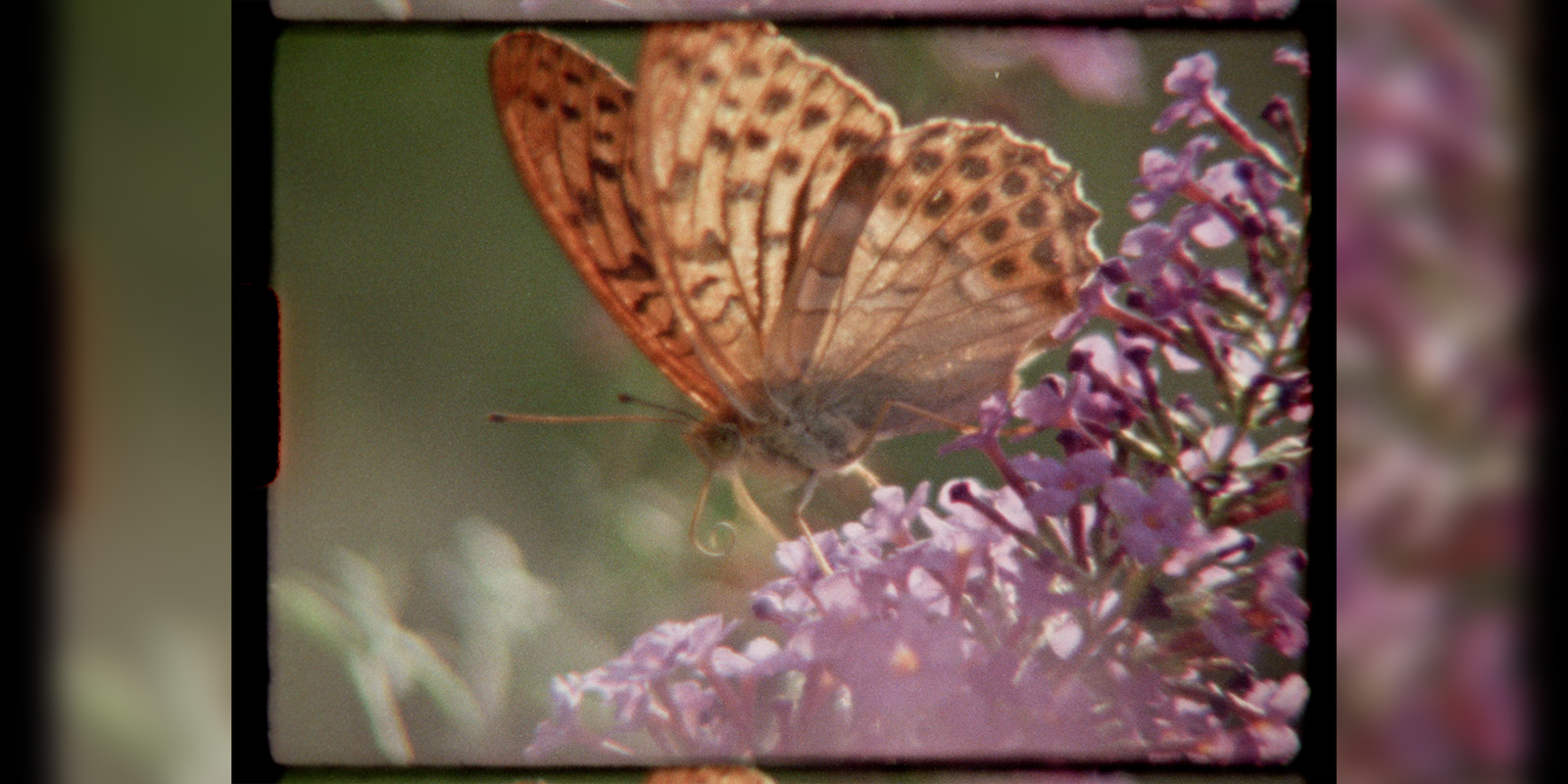
Helping to bring this powerful storytelling to life was Cinelab Film & Digital, who processed and scanned almost all the reels, except some reversal and old stocks which were developed by different specialists. It’s just the latest stage in a collaboration that began a decade ago, and has spanned several of Sayers’ projects including Super Nature and the straight 8 competition. “Back in 2016, Adrian Bull, who had recently opened Cinelab, and I met for breakfast in Soho, set up by Julie Taylor-Butt of Kodak, and we immediately connected around what we were doing with straight 8,” Sayers recalls. “Since then, Cinelab have processed and scanned all of our straight 8 films and have become an invaluable partner.
“Adrian is also someone who cares deeply about environmental issues, which became another important point of connection. When Super Nature started developing, the attitude from Cinelab was always: ‘Tell us how we can help.’ That support grew alongside the project itself. Eventually they became investors in the film, which is why Adrian is credited as an executive producer. Honestly, I don’t think we could have made the film without them. Making a film like this required people who believed in the idea before anybody knew what it was going to become, and Cinelab absolutely did that.”