
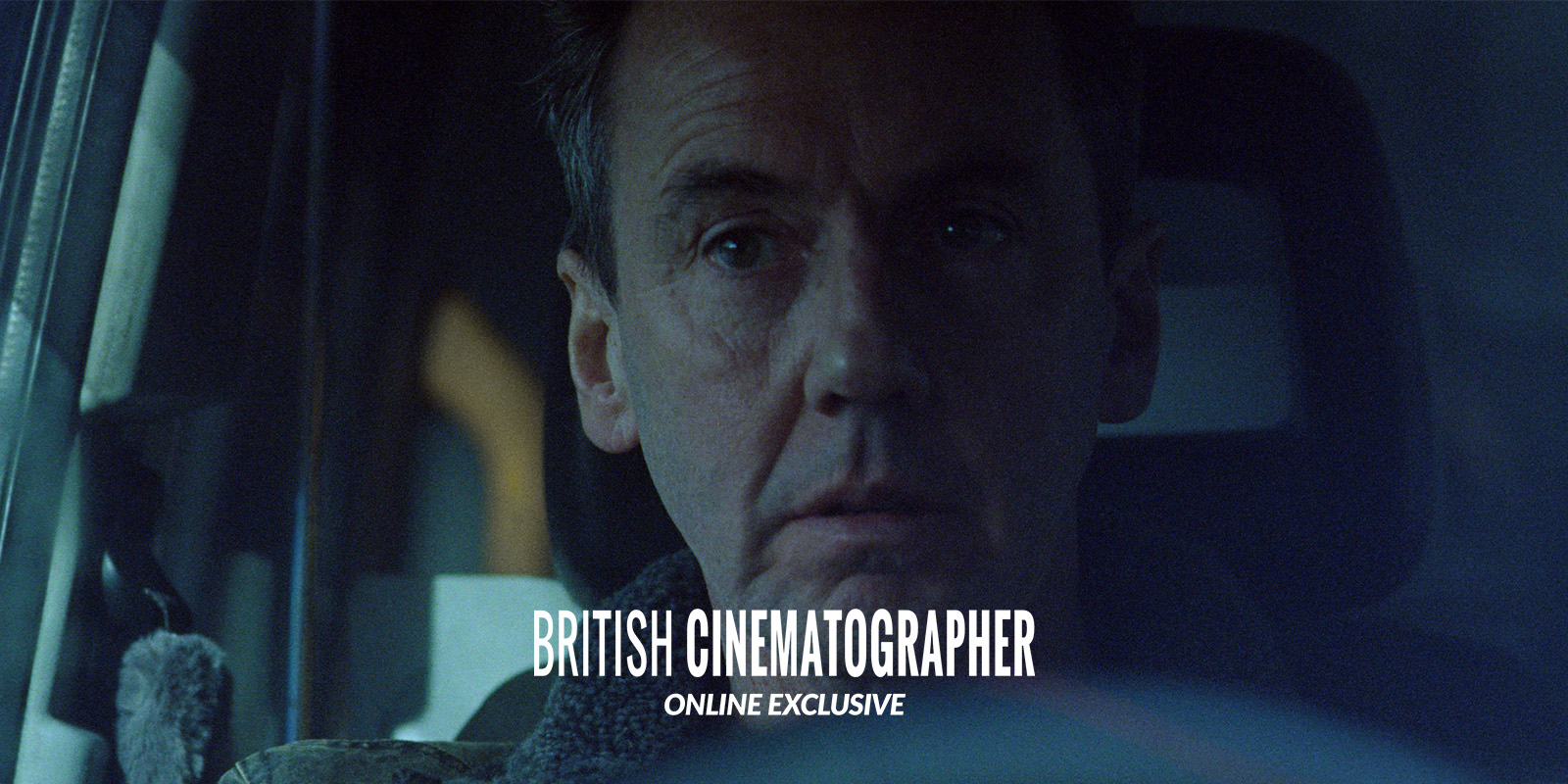
IN THE DRIVING SEAT
Cinematographer Adam Barnett discusses tackling technological change in James Arden’s thought-provoking short film Black Cab.
I was drawn to James Arden’s work from seeing his first shorts. There was a strong sense of gravity to all his work. It felt concrete, real, weighted, and that’s exactly the kind of work I really enjoy making. The script for Black Cab – about a cabbie in the near future confronting the arrival of self-driving cars – carried that same weight.
Visual language
We’d already done a music video shot on 16mm, but we used 35mm glass to have this kind of punched-in tone, which really helped cement this long-lens feel, which we ended up using a lot in Black Cab too.
We decided to use Super 35 glass again for Black Cab, enhancing this sense that the older you get, the more the world kind of closes in on you and everything is kind of seen through a longer lens – tunnel vision, you’ve got your blinders on.
We started chatting about the look; there was a joke between us, which was that cinematography was at its best when everything was a little bit shaky and a little bit blue. There was a lot of raw-feeling stuff we looked at, like Alan Clarke’s Scum, Children of Men… in the end, the look landed somewhere between Michael Mann and Ken Loach; like if I, Daniel Blake met Heat would be one way of looking at it.
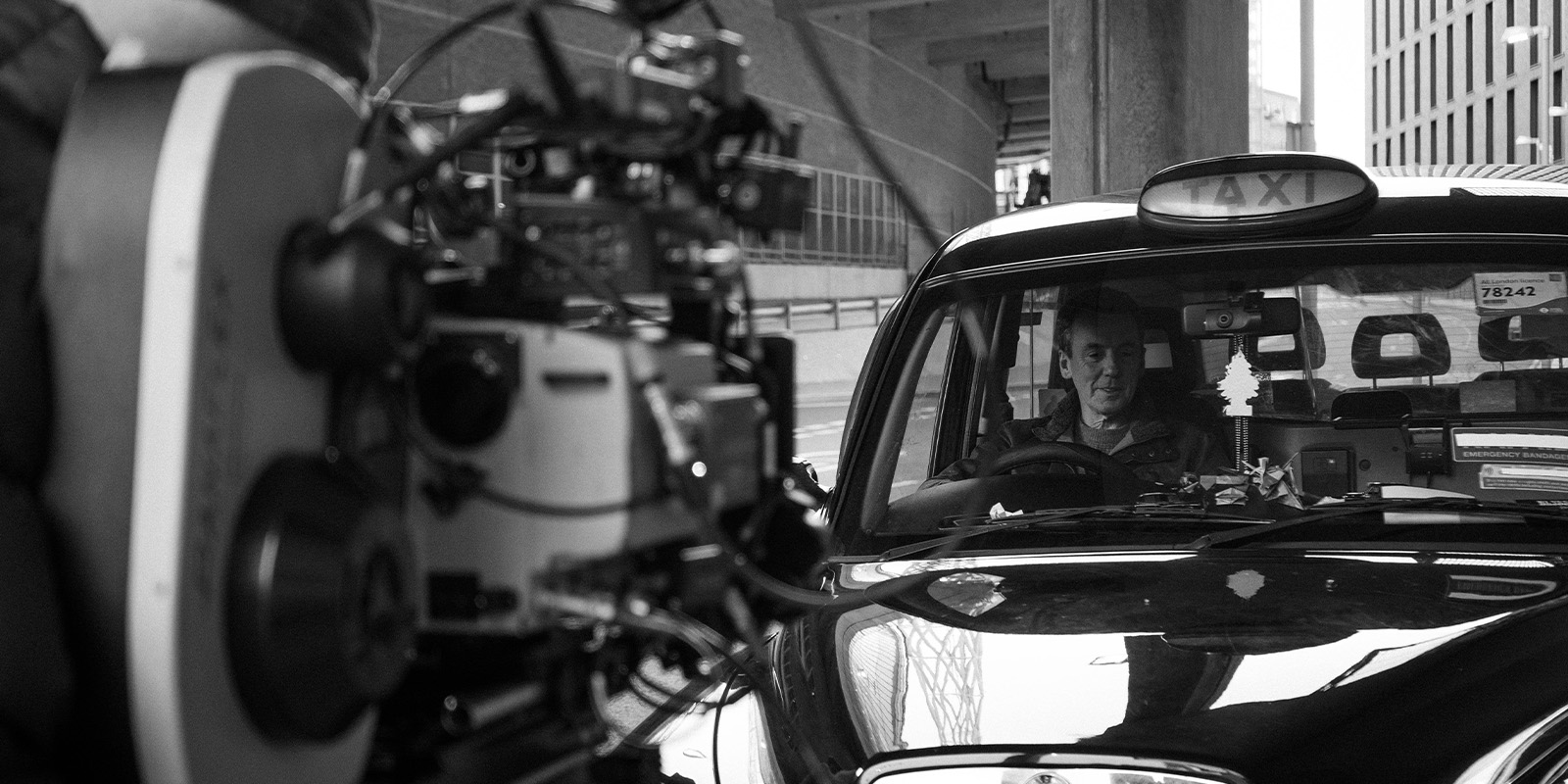
We were both really keen on it being shot on film because there was an anachronistic tension between us making a film about the replacement of organic beings by digital, robotic beings. It felt like this was a perfect creative opportunity to use what many would call an outdated, inefficient medium.
There’s this constant obsession in the world now with ease and comfort… like a life without friction, a total streamlining of everything in your lives and artwork and experiences, and that just seems completely at odds with James and myself as filmmakers. The ethos was: without friction, there is no spark, and without friction there is no tension, and without friction there are no stakes.
Technical approach
I remembered that I had been hanging on to some short ends and extra rolls of 35mm… so I suggested the format and donated my haul to the project, which was matched by Brother Film, our production company. If we split that frame in half, then we double our runtime or thereabouts, but it locks us into this 2:35:1 frame. Something we can’t move away from – not boxing ourselves in, but creating a framework to work within. It harked back to the brutal Catch Me Daddy, also shot on 2-perf 35.
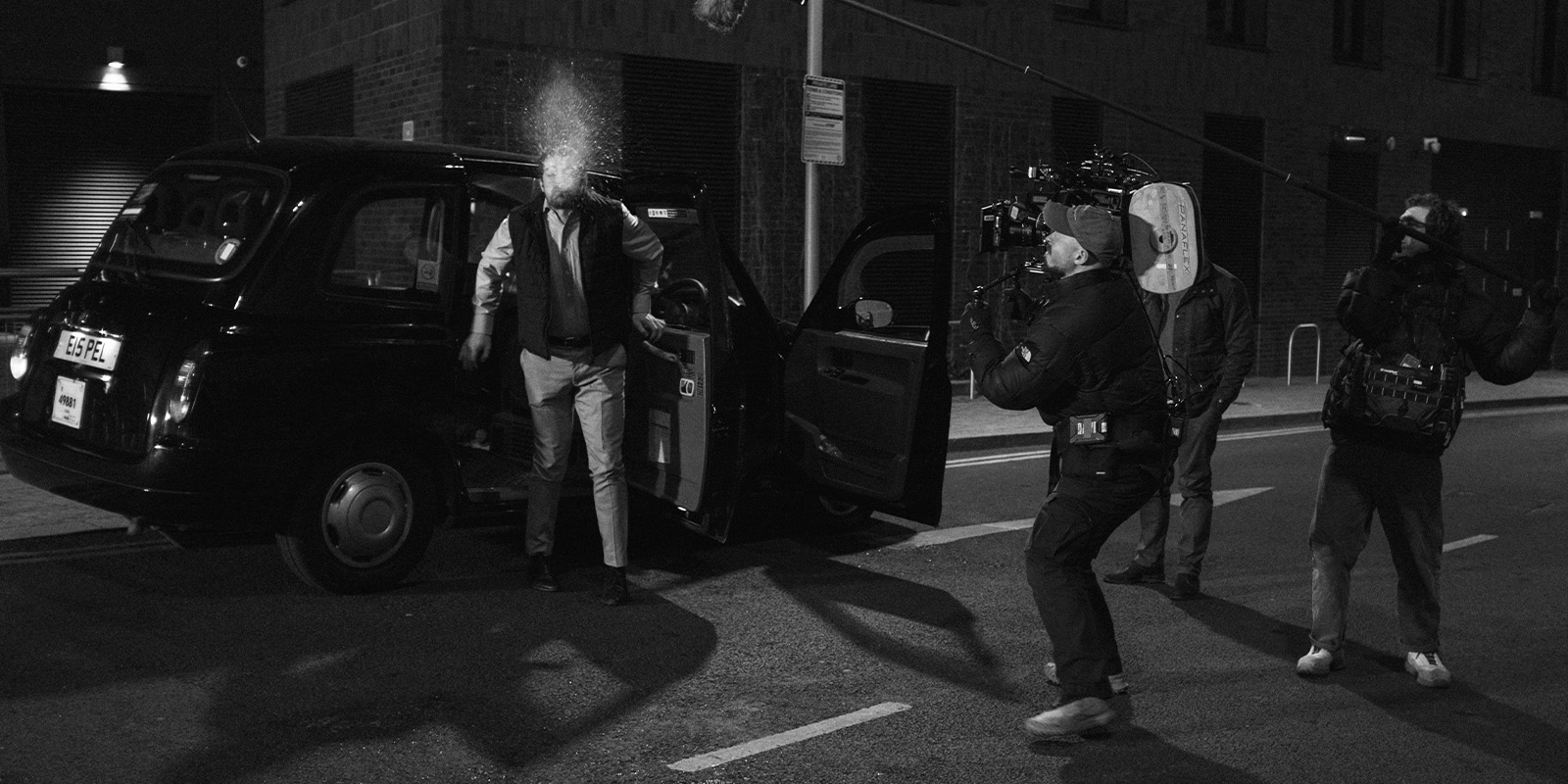
The camera – kindly donated by Panavision – was a Panaflex Millennium XL2, which is an absolute beast. It’s like an RPG on your shoulder. But without pain, there is no gain. Next came Panavision Primos and a couple of really long zooms, like in Alan J. Pakula’s The Parallax View and All the President’s Men.
The longer the zoom, the more dread. All of that became the backbone for how we could tell the story. There are infinite ways you can choose to make something these days. If you are boxed in with certain initial conditions, it forces you to think on your feet and get the most out of that – James was on board.
Challenges
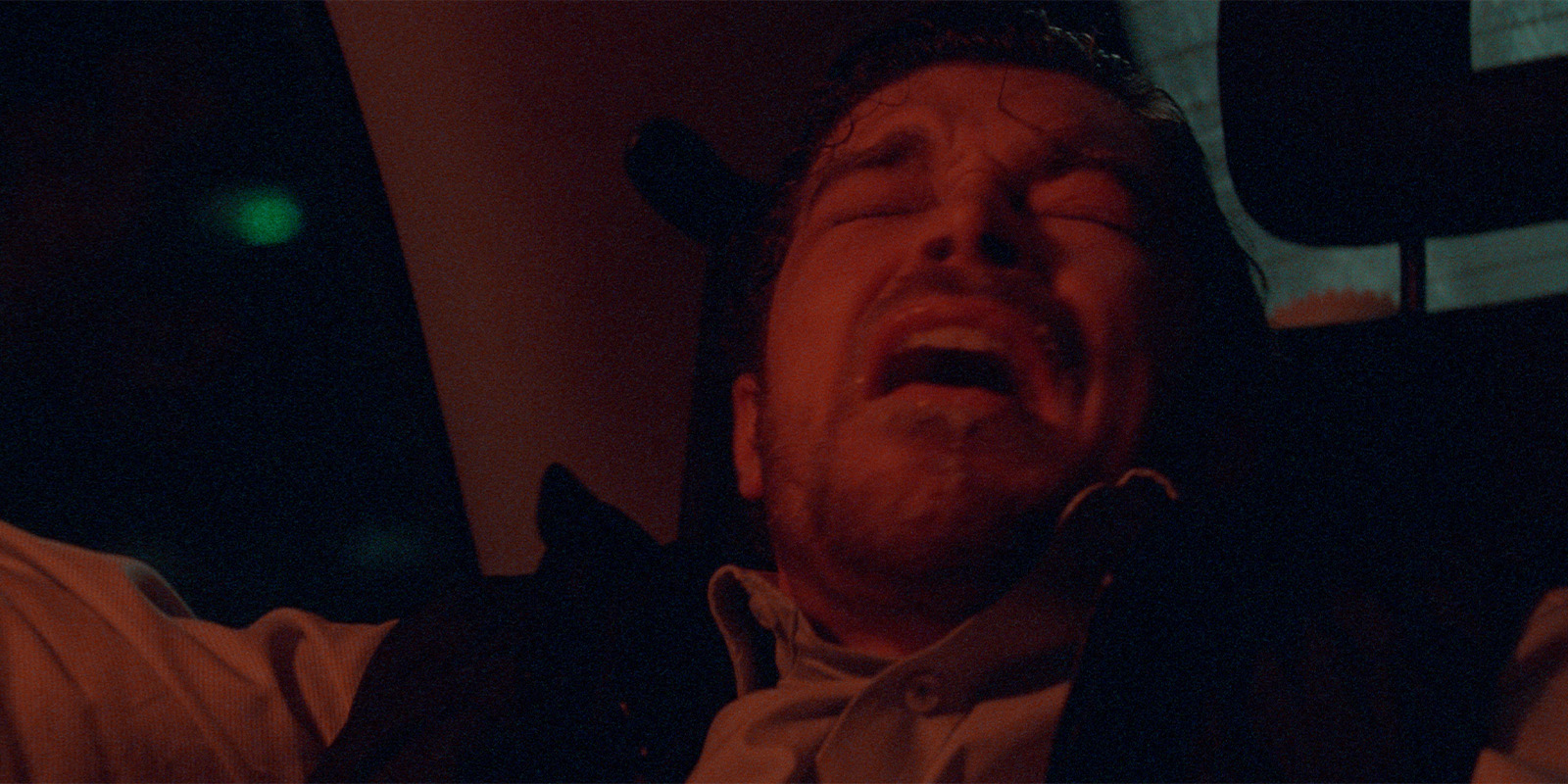
We were really lucky with an incredibly tight crew – working their socks off in really tough, difficult, cold conditions – and an amazing cast. Our lead actor, Jay Simpson, was so good at conveying so much with minor looks and moves. I, personally, as a cinematographer, found it incredibly inspiring – that’s the kind of stuff that I absolutely love and is the reason I do this job: to get the front seat to the best show in the world, the first time it ever happens. It’s a special privilege to see that.
So the technical challenges were shooting in January on film in a tiny cab and a tiny cab shelter; it was no easy task, but exciting things to overcome.
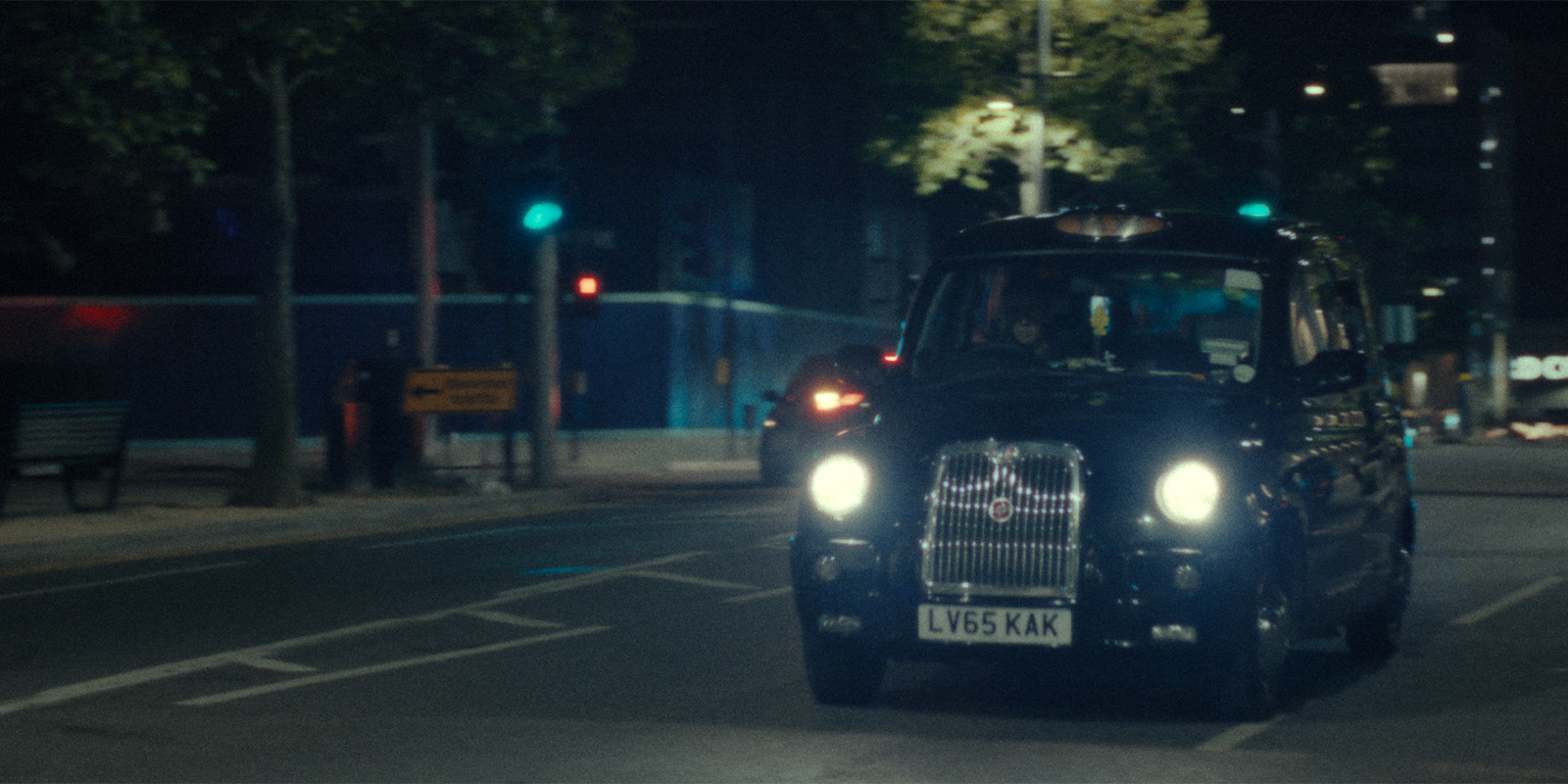
We had a certain route around Wembley Stadium on which we could shoot the majority of the driving and we had to kind of stitch it all together. We lit a lot of the cab with really small LEDs that were built into the interior. I was trying to create a kind of heightened naturalism. We wanted it to feel anachronistic; it’s set in the near future, but we shot it like it’s the ’80s. It has this really interesting push and pull, which I think is one of the reasons I feel so excited by what James was trying to create.
We had a small lighting package and tried to block scenes to utilise the existing street architecture that had lighting and achieve this naturalism with this huge beast of a camera and that insane long zoom lens. All part of embracing the friction.
Bringing it to the grade with Connor Coolbear at ETC was a joy, seeing it all come together. Thief by Michael Mann was a big colour reference, as well as Taxi Driver, Uncut Gems, Bitter Sweet Symphony by The Verve, the palette of those really found their way into the film.
Reflection
What does it feel like to be making films at the dawn of this next stage of industrial revolution with AI? If it disempowers artists and craftspeople and we get swept aside, like taxi drivers when Waymo comes along, what does it all mean?
I don’t think we have any answers and I don’t think the film claims to have any, but it’s certainly a musing on who we are without our vocations, and I think that’s a really interesting and timely question to ask ourselves.