
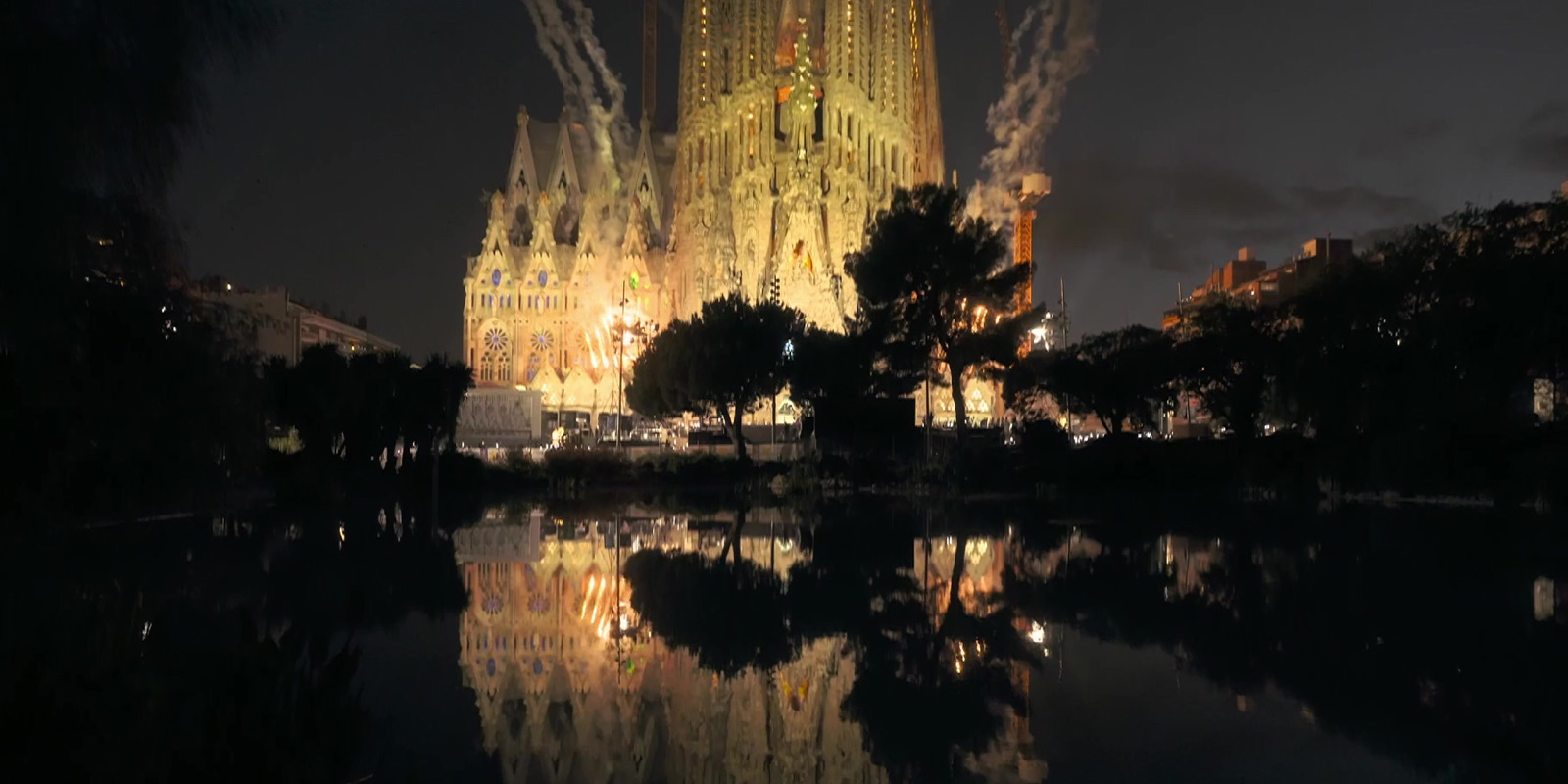
Sagrada Família: when live production becomes a visual poem
Deploying Sony Cinema Line cameras including VENICE 2, FR7 and FX6 models, the Sagrada Família production demonstrated groundbreaking new approaches to cinematic live workflows.
In June 2026, one of the world’s most iconic architectural landmarks became the stage for a landmark experiment in cinematic live storytelling. Broadcast live by Catalonia’s national broadcaster 3Cat during Pope Leo XIV’s visit to Barcelona’s Sagrada Família, the event commemorated the centenary of Antoni Gaudí’s death and the inauguration of the Tower of Jesus Christ. But for the creative and production teams, the challenge extended far beyond documenting a historic occasion. Their ambition was to transform a live broadcast into an immersive cinematic experience, with light itself as the central character.
“It’s a project that, in the end, is about telling a story. A story in which the true protagonist is light,“ explains creative director Igor Cortadellas.
That philosophy informed every creative and technical decision. Conceived as a celebration of the generations of craftspeople, architects and visionaries who contributed to Gaudí’s masterpiece, the production sought to express their legacy through light, shadow and movement. The result was what Cortadellas describes as a visual poem, culminating in the illumination of the Cross of Jesus atop the basilica’s newly completed central tower.
A new visual language for live production
Rather than adopting a traditional outside broadcast approach, the production team embraced Sony’s Cinematic Live Production workflow, combining the visual language of cinema with the immediacy of live television.
According to director of photography Paulí Subirà, the objective was clear: to transport audiences into the emotional heart of the occasion using a visual grammar that blended television and cinema.
The production deliberately distinguished between the liturgical elements of the event and the artistic performance. As the ceremony transitioned into the creative show, LUT-managed workflows were introduced, shifting the visual aesthetic and allowing the live broadcast to adopt a more cinematic identity.
“The transition happened the moment we entered the show: LUTs came on, and everything shifted into Cinema Live, turning the live event into a short film unfolding in real time,”saysSubirà.
The result was a broadcast that maintained the authenticity of a live event while embracing the emotional depth and visual sophistication typically associated with dramatic productions.
Capturing a story built around light
For the cinematography team, the challenge was not simply low-light acquisition. The event itself was conceived around light, shadow and contrast, demanding cameras capable of preserving subtle detail in darkness while retaining the intensity of brilliant highlights.
The production deployed Sony Cinema Line cameras including VENICE 2, FR7 and FX6 models, with VENICE 2 serving as the principal camera system.
“In a night show where the light was the protagonist, there was no other option than to choose VENICE 2,” explained the production team.
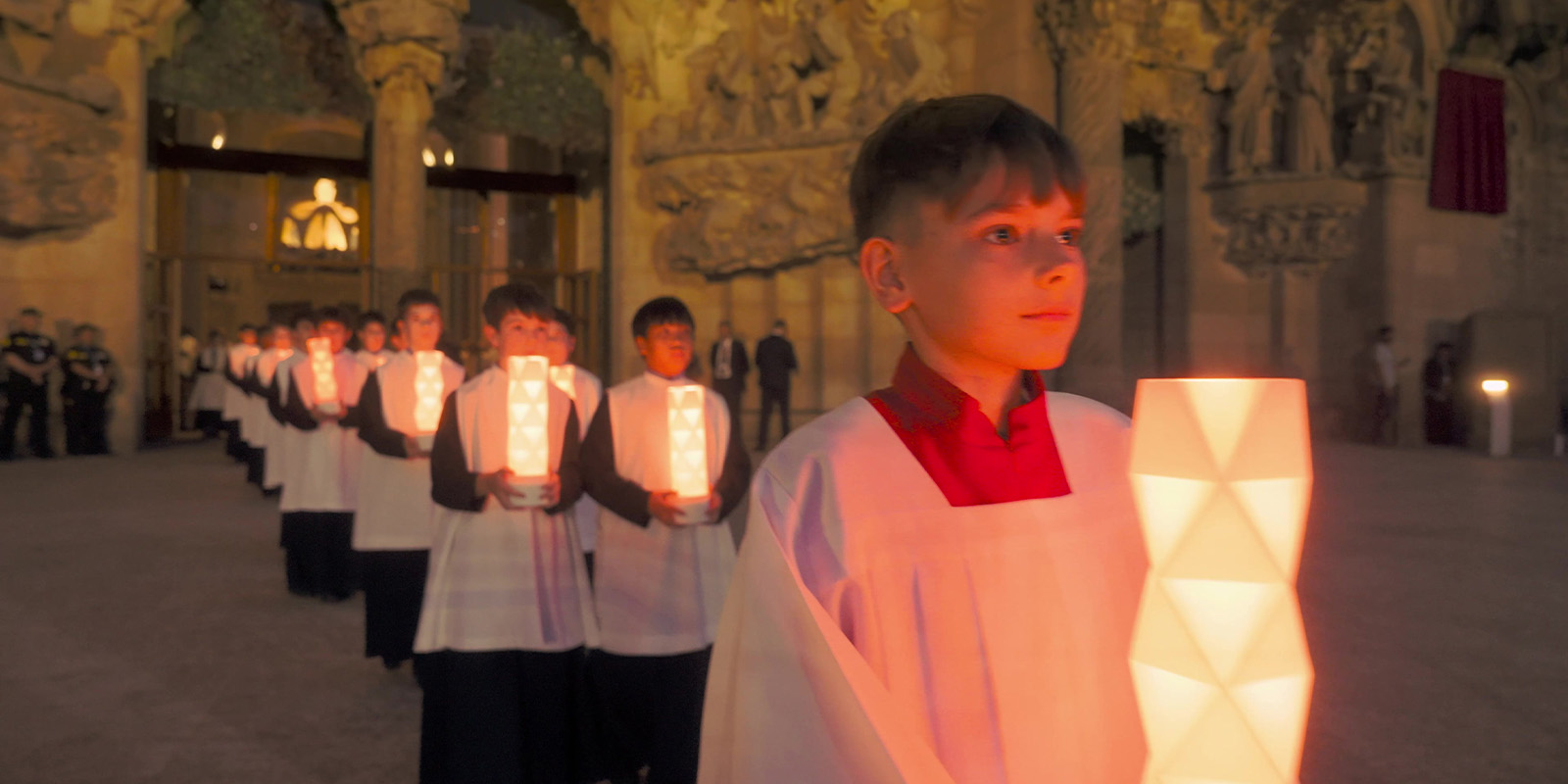
The camera’s high sensitivity and dynamic range enabled cinematographers to capture the atmosphere of the performance without compromising the delicate relationship between illumination and architecture that defined the visual narrative. FR7 cameras provided access to challenging positions throughout the basilica, while FX6 cameras delivered mobility for dynamic shots. Across all systems, Sony’s colour science ensured visual consistency throughout the production.
Cinema meets broadcast
One of the most significant aspects of the project was the determination to preserve cinematic image characteristics within a live production environment.
Rather than relying on traditional broadcast compromises, the team chose to maintain a full-frame workflow throughout. “We wanted to run all the cameras in full frame,”explained the production team.
Avoiding sensor crops and conventional broadcast lens approaches allowed the production to retain the depth, perspective and selective focus associated with modern digital cinematography. This helped create a more immersive viewing experience while preserving the distinctive visual character the creative team envisioned.
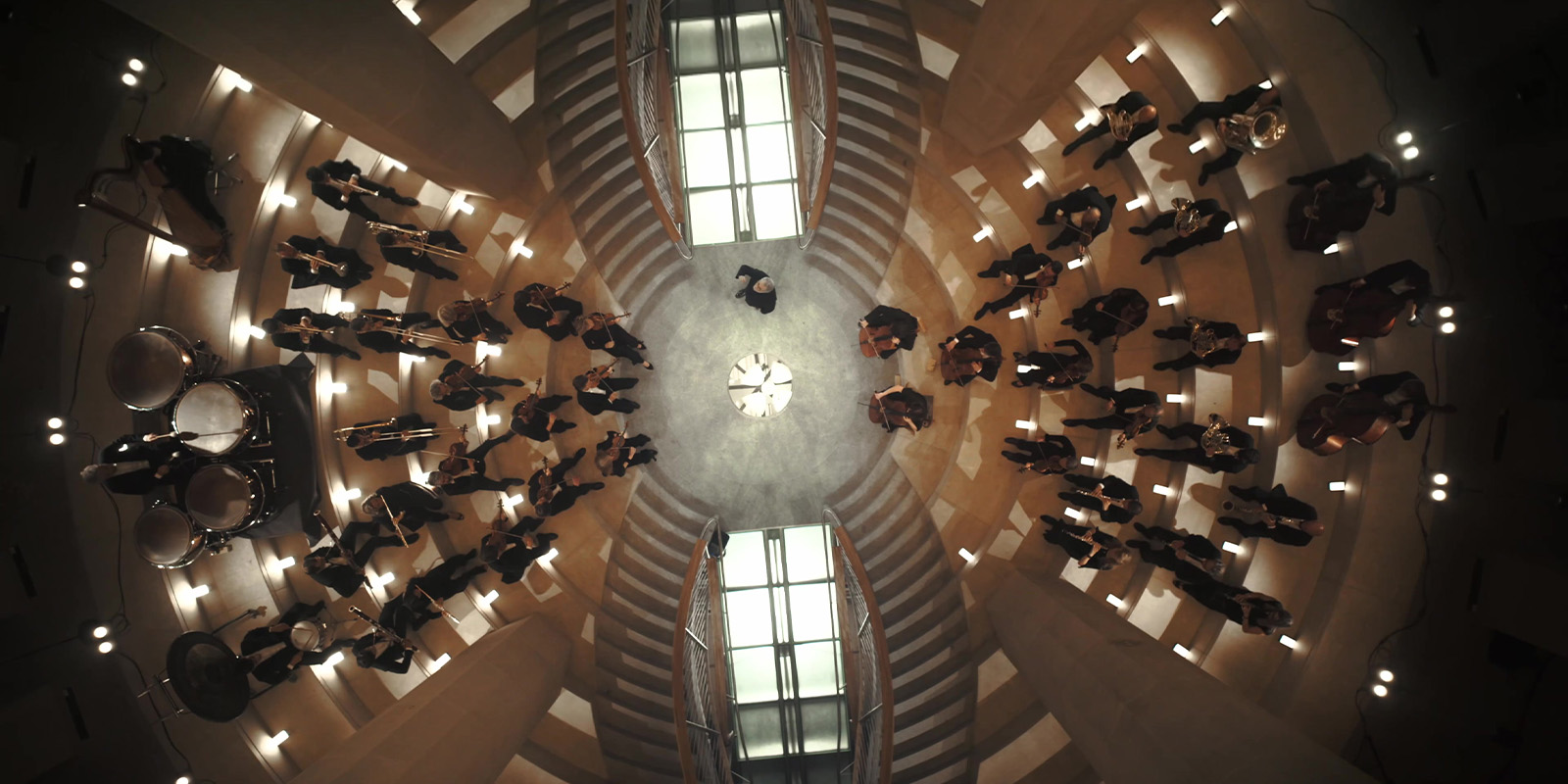
The workflow was supported by PhotoCine’s OB3 mobile unit and Sony’s live production ecosystem, including an XVS-G1 production switcher. For HDR quality control, Sony’s BVM-HX3110 mastering monitor enabled live monitoring using EBU R167 predefined HLG Extended modes, ensuring faithful reproduction of the demanding highlights and contrast central to the production’s visual design.
Defining a European Cinema Live standard
Beyond the event itself, the Sagrada Família production served as a proving ground for new approaches to cinematic live workflows.
Sony occupies a unique position in bringing together expertise from both broadcast and digital cinematography, combining established live production technologies with the heritage of its CineAlta ecosystem. Drawing on these capabilities, the production team deliberately re-engineered aspects of the workflow to help establish a European approach to Cinema Live production.
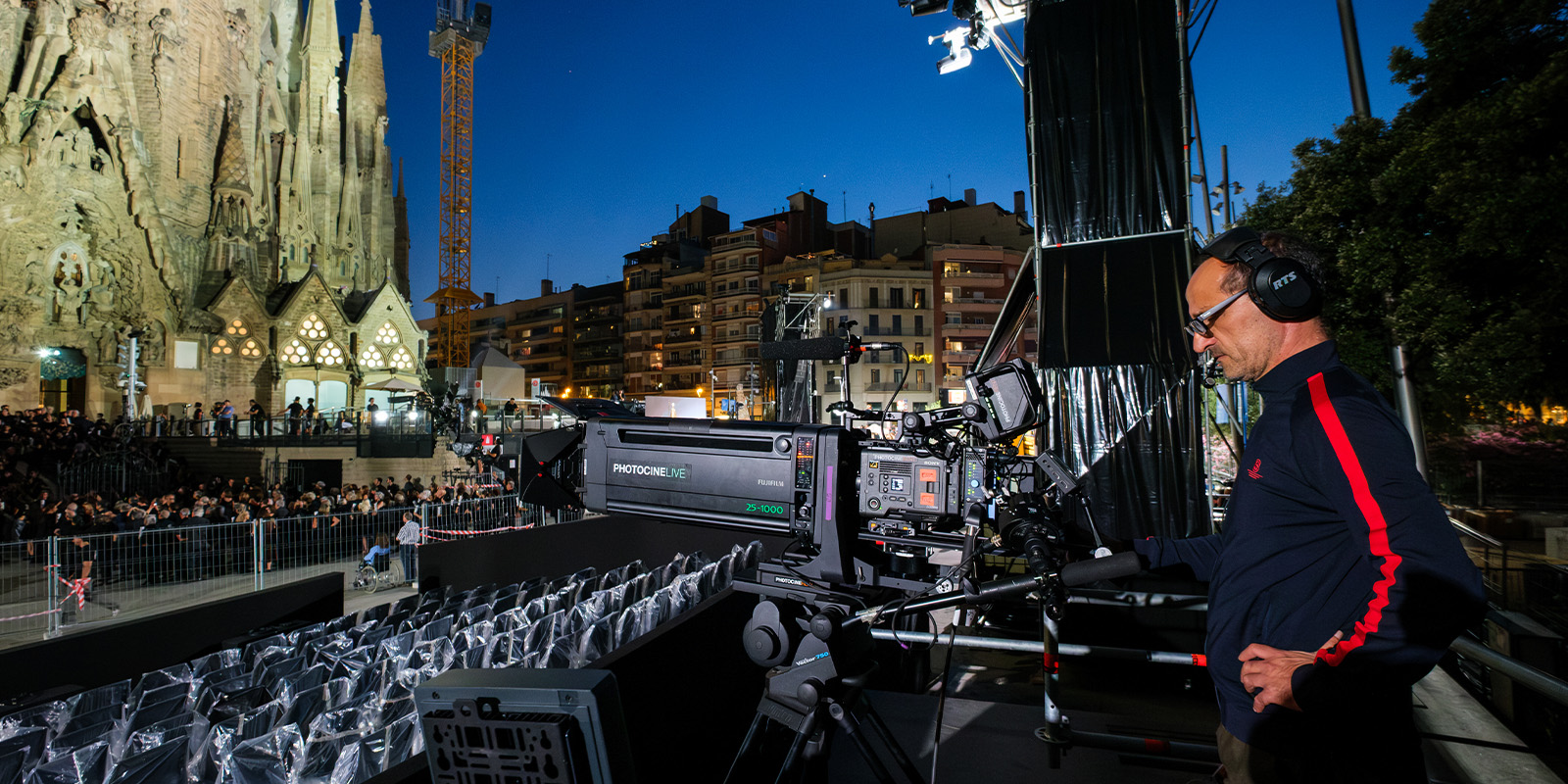
“We have deliberately redesigned all workflows to be able to create a new working standard for the whole Europe,”said the production team.
The Sagrada Família broadcast demonstrated how the boundaries between cinema and live production continue to dissolve. As audiences increasingly expect richer, more immersive experiences, productions are embracing new visual languages that place storytelling and emotional engagement at their centre.
For one remarkable evening in Barcelona, light became the storyteller. Through a fusion of creative vision, cinematography and live production innovation, Sony helped bring that story to audiences around the world.
Discover more at pro.sony