
A VISUAL JOURNEY
Teaming up once more following success with Ida and Cold War, cinematographer Łukasz Żal PSC and writer-director Paweł Pawlikowski craft a touching black-and-white road trip through postwar Germany.
Completing a loose postwar-set trilogy, the sublime Fatherland marks the third distinct collaboration between writer-director Paweł Pawlikowski and his cinematographer Łukasz Żal PSC. Previously, the two Polish-born creatives combined forces on the monochrome gems Ida (2013) and Cold War (2018), both of which earned Żal an Academy Award nod for Best Cinematography. Only the foolhardy would bet against Żal completing a hat-trick of nominations, for a film that’s already seen Pawlikowski take a share of the Best Director prize at this year’s Cannes Film Festival (alongside Spanish drama La Bola Negra).
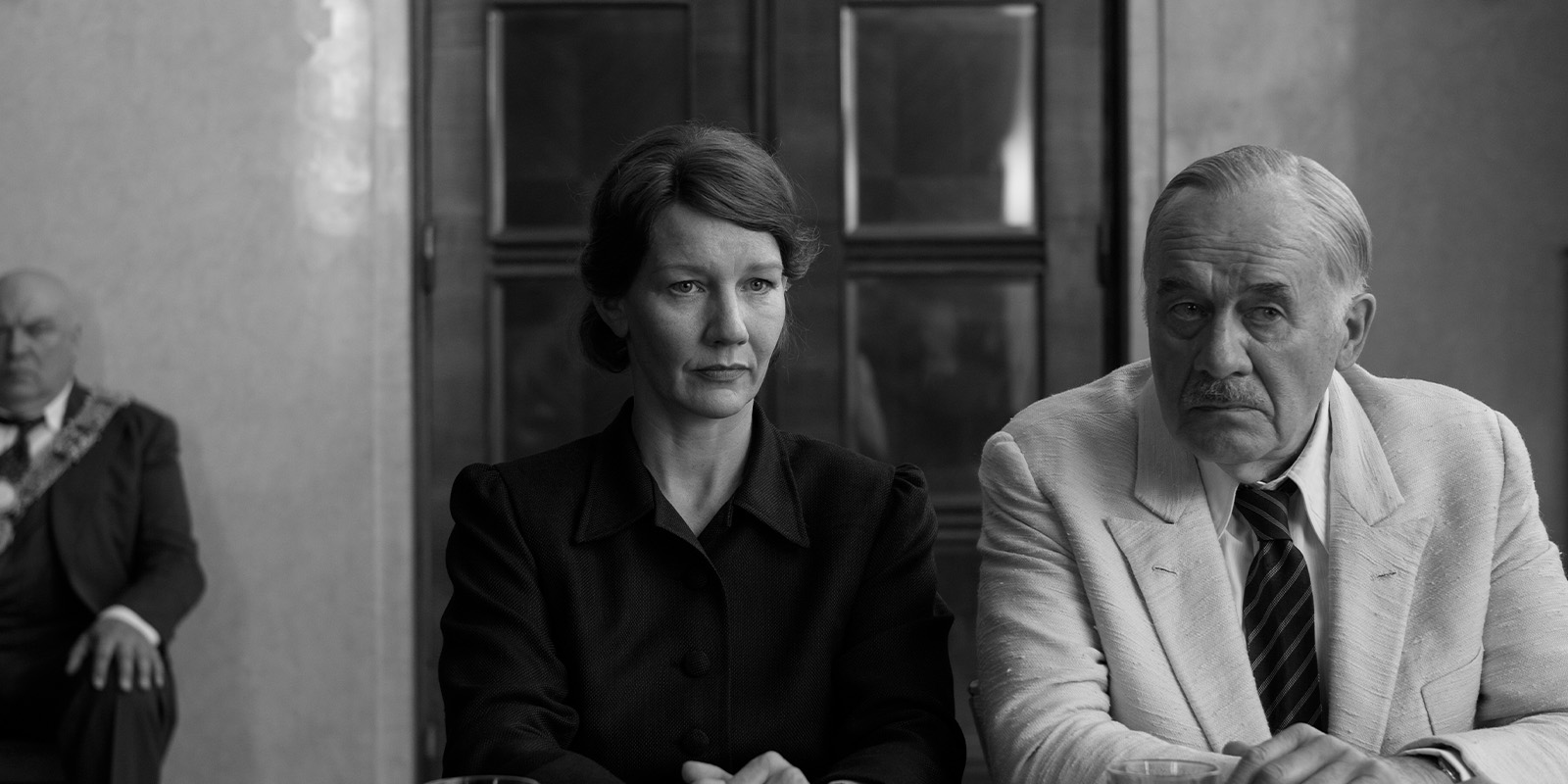
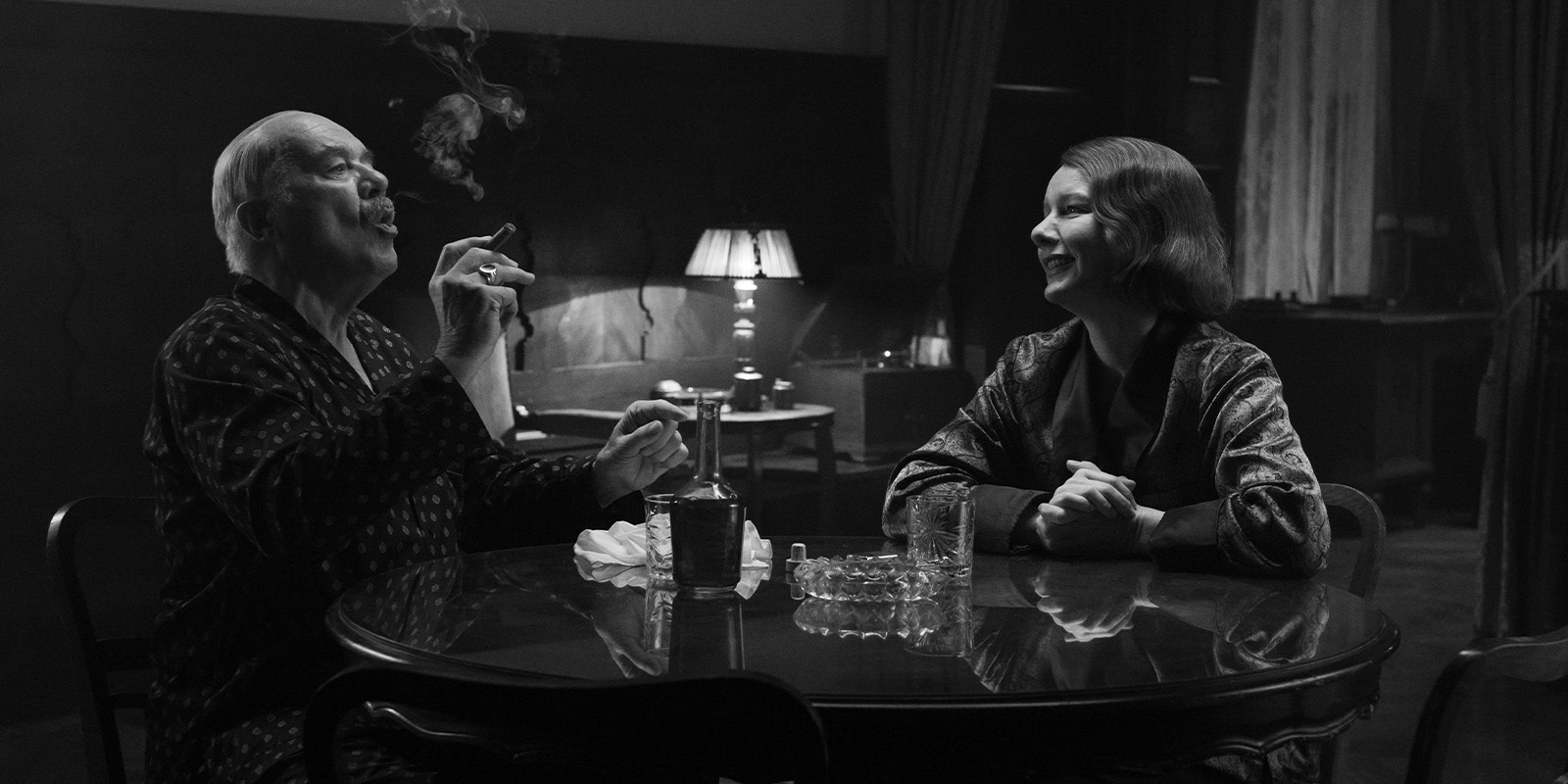
Fatherland tells the story of German novelist and Nobel laureate Thomas Mann (Hanns Zischler), author of The Magic Mountain, and his grown-up daughter Erika (Sandra Hüller), as they drive through war-torn Germany in 1949. Fittingly, Żal and Pawlikowski did exactly that during their prep as they travelled to the German city of Weimar, echoing the journey taken by their characters. “I’m driving him like Erika is driving Thomas Mann,” smiles Żal, speaking over Zoom. “We had a lot of time for discussions.” Beyond the film itself, everything from politics to parenthood was on the agenda. “It’s amazing how its entwined: women, love, life, death.”
All of this proved vital to the lifeblood of the film, further fuelling the creative shorthand that Żal and Pawlikowski have built over the years. “It’s always a creative process where we’re really trying to find our language just before principal production starts, before other people are involved,” says Żal. From the very beginning, the cinematographer was aware that Pawlikowski again wanted to shoot in black-and-white with the 4:3 aspect ratio. “This time I really wanted to [ask], ‘How can we make this black-and-white different and look at this in a completely different way?’”
Looking sharp
Shooting on digital via the ARRI Alexa 35, Żal concedes that the idea of using 35mm film was dismissed early on, due to budgetary reasons. The sharpness of digital was also a factor. “ForPaweł, it’s very important to see everything…[to] see every detail,” he says. “And I really like the Alexa quality…I like just the texture of this camera. I like how it looks in a way that it doesn’t look like film…I’m not aiming to make a digital camera look like film because if you want to shoot film, just shoot film.”
Żal chose Zeiss Standard Speed and Super Speed lenses to complement the Alexa camera. “It’s good to look at Germans with German lenses,” he says, with a smile. “That’s a little joke, but it’s a Jonathan Glazer joke.” Glazer’s Oscar-winning Holocaust drama The Zone of Interest, which Żal also shot, saw the cinematographer choose Leica lenses – another German-made lens package. “The Super Speed lenses are very normal,” he adds. “They are not like Cookes, which really impose a very soft look…I really like this normality of those lenses.”
Taking control
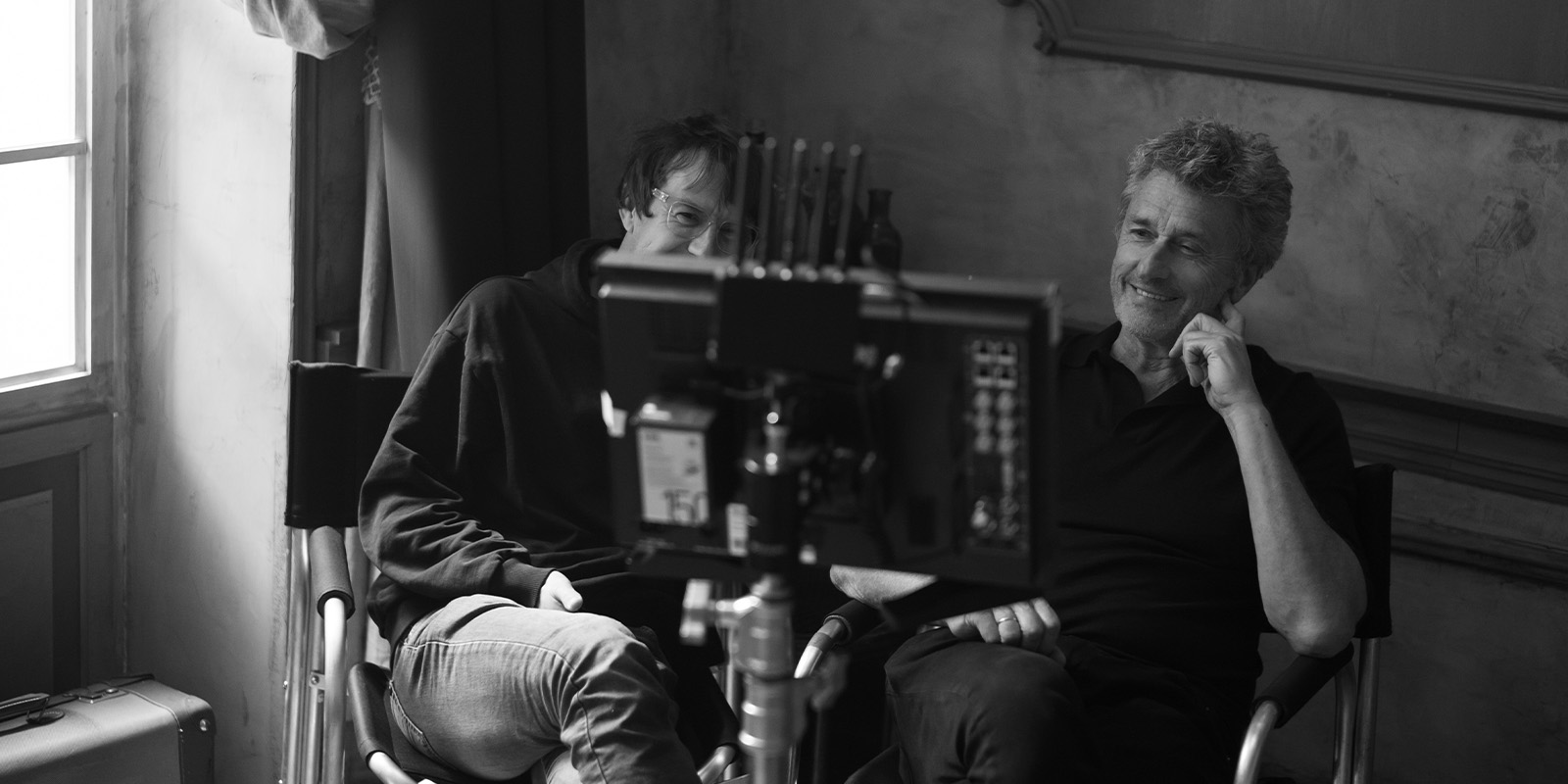
Shooting for a little less than 40 days, beginning in August 2025, with a mostly Polish crew, the production used one, sometimes two, cameras on set. When it was a single camera, operator Stanislaw Cuske took control, allowing Żal to sit alongside Pawlikowski by the monitor. “I really like to sit with him because we are really painting this image with a camera. We are just sitting behind a monitor and we’re tweaking, moving, sometimes reframing. He’s placing people. I’m changing the light. I just really like to control.”
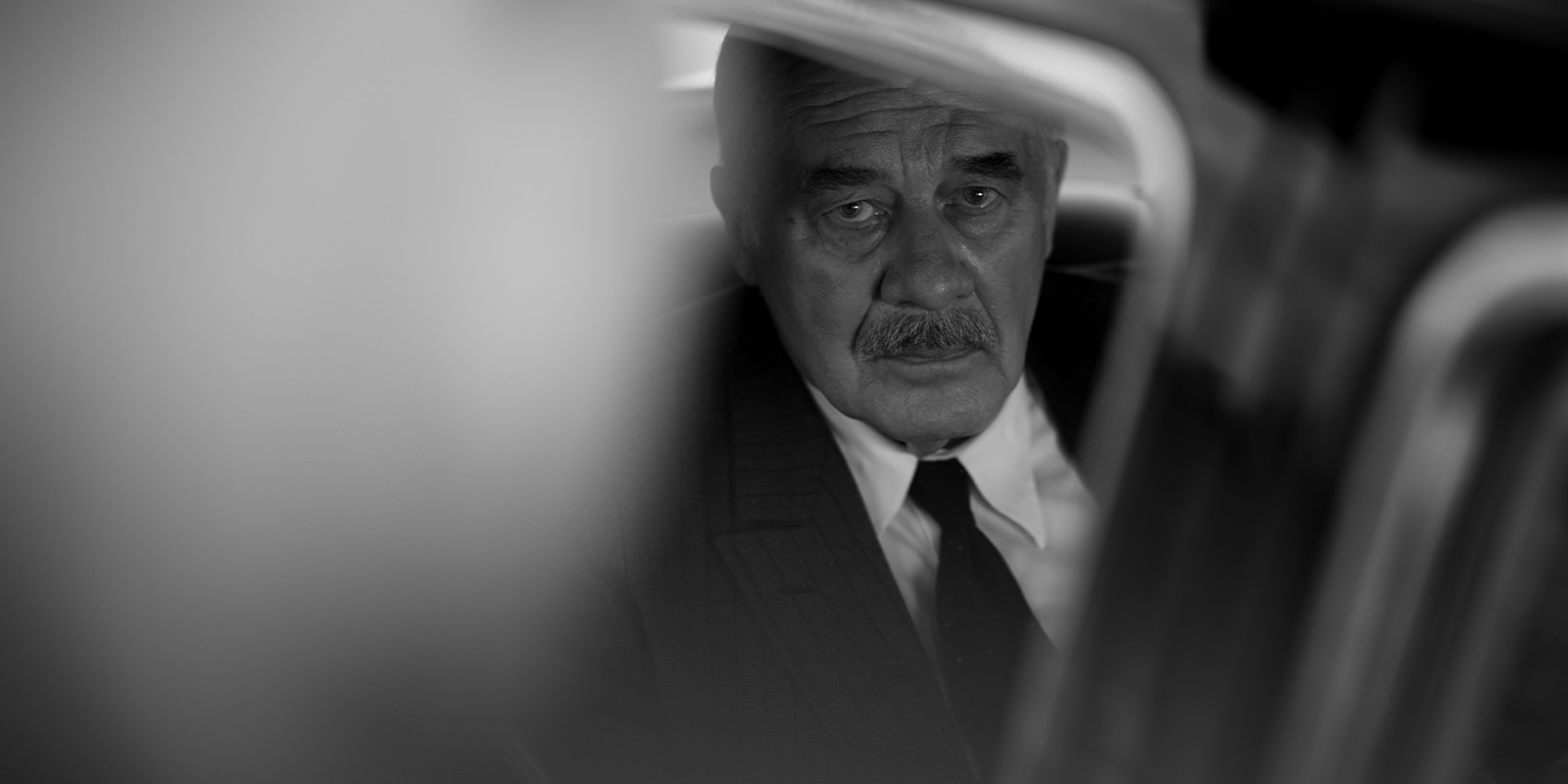
Mostly shot on location – bar two scenes on a soundstage – the bulk of Fatherland was filmed in Poland, despite the German setting, with production designers Katarzyna Sobanska and Marcel Slawinski required to adapt many of the locales. This included the recreation of postwar Frankfurt, seen at the very outset. For Żal, the most challenging moment in the film was this “long driving shot” as Erika and her esteemed father enter the city in their black Buick cruiser. “We’re building this whole world,” he says. “That’s our money shot, and we put so much effort basically into one shot.”
With little VFX work required, aside from erasing antennas and other modern infrastructure, Żal and Pawlikowski wanted to set the tone with the shot, for it to look more like archival footage than a feature film. “It was also important to treat this film a bit like a documentary; that this film would be not perfect,” Żal says. “I think that was the biggest task…to be not too beautiful, still thinking that this is going to be simple, that we don’t want to compose too much. Maybe you’re laughing at this!”
Indeed, given the meticulous framing, it’s hard not to find that amusing. Yet it was exactly the instruction Żal gave his gaffer, Przemyslaw Sosnowski. “I even told him, ‘You need to remember that sometimes, if you feel that I’m coming to you and telling you, ‘Oh, could you add one more [light] here…,’ just tell me, ‘Łukasz, stop it! You told me at the beginning that it needs to be simple, so don’t make this too beautiful!’” Using a mix of natural sources and LEDs, subtlety was the watchword, with Pawlikowski demanding “no fancy lighting”.
Keeping things moving
Featuring multiple shots on the move, the production used a low loader to mount the Manns’ car but also attached the camera to the vehicle, with Hüller free-driving. “The task is not to make this boring,” says Żal, whose philosophy leaned towards variety where possible, whether on the road or not. “We always use a dolly for a static camera. When you have a pneumatic dolly, you can very easily change the angle,” he adds. “And when the film is static and suddenly when you have a movement, this movement becomes really significant. I really like that.”
With the production on the move across Poland, with locations often far from Warsaw, Żal cites the film’s finale as “the most stressful”, as Erika and her father enter a ruined church and hear an organ recital of Bach’s “Jesu, Joy of Man’s Desiring”. Ending the film on a moment of spiritual contemplation – “something which really brings you to God” – was never going to be easy. Shooting in an abandoned Evangelical church in Goszcz, the camera was placed behind Hüller and Zischler. “I see that Pawel…he’s happy but not fully happy.”
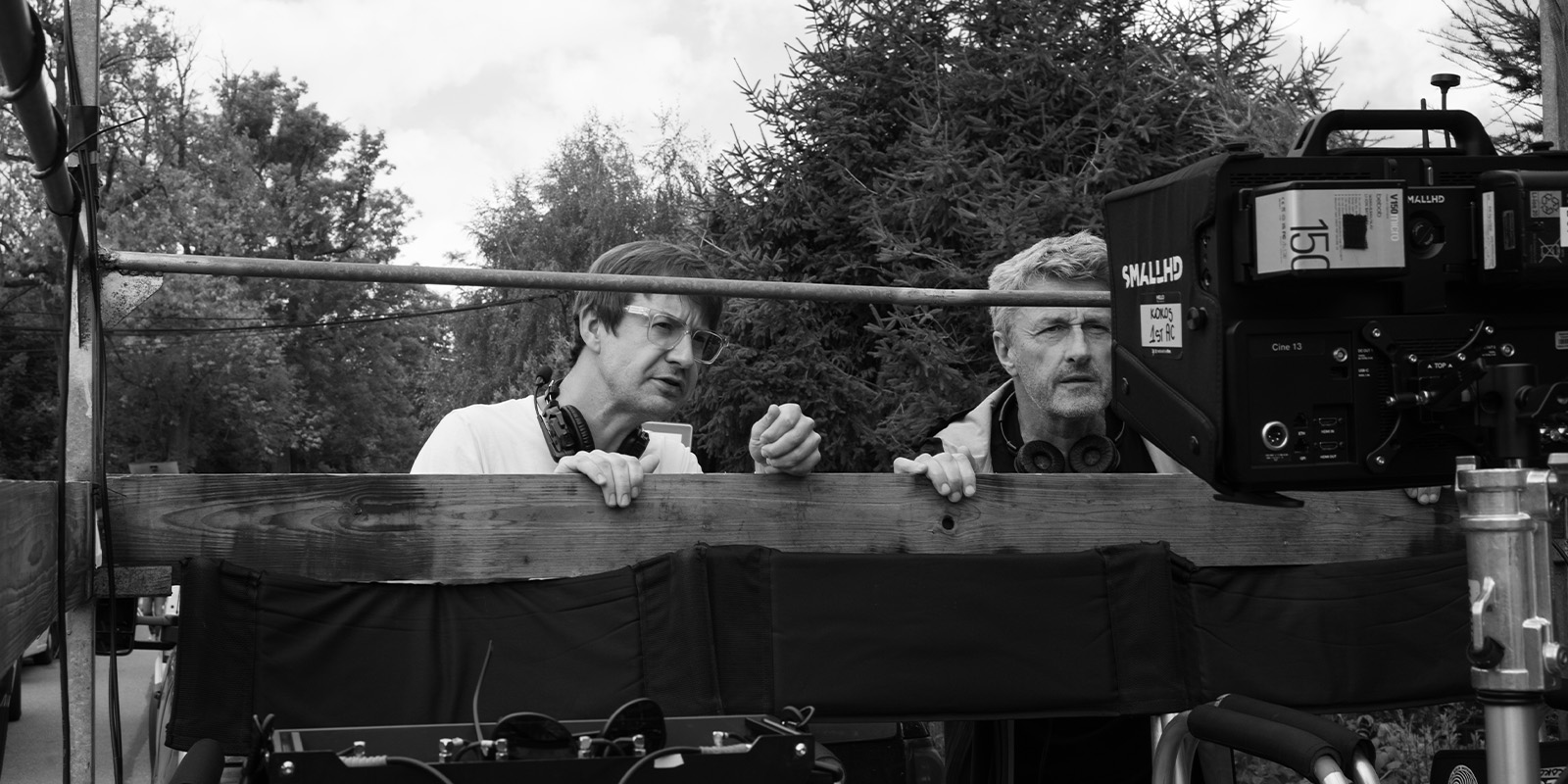
After adjusting the camera to a different angle, the scene was reshot to a more satisfying – and spiritual – result. “Very often this film was shot like that. We knew what we’re doing, but at a certain point we were just finding something different or extra – something which we didn’t expect.” If this sums up their working approach on the Fatherland shoot, striving for such delicacies continued into the postproduction phase, as Żal once again teamed up with senior colourist Michał Herman, who worked on both Ida and Cold War.
Again, the plan was to keep the film’s almost archival, time-capsule feel. “I told him that I want to have this very documentary-like, bold look, and with deep blacks and with high contrast,” Żal explains. Adjustments were made, to not be “too aggressive in the contrast”, as Żal looked to finesse the look, and reflect the emotional currency of the story. “This world is not black-and-white. It has so many shades of grey,” he says. It is entirely fitting – exactly reflecting how author Thomas Mann saw the world.