
PUNCHING ABOVE THEIR WEIGHT
While boxing films seem ever-present in cinema, Heavyweight – now available on all VOD platforms in the UK following its theatrical run – brings something completely different to the scene.
Boxing has a storied history in cinema. From Rocky in 1976 to Giant in 2025, boxing movies have captured audiences’ attention for decades, pulling the viewer towards the edge of their seat as they take in every right hook and swift uppercut as though they had front-row seats to the real thing. Yet this year, Heavyweight, from Blackwater Films and Silver Milk Productions and distributed by High Fliers, enters the ring with a completely fresh take on the formula– in that it barely enters the ring at all.
That is, the majority of Heavyweight takes place in a locker room in the build-up to Derek’s (Jordan Bolger) career-defining fight, as he takes on his inner demons – and often his own cornermen. For writer-director Christopher M. Anthony, the film’s narrative restraintis what makes it shine.
“I decided early on that I wanted to do something that was purely about actors,” he explains. “I wanted it to be a very personal film. I used to box, I used to do MMA, and I had a lot of anxiety before my fights. Right at the beginning of my preparation, I was always way more anxious than towards the end – so I thought it would be interesting to explore how fighters control that anxiety, especially when things don’t always go to plan, and see them go through that preparation.”
Rather than taking inspiration from the crunching hits of a Raging Bull or Rocky – “partly because the scale would have been difficult, but mostly because it wasn’t important to the story” – Anthony took inspiration from intense thrillers like Uncut Gems, Whiplash and, with it taking place in real time, Boiling Point. “There’s a review which calls Heavyweight ‘the sporting equivalent of Boiling Point’,” he muses, “and while I started writing this before Boiling Point came out, it did eventually become an influence, and I think it does have a similar energy – less in terms of it being one-take, but more the real-time intensity of it. That’s where that level of inspiration comes from, wanting it to constantly feel intense. I want an audience to feel something. That’s the most important thing. I don’t care whether I’m laughing, crying, feeling uncomfortable, whatever, when I watch a film I want something visceral, sensational, so we tried to put everything – from the sound to the editing to the cinematography to the grade – into giving this a sense of visceral feedback.”
Getting up close
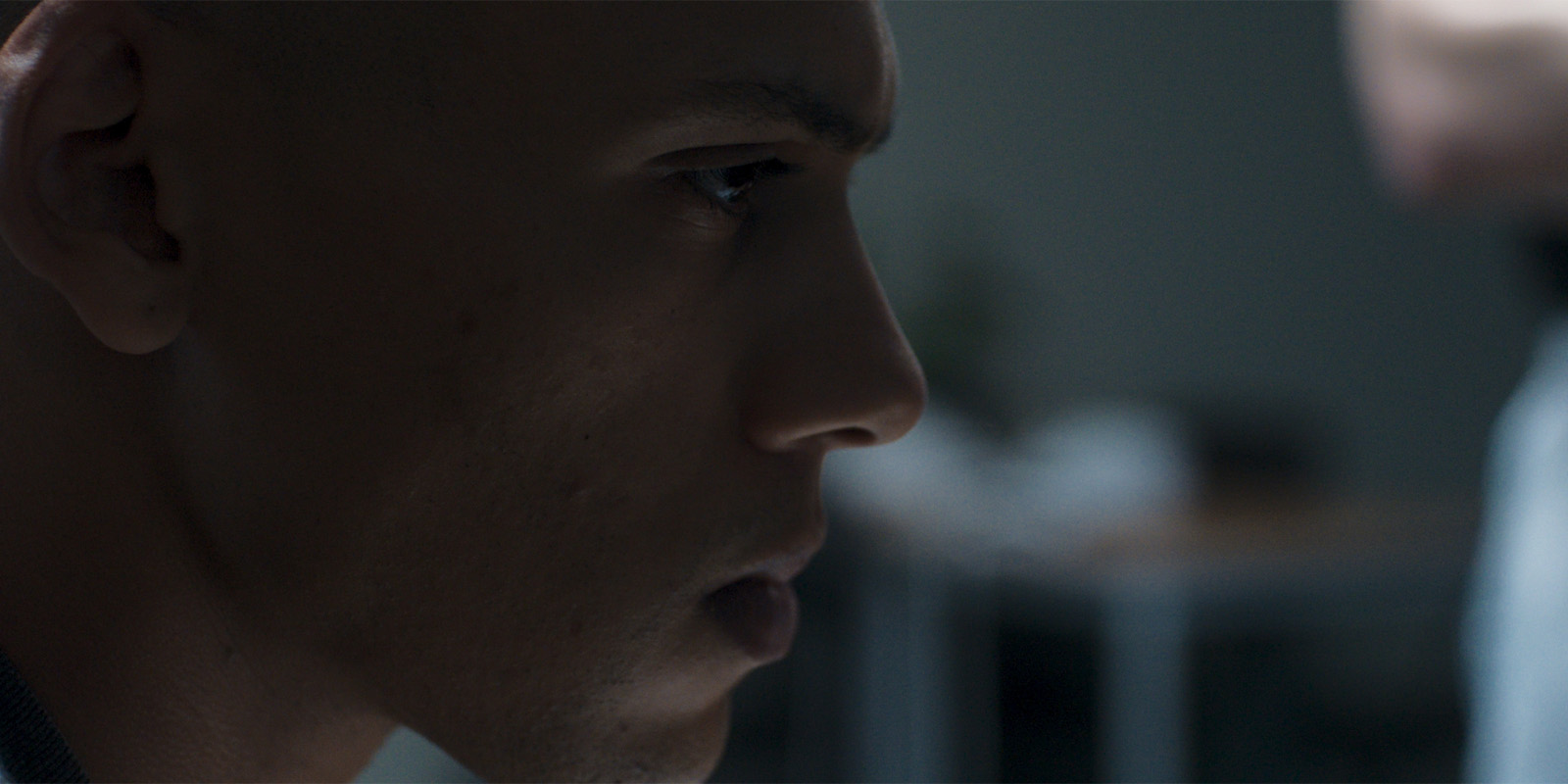
Central to that intensity is, as Anthony says, the cinematography of BAFTA winner Chas Appeti, who often gets suffocatingly close to the actors, soaking in their anxiety and uneasewith consistent close-ups.
“It’s always more effective when you’re closer to the subject in terms of their facial expressions,” Appeti says. “When you’re that close to an actor, you can tell what they’re thinking just by looking into their eyes. They haven’t really got to say anything. As Christopher said, this is all about the actors, so we’d lean into the extremes to get the most out of their performances.”
For these scenes, Appeti made use of Zeiss Super Speeds – “a big favourite of mine” – relying mostly on 50mm but pushing to a maximum of 85mm. As well as allowing close proximity, Appeti credits the “quite old bit of glass” for “giving you a bit more warmth in the image – it’s not too perfect, which I think is what this film needed. It couldn’t be too clean, it needed a little bit of something else.”
Anthony had initially wanted to shoot on film, to lean into visual imperfections that would complement the characters’ imperfections, but due to a tight budget, that didn’t come to fruition– luckily, the Super Speeds offered an affordable solution. “This was a good alternative,” Appeti asserts, “in terms of using older glass to give it a bit more imperfection than a Signature Prime or Master Prime, which are quite sharp.”
The ARRI Alexa 35 also proved useful, Anthony adds, as “the closest thing to shooting on film we could find” in a digital camera – while providing visuals that closely emulate real sporting environments. “The Alexa 35 made it feel a little bit more like what we’re used to seeing when we’re in a locker room,” he says, “because we see locker rooms on television and it’s always very dynamic. So I thought that was quite a nice mix, those lenses with that camera.”
Locked in
As mentioned, and as is the case in real-life boxing broadcasts, in Heavyweight – the opening film of the 33rd Raindance Film Festival – the locker room plays host to much of the drama. With the vast majority of the film taking place within its walls, Appeti had to innovate to keep the visuals engaging throughout –with this unique test “one of the reasons” he took on the project. “I loved the idea of keeping things interesting for that amount of time in one room, thinking of ways to keep the movement to the maximum, not having the camera hover around too long in one place – almost like it’s a person in itself.”
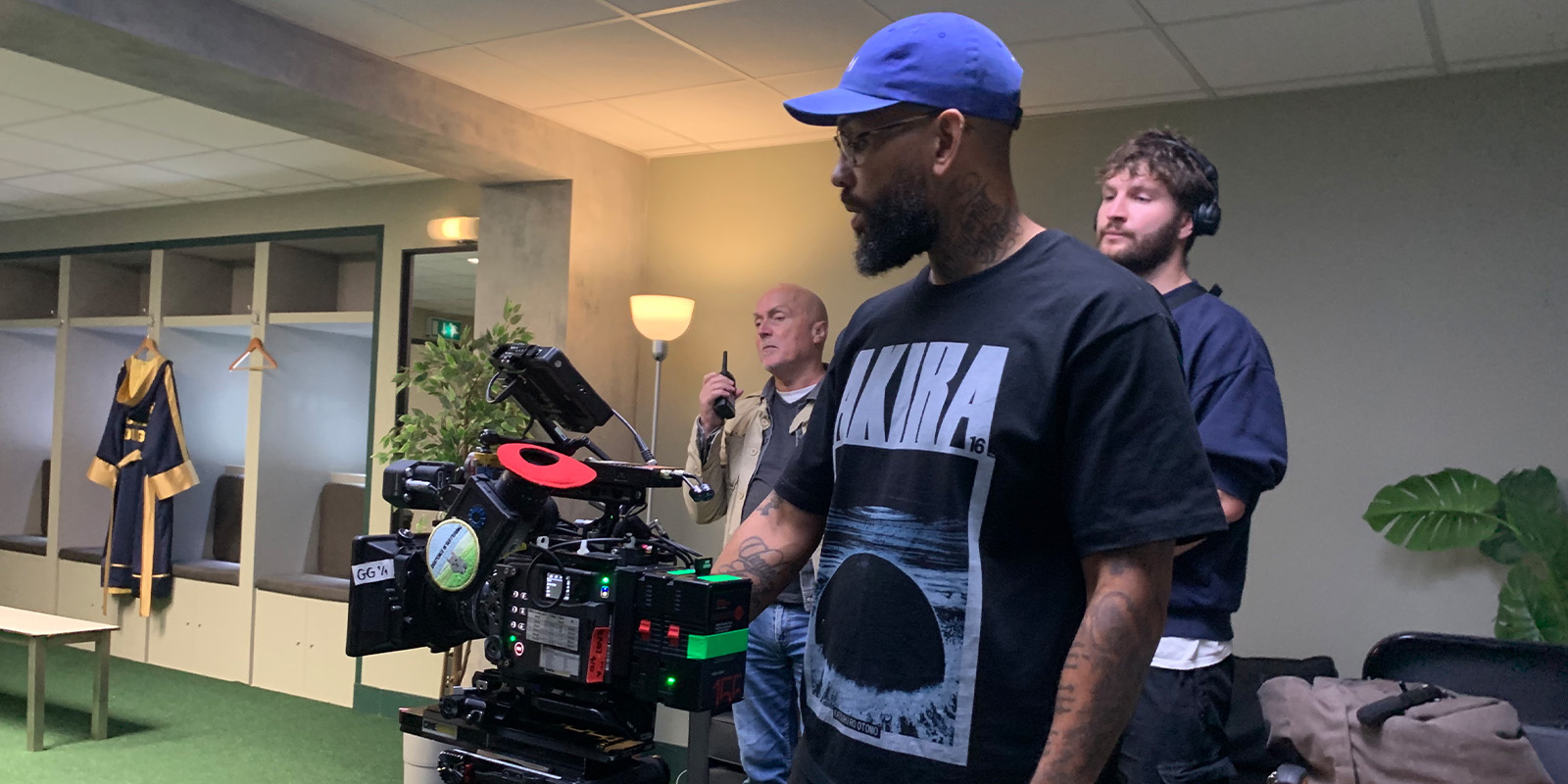
Again, lensing was key. “We were constantly aiming to find the right rhythm, and part of that was obviously keeping the lensing considerably tight for that room. I think we only use a couple of wide shots throughout – one for the opening shot of the locker room and then one at the end. The widest we shot was on a 35mm lens, as we were always trying to keep the viewer as one of the team, so they’re seeing this story from the perspective of everyone who’s in that room.”
Appeti focused on “tricking the audience” by showing different sides of the room through different perspectives and in different temperatures. “The room is actually split into three distinct temperatures throughout,” he explains. “One end of the room was quite cold and one was quite warm, and then you had the bathroom area which was more of an abstract colour. It was all about keeping the mood different throughout the room, depending on where they’re standing or sitting. So there was a lot of trickery that went on throughout it.”
The set was built at East London Studios,with Anthony instructing his team to craft a setting that felt as cramped and oppressive as Appeti’s camerawork. While this created challenges for the DP, it also led to some happy accidents. “They’d built the ceilings of the room really low, which helped to add to the tension of the scenes,” Appeti reveals, “but as a DP, you need stuff to grip to, so what I had to do was cut two big holes into the ceiling, which acted as skylights, so we could control the light from above. What you can’t see in shot is that there are basically two big chimneys above the set, which we built so we could have a bit more height and light dispersal into the room, and in the end I think it went a lot more colourful than I was expecting – more blue – and it actually looks really cool.”
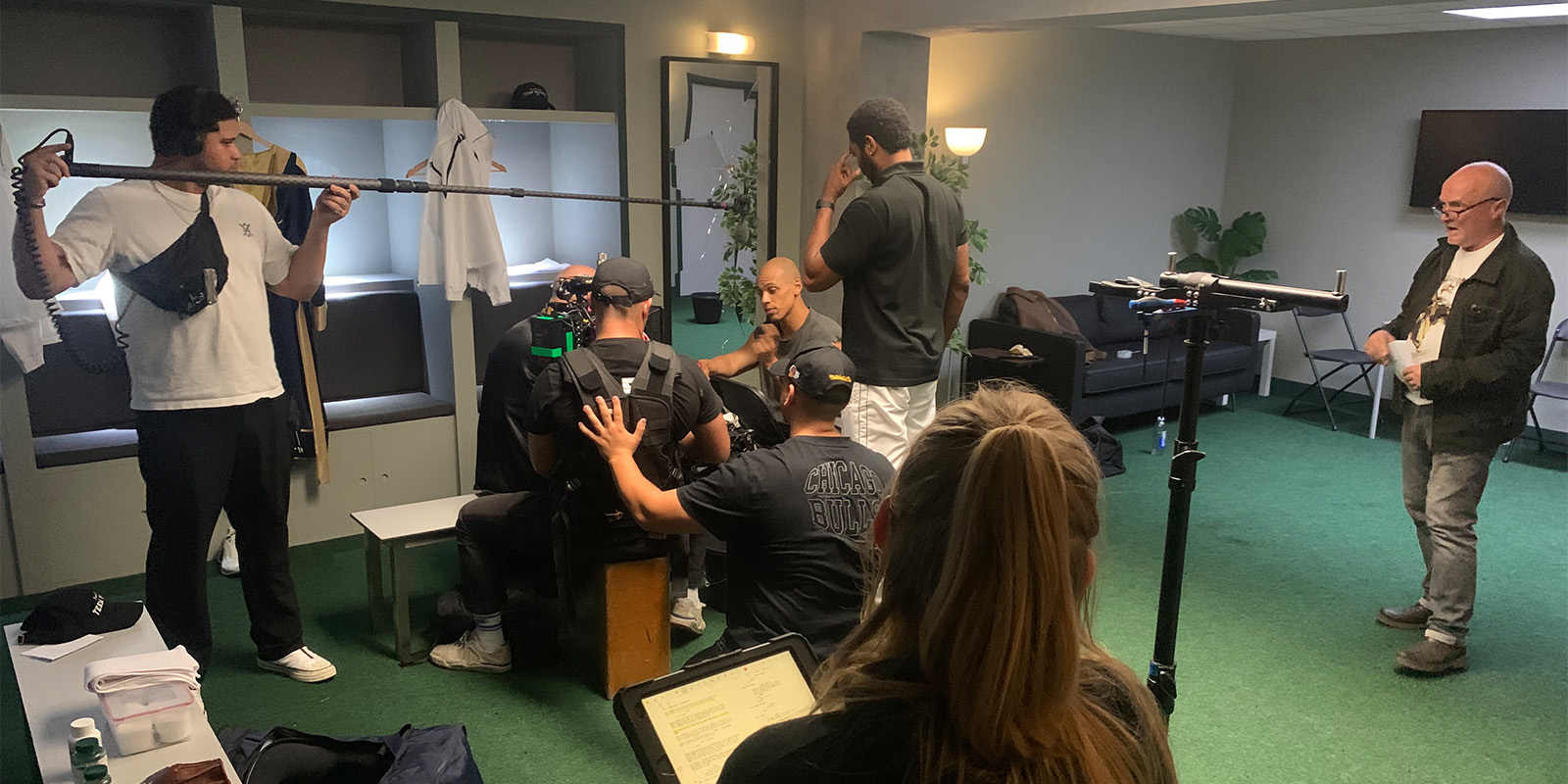
Appeti and his gaffer, David Witchell, almost exclusively relied on LED lighting, particularly ARRI SkyPanels and Aputure MCs – “fast, controllable” lighting. Like a boxer in the ring, he wanted to be able to adapt on the fly. “We only had 15 days to shoot,” he says, “so we needed to be as fast as possible. What I like about LED is that you can have everything on a board, so if we wanted to dim an area or change the temperature, it was very fast to do because it was all remote. For me, control of light on set is very important – it’s the best way to ensure speed.” The Alexa 35 delivered in this aspect too. “It has got an amazing sensor on it, so when we needed a little bit of a boost, for example in the bathroom area,you can push the ISO and the grain still looks good on the 35,” Appeti explains, with Anthony beaming at the film’s “unique look”.
Getting ready to rumble
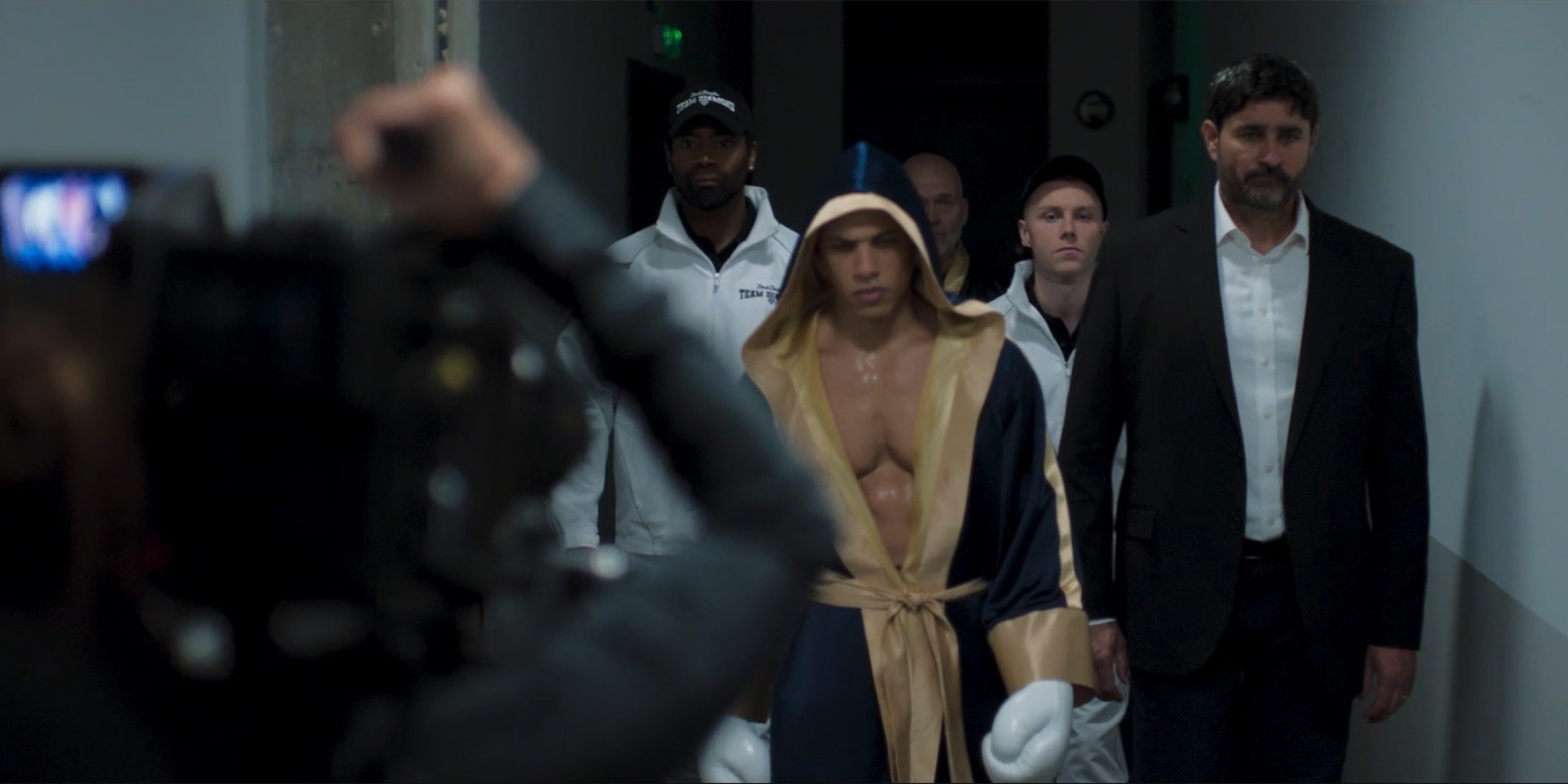
This look develops as the film goes on, with Anthony wanting to bring “subjective” camerawork that evolves alongside Derek, as he is forced to grow from a boy to a man across the space of 98 painstaking minutes. “When we start out, we’re quite gentle with the camerawork,” the director muses. “We’re walking in with him. The camera’s quite low, looking up at him. It was really important to make him feel big right from the very beginning.
“Then when things start to go awry, we shift those visuals. We see Derek watching a guy getting knocked out on the TV, and we linger on him a lot longer because now we’re starting to hint at what the risks are of a boxing match, which is that you can actually get hurt.”
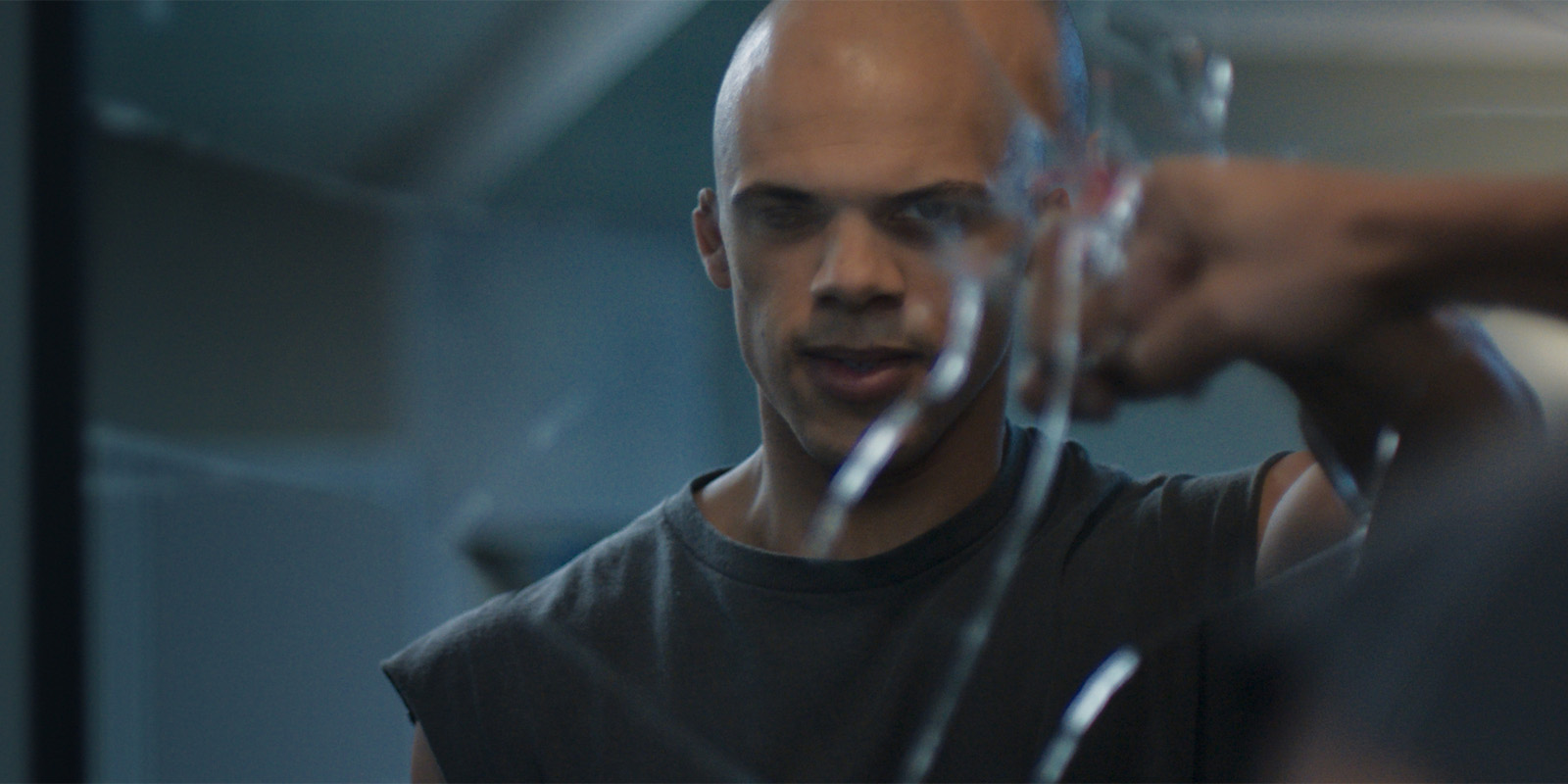
As the layers are peeled back on Derek’s mental state, so too are the gentle visuals, with Anthony aiming to display that “something’s not quite right” in the boxer’s mind. “He starts to put these defences up, and the camera becomes much more confrontational. We have what I call the ‘Red Shoes shot’, which is the mirror break. The setup honours a similar shot in Powell and Pressburger’s film – with Bolger’s punch stopping an inch short of the mirror, the lens is swung from a 35mm to 100mm and the mirror swapped out for a broken one. The jarring cut leads to a visceral moment that changes the course of the film. We start to question what this character’s going to do, what this pressure is doing to him. We start cutting between characters much quicker, we go more handheld with the camera, adding more dynamism into the scenes, and we start to explore how Derek handles growing tensions in the locker room. Can he step up to the challenge?”
Whether he can or not is up to the viewer to find out – but we can say with confidence that this director-DP duo certainly did.