
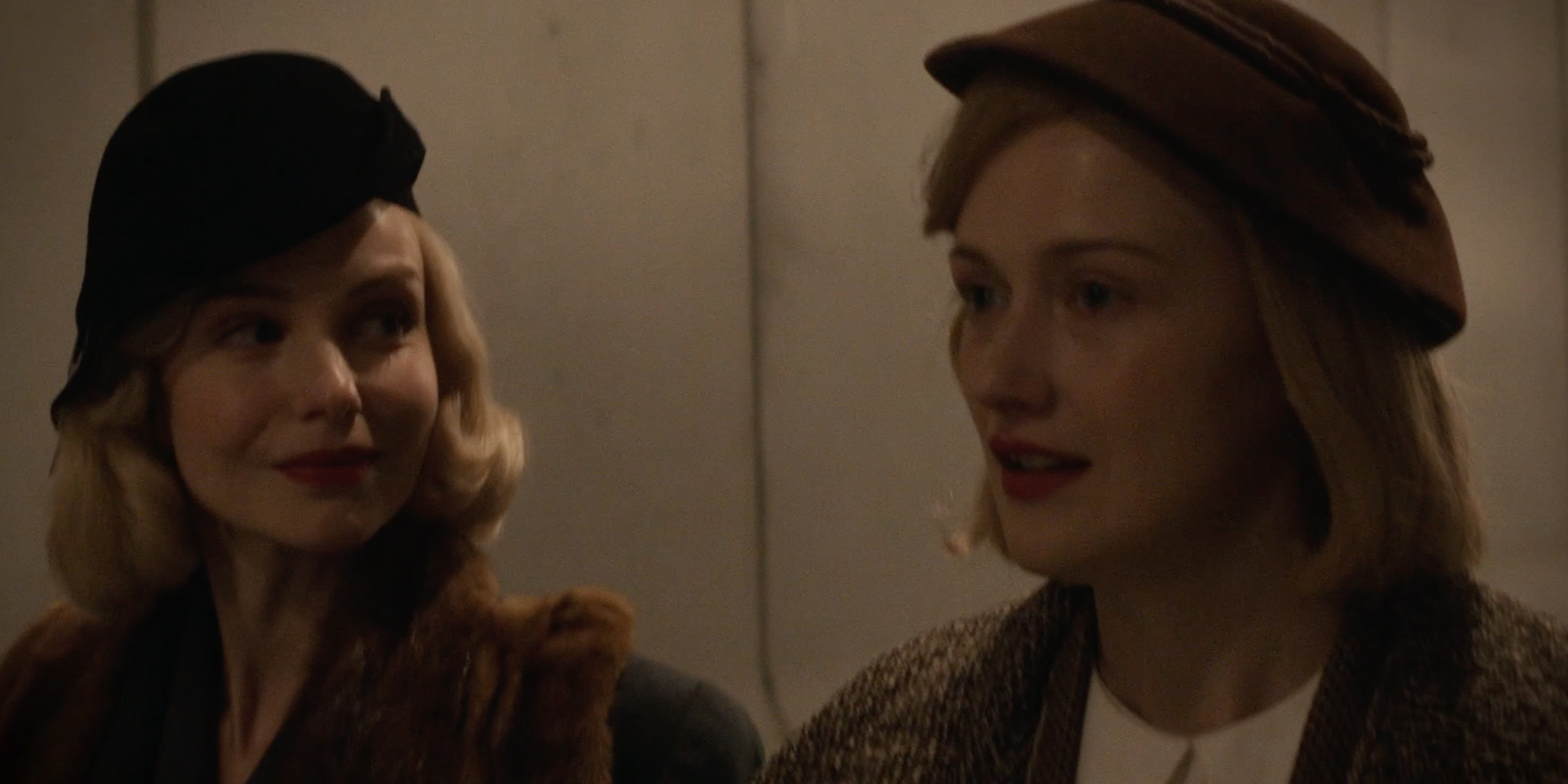
TUNNEL VISION
Using high-speed Venice 2 photography, practical lighting and selective VFX, Outrageous evokes fractured memory, culminating in a stylised, slow-motion “Cathedral of Light” at Nuremberg.
Outrageous is narrated by eldest sibling Nancy Mitford, who opens the show by describing her family in a photograph taken many years ago: “It captures my family like flies in amber, just before we all set out into the world.” She invites us into its world and we experience siblings finding their own voices in a crowded family.
Director Joss Agnew and I discussed how best to evoke this feeling and agreed that ramping from 25fps to 50fps and occasionally up to 75fps, would create the sense of recall—bending time. This motif appears at the top of the show and is used in significant scenes throughout.
The Nuremberg Rallies sequence in episode two was ideally suited to this device, as it marked a pivotal moment for Nancy’s infamous sisters, Diana and Unity Mitford—signalling the beginning of their fateful obsession with fascism.
Our challenge was to create Nuremberg itself. We shot in the UK with a limited schedule and budget, so filming in a real stadium with many SAs wasn’t feasible. We knew from the outset that we’d be relying heavily on VFX to construct our Nuremberg Stadium. Joss and I began by referencing Leni Riefenstahl’s iconic black-and-white images of the rallies.
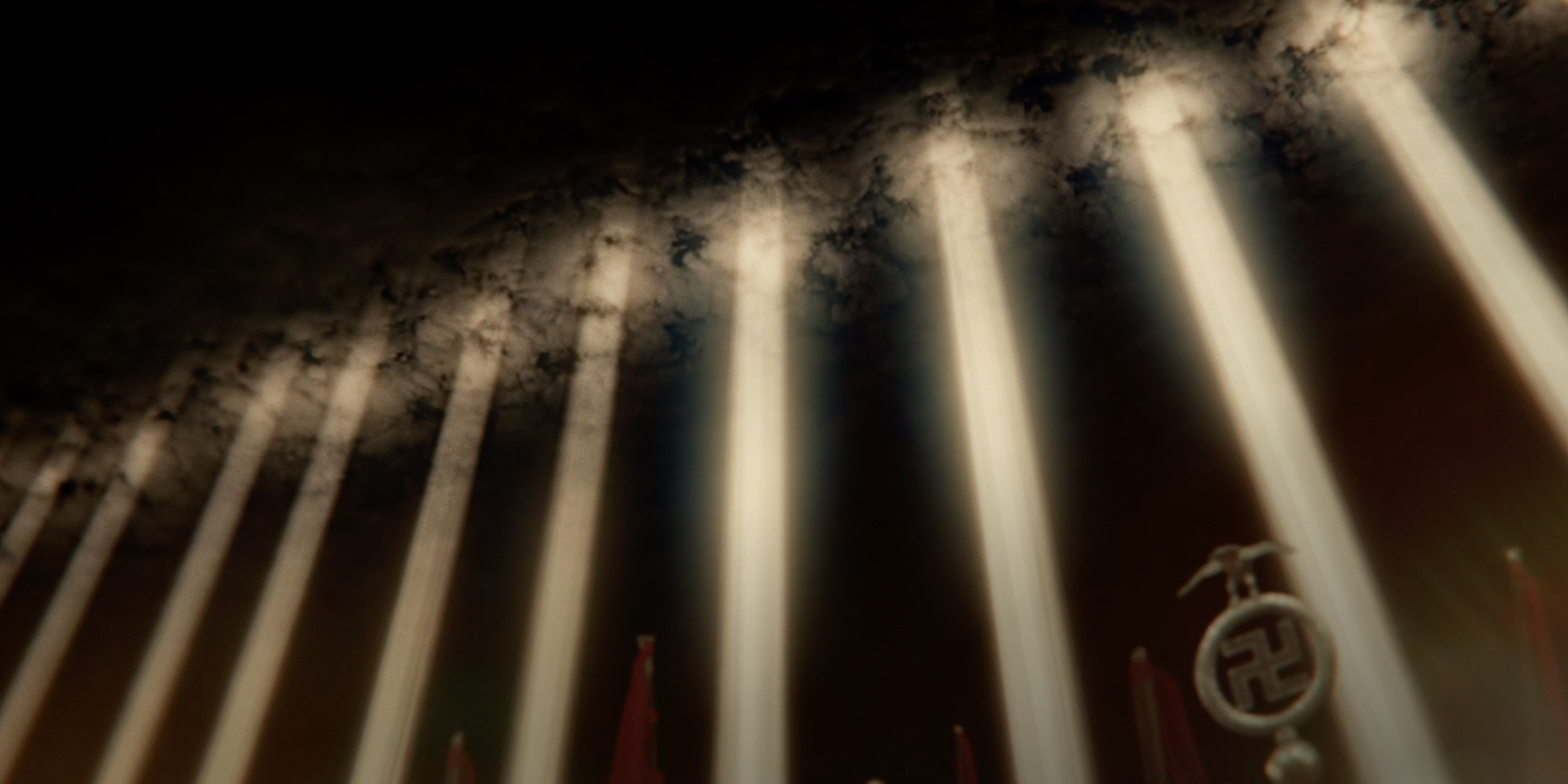
Even now, those images feel majestic and epic in scale, with strong bleach-bypassed tones. Crucially, we decided to frame the sequence through our lead characters’ perspective—capturing the emotional intensity of the experience rather than recreating the entire arena. We wanted to evoke the excitement and hysteria of a teenager going to a Beatles concert—the raw energy and fanaticism that the Nazi party knowingly fuelled.
Against the grain
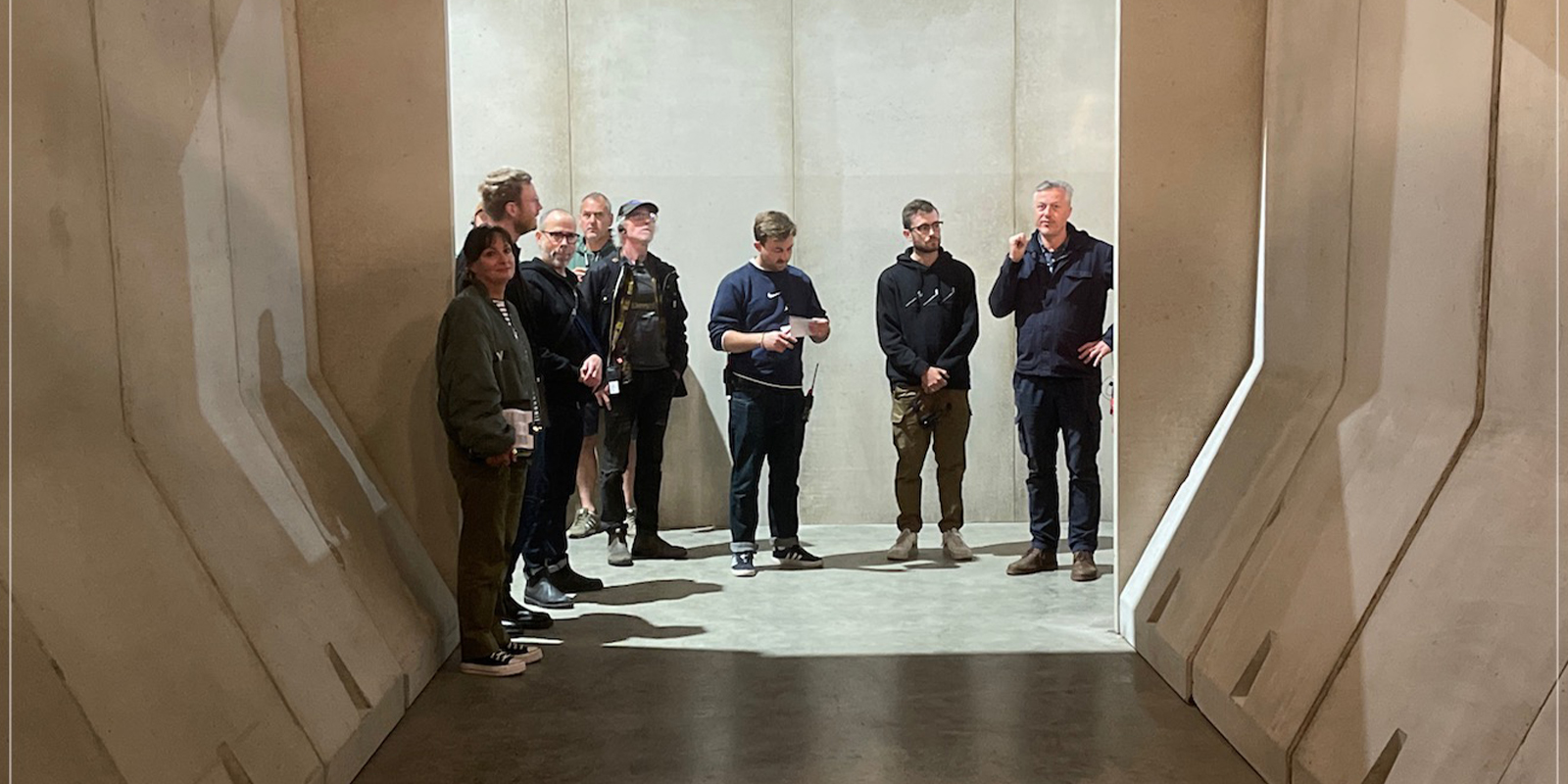
We filmed in a farm grain store at White Waltham, which offered the space we needed for several large set pieces. We built three sets inside, including the Nuremberg set: a 20m tunnel with returns at either end. The rest of the “stadium” was filled with blacks and bluescreen and populated with SAs. The tunnel walls were made from freestanding precast concrete already present in the grain store. Production designer Matt Button integrated these blocks and added a ceiling to fully enclose the space. With no period reference for tunnel lighting, I chose bulkheads—both historically appropriate and ideal for the look I was after.
Joss and I knew we could build tension by following our characters’ journey through the tunnel. Their rising adrenaline, the mounting roar of the crowd and the gradual reveal of blinding light created a visual crescendo—heightening the sense of overwhelm the sisters felt as they stepped out into the vast stadium.
Seeing red
We worked with a storyboard artist to pre-visualise the sequence. With limited VFX budget, we focused all resources on three key shots to maximise impact, integrating them as seamlessly as possible.
We achieved the “Cathedral of Light” effect in the non VFX shots by placing two 20×20 blacks at the end of the tunnel behind the SAs, with Source 4s and 5Ks on scissor lifts backlighting through the blacks. Additional Source 4s, 2Ks and S60s on ultrabounce surrounded the crowd. Moving profiles picked out Nazi flags, while sparks moved the heads discreetly, creating a chaotic, rock-and-roll stadium feel—immersing us in Unity’s perspective as Diana looked on, pleased to see her sister so enthralled by the spectacle.
Camera operator Ben Eeley was on Steadicam, filming just under eyeline at ground level. I operated second camera on tracks and dolly, looking slightly down on Unity and Diana using an Optimo 24–180mm. This lens complemented our shooting set of two Atlas Orion anamorphics and K35s with Canon FD primes. We shot 2.1 with 16:9 safe.
Shooting at 100fps meant I relied on the Venice 2’s high ISO. The 3200 ISO mode was essential and did not disappoint—I pushed the image, embracing the texture it brought to the story. We spaced 10 100w bulkheads 2.5m apart across the ceiling, with five more on the back wall. I reduced the palette to near monochrome with sharp accents of Nazi red. Hair and make-up designer Loz Schiavo and costume designer Claire Collins worked closely with Joss and me to shape this muted world. It was a stark contrast to the pastel palette and creamy highlights of episode one.
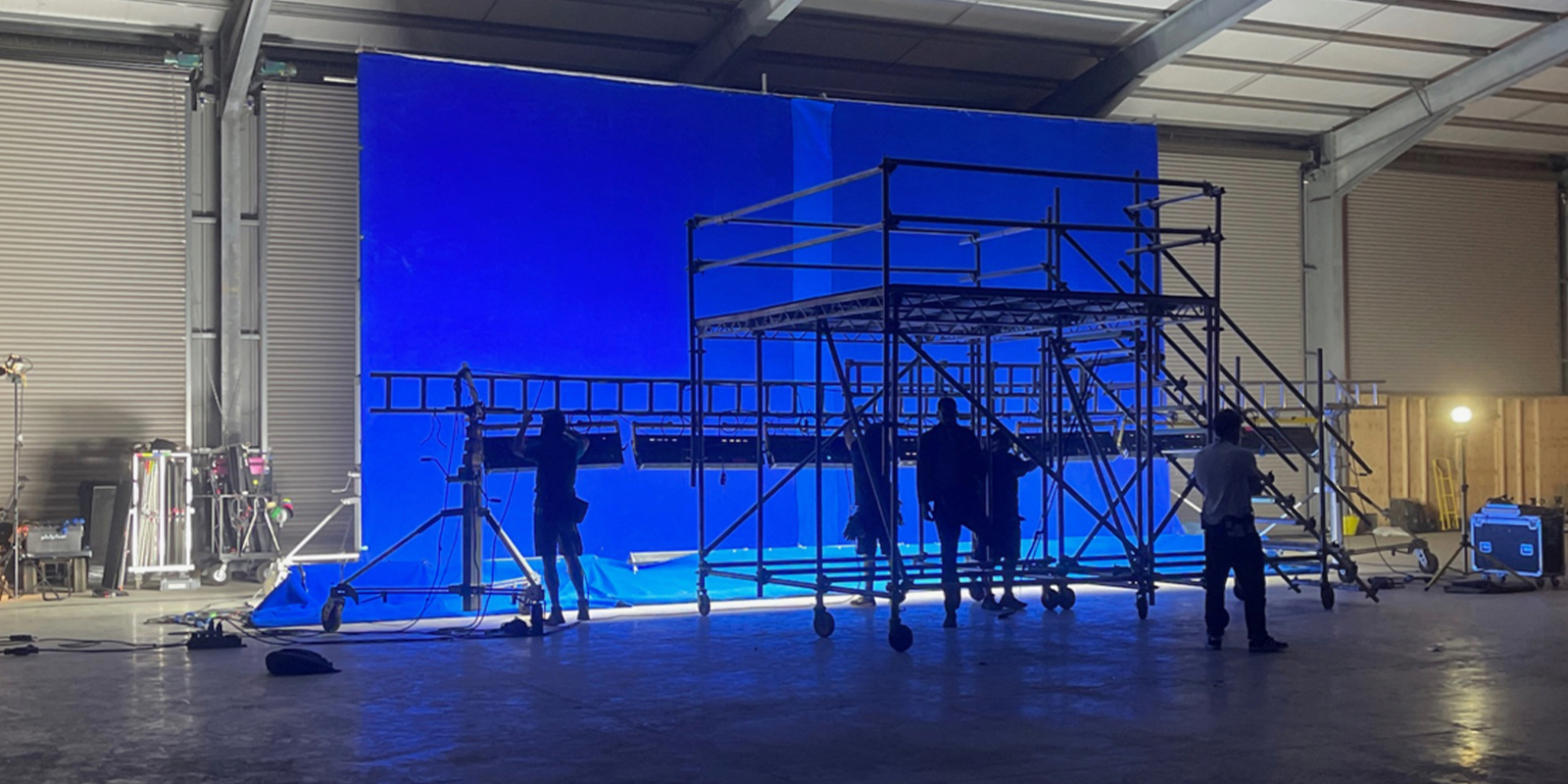
The grain store hosted multiple sets on our single shoot day. A bluescreen was used to capture plates of Hitler, SS Guards and Nazi soldiers. We also shot a 1930s London bus—first a mid-shot of Nancy inside, followed by a wide plate for a VFX shot of the bus crossing Albert Bridge. We wrapped the day filming the Oswald Mosley Blackshirts rally at Kensington Olympia, inspired by original archival footage.
But beneath the glamour and defiance lies a quiet shift. This is the moment things begin to unravel for the sisters—a turning point where they edge closer to a darker legacy, stepping knowingly or not, onto the wrong side of history. The beginning of their liberation might just be the beginning of their undoing. That tension between surface and subtext is exactly what we were exploring through the cinematography.