
A QUIET RADICAL
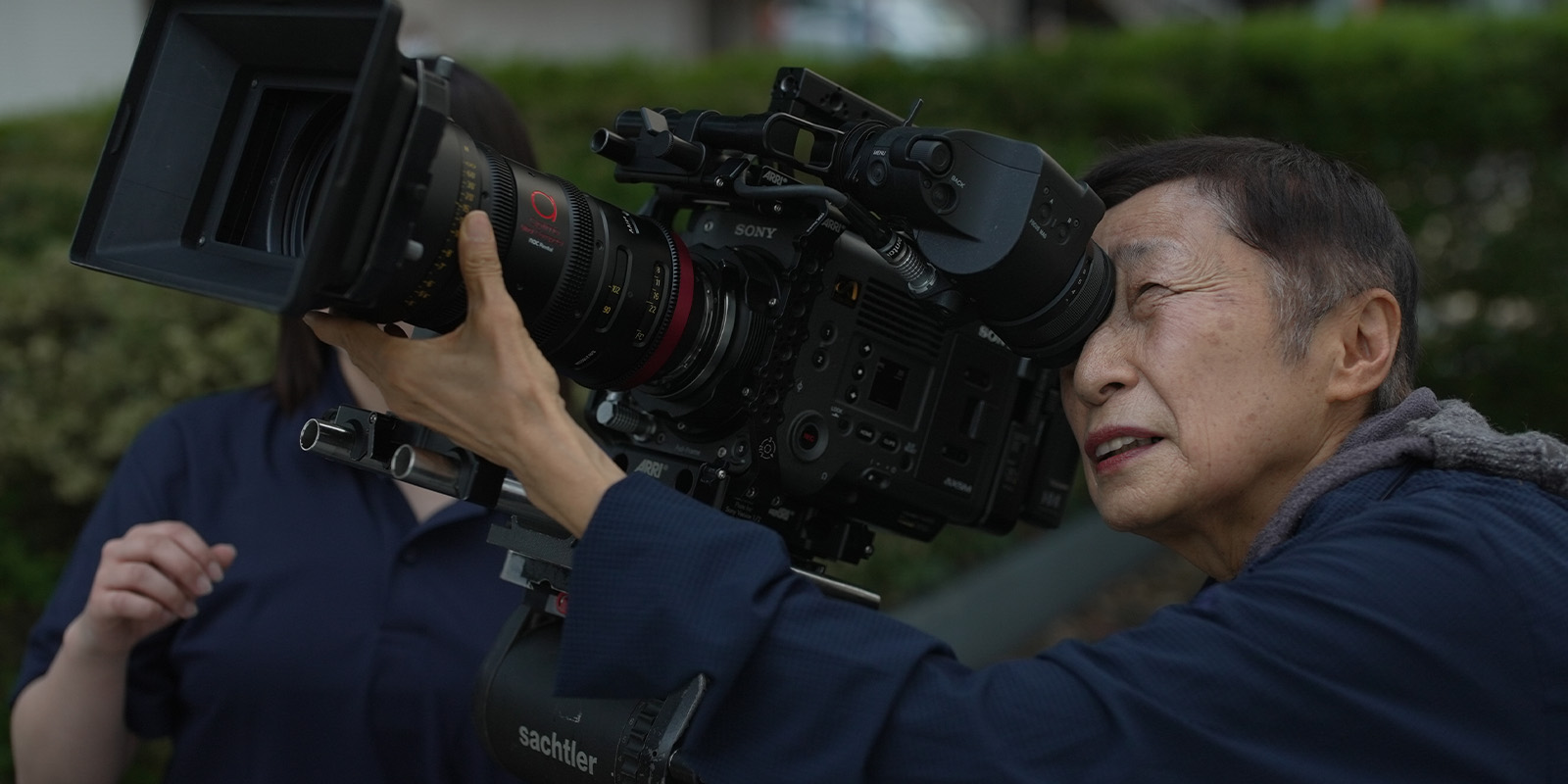
Her name may not be widely known outside cinephile circles, but her influence runs deep. Akiko Ashizawa JSC has built a career shaped by an unwavering commitment to the emotional truth of an image in some of Asia’s most distinctive films.
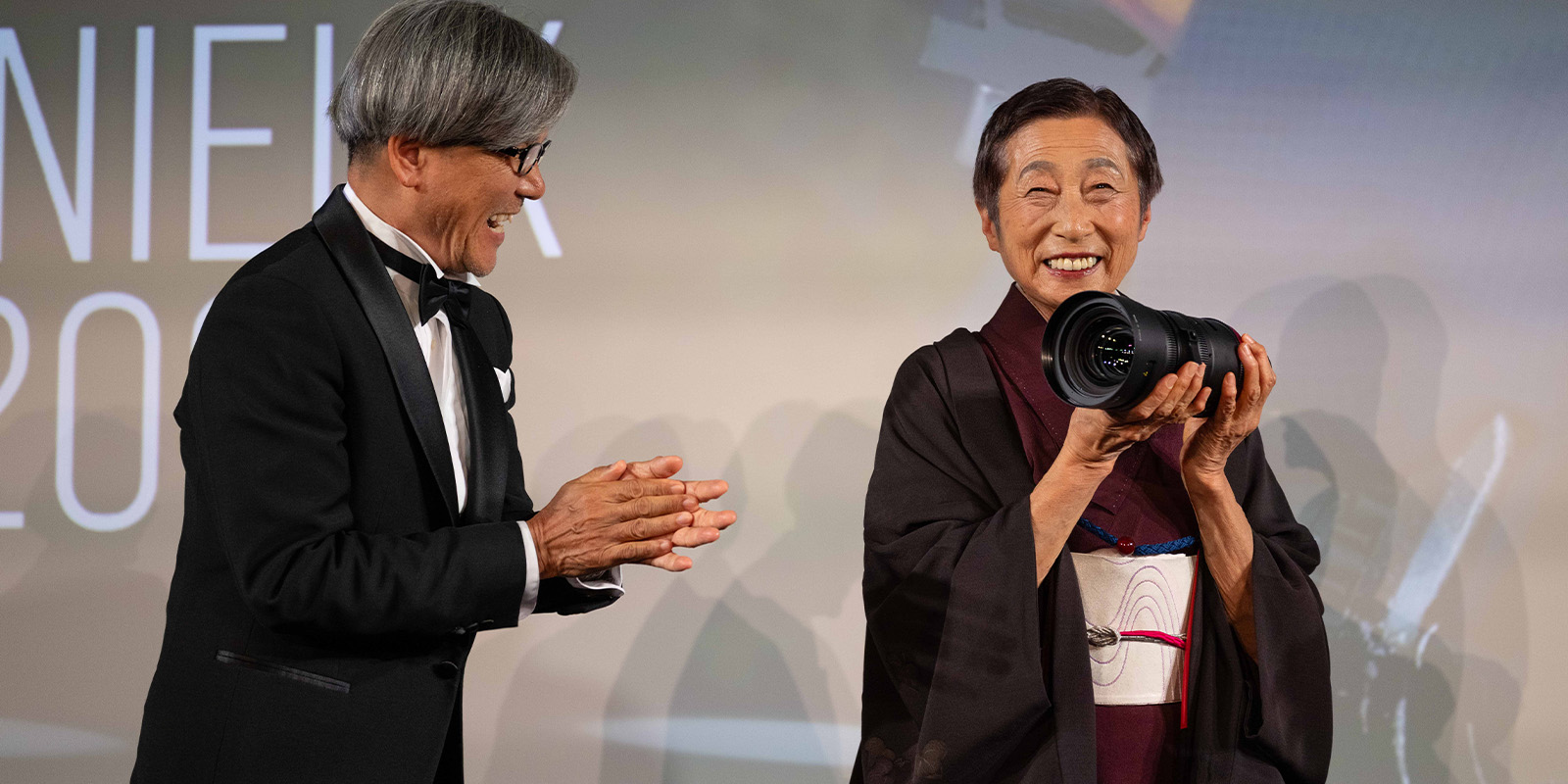
Honoured in Cannes with the Pierre Angénieux ExcelLens in Cinematography award, Akiko Ashizawa JSC’s work encompasses more than 50 films ranging from exploitation classics to intimate dramas and philosophical sci-fi to light comedy and horror satire.
She has won Best Cinematography Awards from Yokohama Film Festival, Mainichi Film Concours and FANCINE Festival. In 2020 she was nominated for an Asian Film Award for her work on To the End of the Earth (Tabi no Owari Sekai no Hajimari, 2019), directed by Kiyoshi Kurosawa with whom she is most closely associated, having made 10 films together includingCannes-selected films Tokyo Sonata (2008) and Journey to the Shore (2015).
Yet she insists she never set out to become a filmmaker at all.
Born in Tokyo in 1951, Ashizawa grew up in an auspicious decade for Japanese film. This Golden Age was dominated by Akira Kurosawa (Roshomon, 1950; Seven Samurai, 1954; Throne of Blood, 1957) as well as Yasujirô Ozu’sTokyo Story (1953) and French director Alain Resnais’ Hiroshima mon Amour (1959).
Her mother had dedicated her life to Noh, a traditional form of musical theatre in which actors wear masks and costumes. “She had many devoted followers and taught Noh songs (utai) to her students,” Ashizawa recalls. Utai refers to the “script and lyrics” of Noh plays.
Despite being surrounded by this world of performance and aesthetics Ashizawa initially chose a different path, studying management at university.
“That was the era when 8mm cameras were becoming popular, so my friends and I started making small films together. That’s how I first became involved in filmmaking.”
Her true cinematic awakening came on a date when a boyfriend took her to see JeanLuc Godard’s Pierrot le Fou (1965). “I thought filmmaking looked easy,” she recalls with a laugh. “I was completely mistaken.” The relationship ended, but the revelation stayed. “My relationship with film was going to last.”
Finding a way in
Ashizawa entered the industry through small independent productions while still a student. At first, she imagined herself a director but eventually turned towards cinematography.
“I made films in 8mm with a group of friends, amongst them was Yoshimitsu Morita. He was incredibly talented.”
While Morita went on to direct (including The Family Game) Ashizawa decided to take a different path. “I think my encounter with Morita helped me realise that I should try to be a cinematographer.”
Like many filmmakers of her generation, she started her career on small projects, ‘pink films’, low-budget genre movies, sometimes gems, often featuring violence, sex and nudity.
“First, I worked for DP Hideo Itô (who had shot In the Realm of the Senses). He quit his prestigious career at Toho and became independent. His decision to go independent was inspiring and shaped my understanding of creative freedom.
“There were no cinematographers at that time who would be willing to hire female staff as their assistant, but he accepted me happily. He taught me never to forget to give your best shot, regardless of the size of the projects.“
Then Ashizawa apprenticed with DP Masao Nakabori (Women in the Mirror). “He taught me that as a cinematographer, my job was to understand and translate the director’s emotions and vision through the camera.”
Breaking through to the next level required strategy. Her solution was to step sideways. She entered television and commercials, where the gender barriers were lower and the economic boom had attracted a wave of talented creatives. “I was fairly free to work and learn,” she says. “The commercial world helped me learn a great deal.”
A first feature
Her ambition was to make features and her breakthrough was a result of her own persistence. While still working in commercials, she wrote a letter to the director Hideyuki Hirayama expressing her desire to shoot a film. Two years passed before he replied. When he finally did, she seized the opportunity as cinematographer on Yoikoto Asobo (1994, Let’s Play With Good Kids).
She gained attention a couple of years later shooting Hisayasu Satô’s body horror Splatter: Naked Blood. It concerns a young scientist who develops a new drug that alters the way the brain handles pain, turning pain into something pleasurable.
In the same year, they made Yabu No Naka (In a Thicket) based on the same short story adapted as Roshoman. Both films transcended their exploitation roots. One critic even preferred Yabu No Naka to Kurasawa’s classic.
Ashizawa would later revisit some of these themes in Rampo Noir (2005), an anthology of four short horror films directed by different directors, including Satô, and based on stories by Edogawa Rampo, the so-called ‘Japanese Edgar Allan Poe’.
A completely different opportunity presented itself in Misuzu (2001), a 1920s-set biopic of poet Misuzu Kaneko directed by Shô Igarashi, which was followed in 2004 by Hazan, a period biopic of ceramic artist Hazan Itaya with the same director.
In between, Ashizawa shot romantic drama Unloved (2001) for director Kunitoshi Manda starring Yoko Moriguchi and Shunsuke Matsuoka, which won the Grand Rail d’Or prize and the Future Talent prize at Cannes.
For Chronicle of My Mother (2011), an adaptation of a memoir of novelist Yasushi Inouedirected by Masato Harada, she received the Mainichi Film Award for Best Cinematography.
More recently, she worked with director Keishi Ohtomo, on historical epic The Legend and Butterfly (2023), covering three decades in the life of iconic samurai Oda Nobunaga.
The Kurosawa Partnership
It is her longstanding collaboration with director Kiyoshi Kurosawa which is perhaps the defining relationship of both their careers. She was drawn to his sensibility early on, particularly his remark that many directors could shoot sunny weather, but few could shoot cloudy weather well. “I wasn’t sure I could,” she admits, “but I said I could.” That confidence opened the door.
They first collaborated in 2005 on horror mystery Loft and followed this by another in the same genre, Retribution (2006), before Tokyo Sonata established them at the pinnacle of world cinema. Kurosawa channelled his interest in psychological horror into a traditional family drama which is subtly unpicked by tension and revelation and about which the critic Roger Ebert said, “We are blindsided by its beauty.” The film received the Jury Prize at Cannes Un Certain Regard.
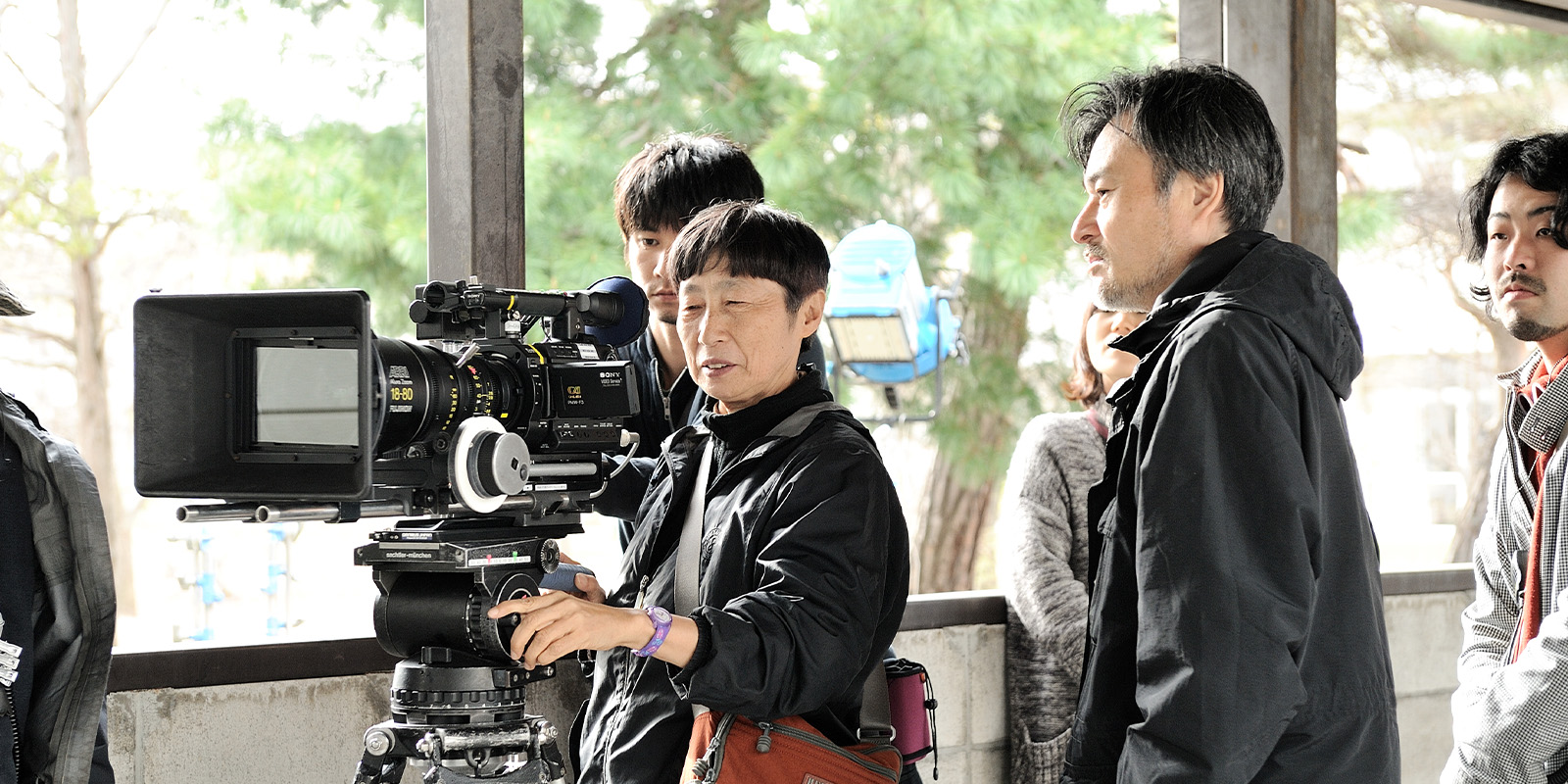
Ashizawa says, “Kiyoshi taught me to question common sense, to question what society assumes is ‘right’. He taught me that behind everything, there is something deeper. And he taught me never to forget a sense of humour, even in serious work. These ideas have become my motto.”
Journey to the Shore blended gentle romance with the supernatural and meditations on loss for which Ashizawa employed hypnotic long shots, helping Kurosawa to win best director in the Un Certain Regard section at Cannes 2015.
He returned to darker themes with2016’s psychological horror Creepy, tackled a science-fiction thriller in Before We Vanish (2018) and again in Foreboding (2017) which was a spin-off from Before We Vanish and originally produced as a five-part TV series before being re-edited for theatrical release.
Their most recent film, To the Ends of the Earth (2020), is an extraordinary character study of a young Japanese TV journalist who travels to Uzbekistan on assignment and gradually spirals into an emotional crisis. Critic Simon Abrams praised Ashizawa’s “fluid camerawork, subtle lighting cues, and rich depth of field”.
Ashizawa says, “Even though we’ve worked together many times, each film feels like the first, and we always try something new. The most important thing is maintaining a good distance between director and cinematographer. That balance allows our personalities to harmonise.”
Her filmography is filled with unusual challenges. In Koji Fukada’s sci-fi Sayonara (2017) a terminally ill young woman in post-Fukushima Japan lives alone with only an android for company. Uniquely, rather than use an actor or CGI, the android was a real one, developed by robotics expert Hiroshi Ishiguro at Osaka University.
It remains one of her favourite experiences. “It felt as if my feelings were being transferred into the android,” she says. “I even found myself putting a coat on the robot at the end of the day.”
Nankyoku ryôrinin (The Chef of South Polar, 2009) is another of her favourites. “Exploring the essence of humour made me realise how difficult it was to make people laugh,” she says. Directed by Shuichi Okita, this lively tale of a science crew enduring isolation in an outpost in Antarctica becomes a crisis when they run out of ramen. The production shot in the far north of Hokkaido, where effects teams conjured blizzards and drifting snow.
Ashizawa has always been drawn to prominent young filmmakers in Japan and across Asia, saying she wants to exchange ideas, experiment and to keep learning.
For Philippine director Janus Victoria’s debut movie Diamonds in the Sand (2024), she chronicled a Japanese salaryman’s journey to find meaning after his neighbour’s ‘kodokushi’ (lonely death).
In 2018, she was invited by Indonesian filmmaker Edwin to make one of three short films in the anthology feature Asian Three-Fold Mirror 2018: Journey.During its premiere at the Tokyo International Film Festival, Edwin gave her the script for Vengeance Is Mine, All Others Pay Cash, a tribute to ‘80s and ‘90s Asian action, martial arts, gangster and horror movies.
“I once doubted I could shoot action, but after tackling it with Edwin on Vengeance Ifeel ready for anything,” she says. The film premiered at Locarno Film Festival where it won the top honour, the Golden Leopard.
She elected to shoot 16mm as the best way to honour the genre and period. “The other thing that I love when shooting on film is the ability to freeze time,” she says. “The grain triggers the imagination.”
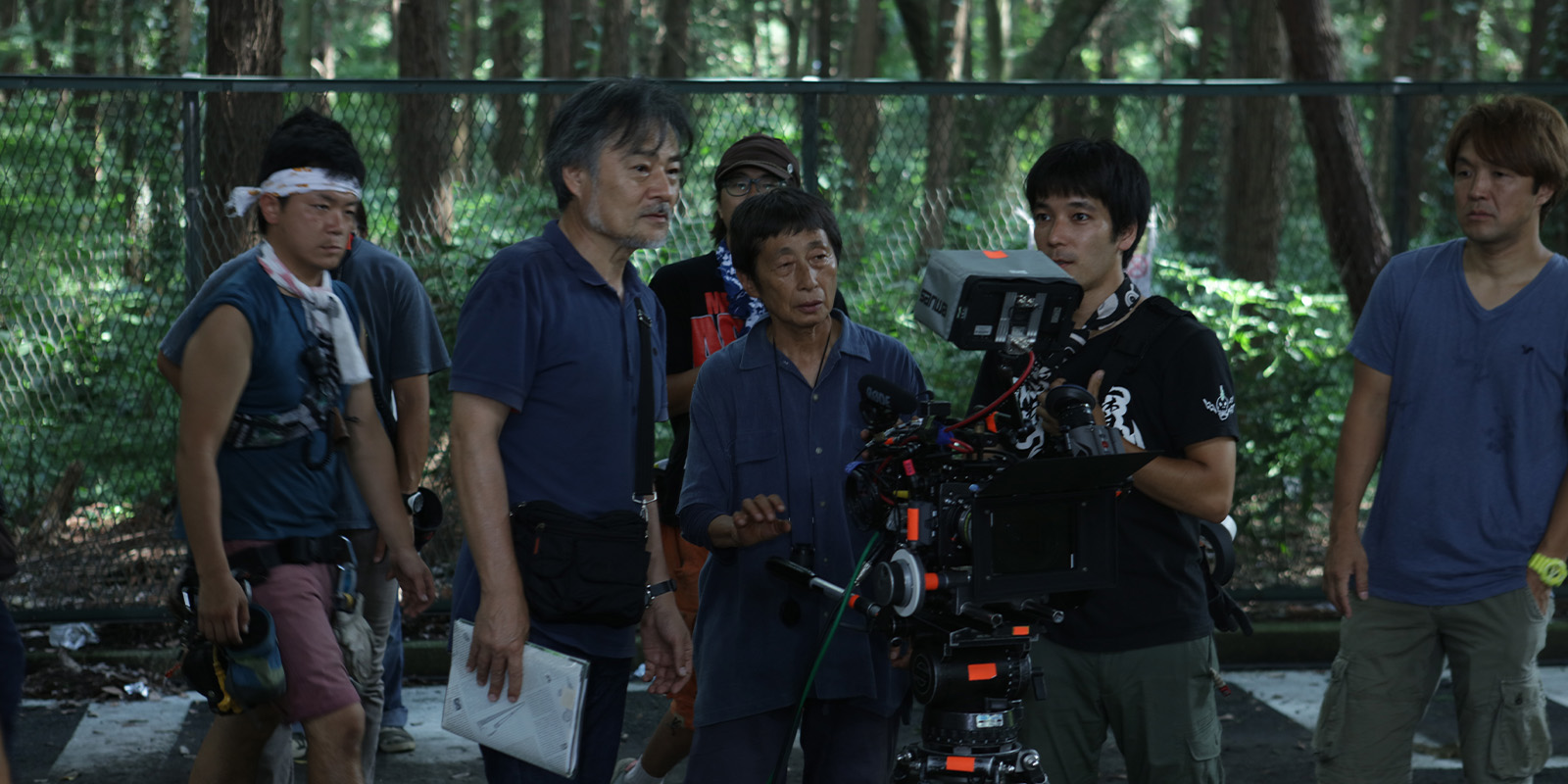
Working again with Edwin on this year’s release Sleep No More, the original plan was to shoot 16mm, however the project makes extensive use of practical effects (prosthetics, fake blood, modelling) and complex action sequences.
“I simply didn’t have enough time to shoot on film and review the footage immediately after each take. Therefore, I had no choice but to switch to digital. Even so, we wanted to add a film texture to the image. That’s why we added film recording during postproduction.”
They converted the final digital master into negative film then scanned the neg and converted it back to digital. “The black in the shadow came out very rich and we are very satisfied with it.”
Shot on location in Jakarta, the film critiques the impact of western consumerism on workers in a wig-making sweatshop.
“Japanese horror tends toward the psychological and Indonesian horror toward the textural and graphic,” Ashizawa observes. “Bridging those sensibilities requires deep discussion and shared research.”
Although she speaks little English, she believes in the universal language of film. “With Japanese directors like Kiyoshi, communication often happens through atmosphere – we don’t need many words,” she says. “Working internationally means understanding the place and its people. I begin with the script and the director’s ideas. I don’t impose my own approach. I try to understand the director’s intention and come close to their vision. That is my style.”