
SQUID GAME: THE CHALLENGE: CAPTURING TV’S BIGGEST GAME SHOW IN HDR
456 contestants. Ninety cameras recording in HDR. Multiple sets. This was the reality facing the team behind Squid Game: The Challenge. And that made it one of the most technically ambitious game show productions in television history.
After the success of the first season of Squid Game: The Challenge, the second (now available to watch on Netflix) needed to be even better: more dazzling drama, richer details, captivating stories. The production team decided to embrace Sony’s HDR technologies, capturing every nuance of one of television’s most audacious projects.
Building an HDR camera ecosystem
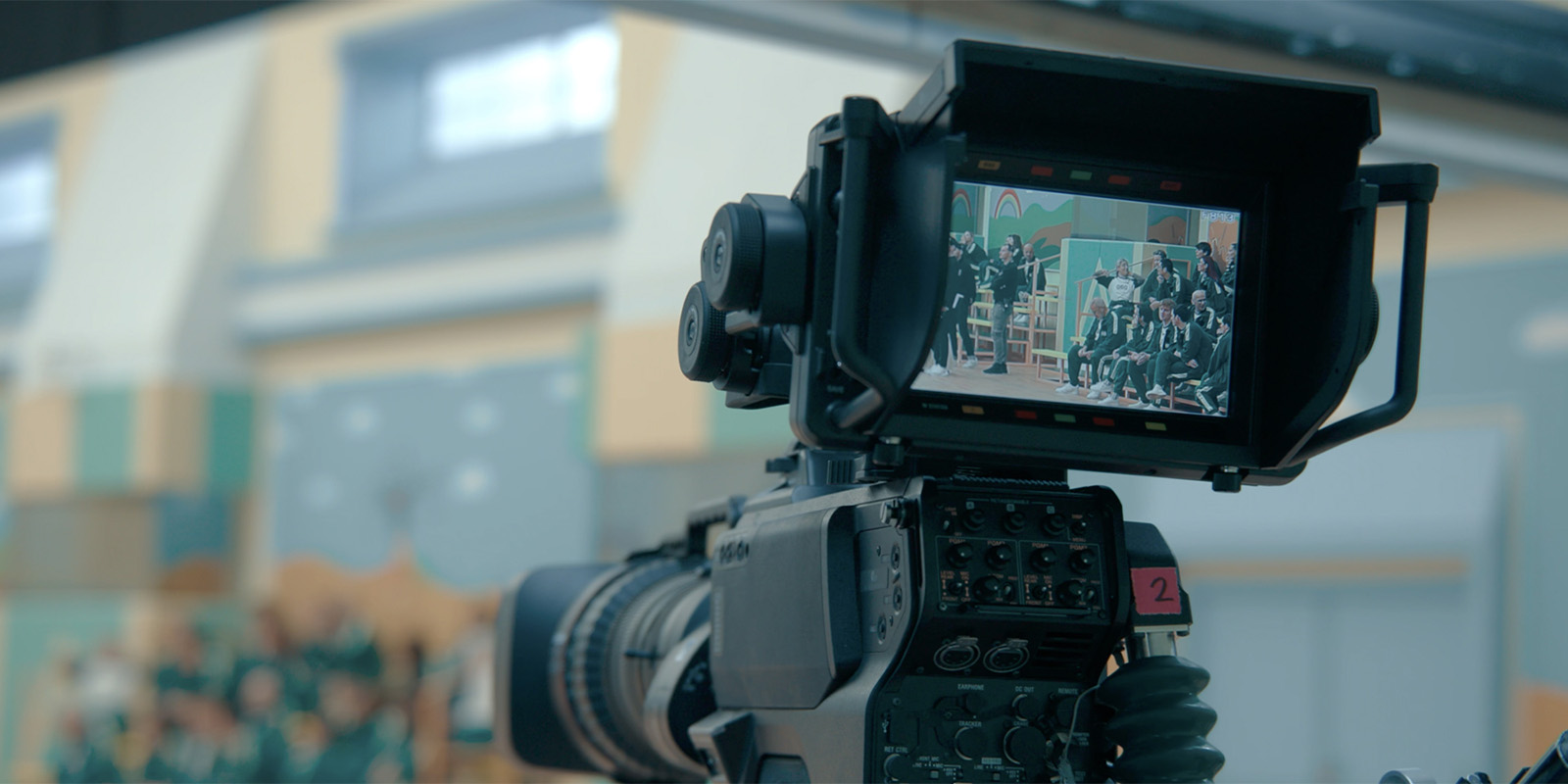
An extensive multi-camera set-up covered the sets from every possible angle, with ten Sony HDC-F5500 and VENICE 2 cameras linked up with Sony HDC-P50 and FR7 PTZ cameras via remote control panels (RCPs).
Then, as individual stories developed (and gameplay allowed), the camera team followed players more closely, using Sony FX9s, FX6s and FX3s to capture specific, unplanned moments on the ground.
“We would have to be very reactive, so the camera coverage and the lens choices meant that we couldn’t miss anything in the moment,” says DP Rob Mansfield.
This made the FX9, FX6 and FX3 ideal choices, as they provided HDR capabilities in compact forms: Each camera boasts full-frame CMOS sensors with 15+ stops of dynamic range, for vibrant colour capture and incredible performance in any lighting conditions.
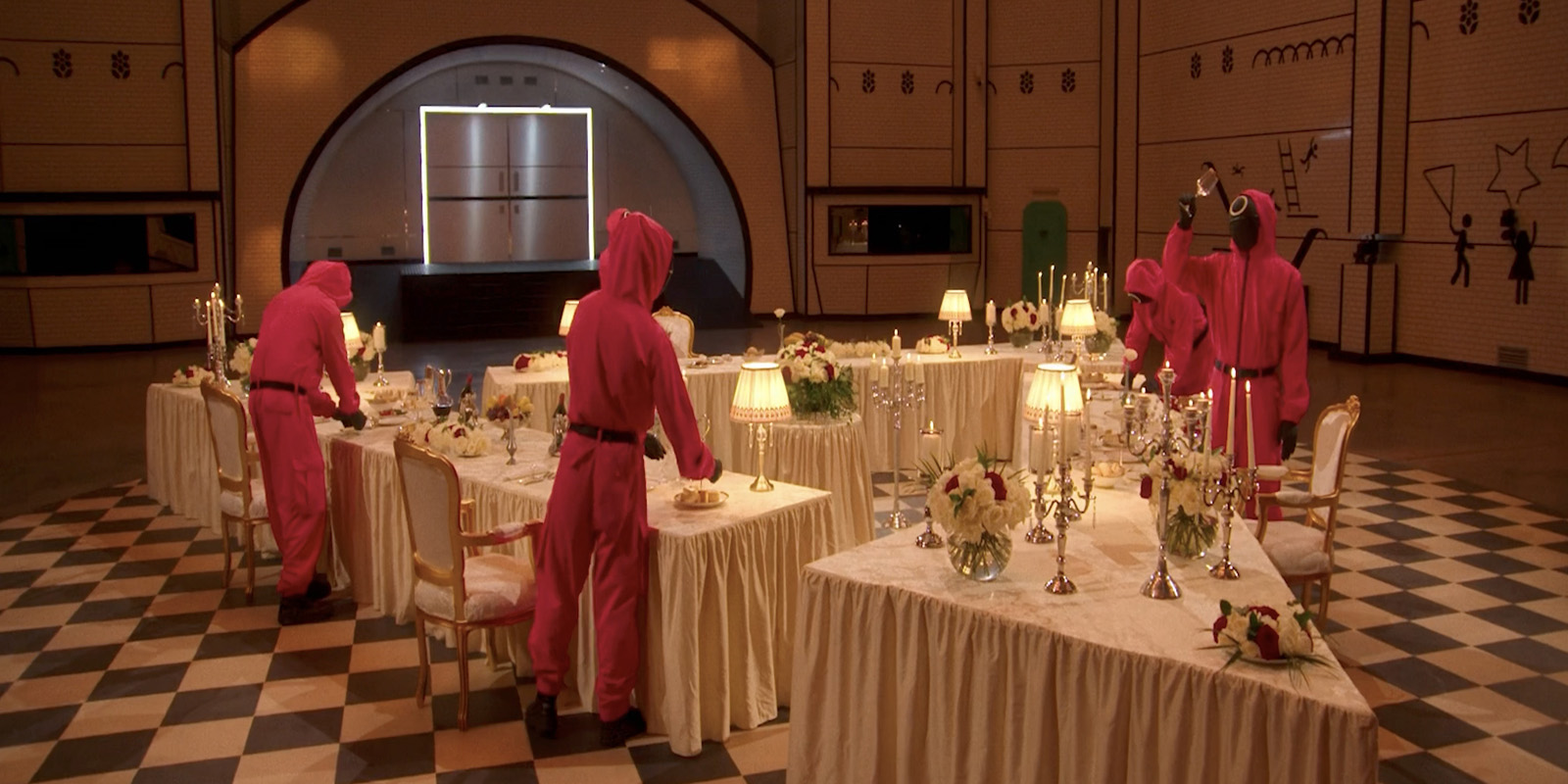
All 90 Sony cameras on Squid Game: The Challenge used S-Log3 to shoot in high dynamic range, delivering a consistent starting point for post-production. Details, highlights and shadows would look as close to real life as possible, as well as matching between angles.
“An F5500, a VENICE 2, an FX9, an FX3, a P50, an FR7 – they all perfectly match,” notes vision supervisor Daryl Bidewell.
Mighty HDC-F5500 backbone
The HDC-F5500s served as worthy primary cameras for the show. Designed for more cinematic live productions, their Super35 4K CMOS sensors brought a shallow depth of field that could isolate specific contestants within the frame and underline the drama.
“The HDC-F5500 was a game changer,” says Mansfield. “Because it’s controllable with RCPs, that gives us the simplest set-up for a multi-camera environment that wants to have the cinematic look.”
The HDC-F5500’s capabilities proved essential for one of the most memorable challenges in the show, where 456 contestants ran across a space the size of a football pitch. This demanded the largest camera set-up of the entire series, and was undoubtedly one of the most chaotic sections of gameplay.
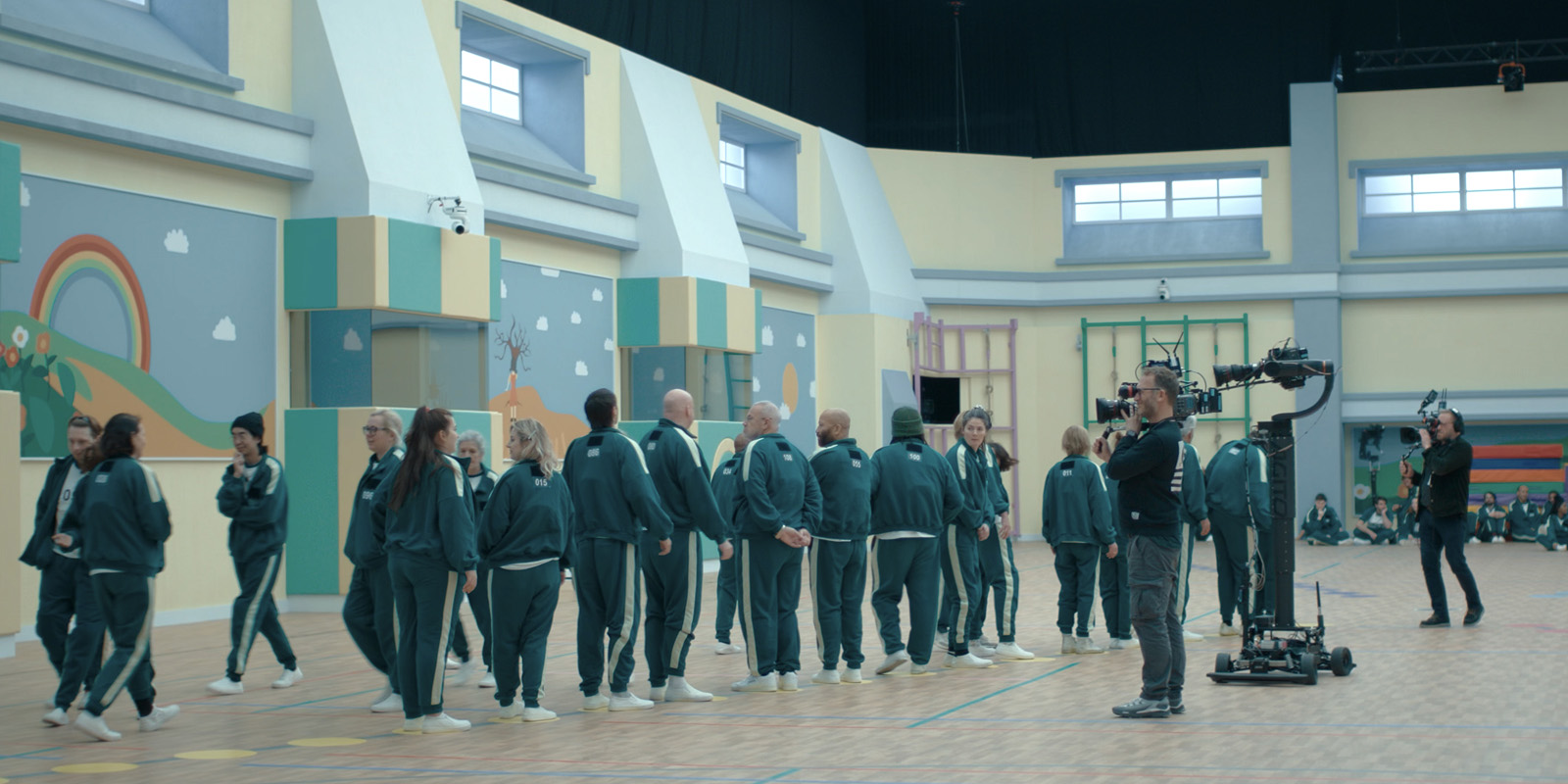
Designed for fast-paced sports productions, the HDC-F5500’s global shutter provided pin-sharp 4K images throughout. The Virtual IRIS allowed the production team to precisely adjust exposure settings from the control room, ensuring a consistent look without the need for time-consuming, on-the-ground resets.
Matching across LUTs and monitors
The control room provided a live view from every single camera – you’d be able to see the impressive richness and vibrance come through on the Sony BVM Monitors in the gallery.
Every one of the cameras recorded with S-Log3 / S.Gamut3, to capture as much colour information as possible for an HDR output. This was then converted to Dolby PQ, in a DCI-P3 colour space, for a consistent look on the monitors.
The team in the gallery were also able to fine-tune the cameras in real-time, adjusting exposure, saturation, colour temperature and more on the cameras themselves, thanks to the RCPs attached to the HDC-F5500 and VENICE 2.
“The Sonys were all fantastic and held a true colour tone to them,” says vision supervisor Daryl Bidewell.
Protecting HDR flexibility in post
Having prepared, monitored and adjusted throughout the shoot, Mansfield and Bidewell knew that the HDR files sent to post-production would have incredibly rich colour data. This would give the colourist as much flexibility as possible for achieving precisely the look needed.
“I can push it further in the grade, but if they push too far as they’re shooting, they might over-commit and lose flexibility later,” says colourist Andrew Cloke.
Cloke watched footage with the producers, taking notes as he went and including the online editors, in case they spotted something he could quickly fix.
“We do our HDR master, it goes through an HDR online, and then that gets fed back to the grade suite again, to generate the SDR metadata,” says Cloke. “That’s another chance for me to watch through, check that it all converts correctly, and still looks good in SDR.”
After careful planning, rigorous standards on-set, and fastidious colour grading, Squid Game: The Challenge delivers a captivating real-world contest with the vibrance of the much-loved drama series.
Now, it stands as a blueprint for capturing large-scale, unscripted productions, without missing a moment of action or a shade of HDR colour.
Discover more at pro.sony/cine